
UGM is committed to fostering an inclusive and equitable environment for all its community members. While specific policies addressing non-discrimination for transgender individuals are not explicitly detailed in publicly available documents, UGM’s overarching non-discrimination policies encompass all individuals, regardless of gender identity.
Key Policies and Initiatives
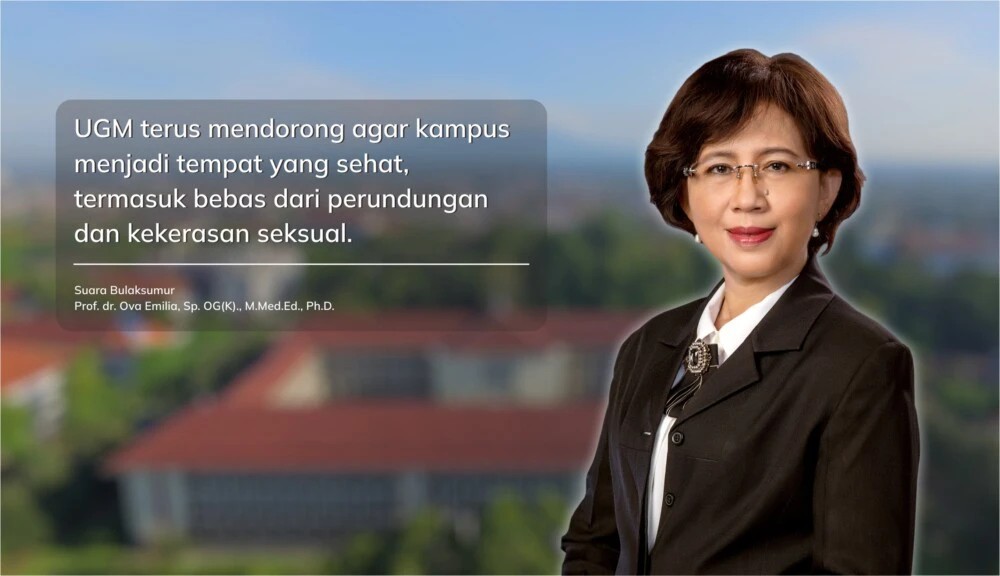
General Non-Discrimination Policy: UGM’s commitment to non-discrimination is reflected in its policies that prohibit discrimination based on race, ethnicity, religion, gender, and other characteristics. These policies aim to ensure equal opportunities and treatment for all students, faculty, and staff. This commitment is outlined in the Board of Trustees Regulation Number 1 of 2023, which emphasises the creation of a safe and comfortable campus ecosystem, free from sexual violence, bullying, and discrimination.
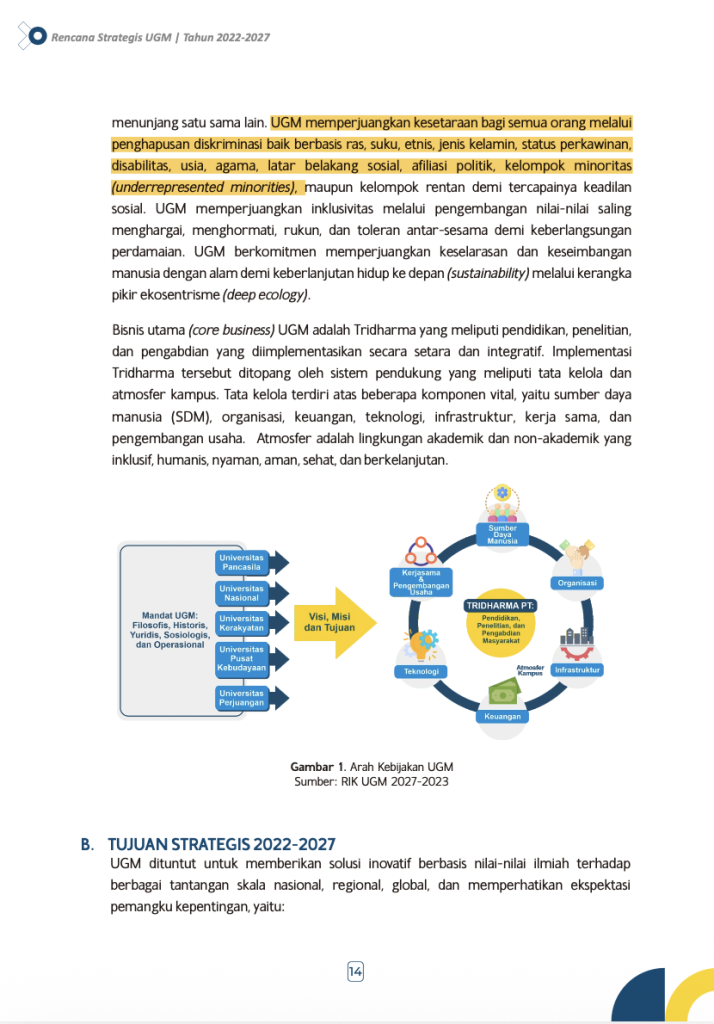
The university’s commitment to inclusivity and zero tolerance towards discrimination is also clearly stated in the Strategic Plan for 2022 – 2027. UGM ensures that all students and employees have equal opportunities in applications, admissions, and participation in all academic activities.
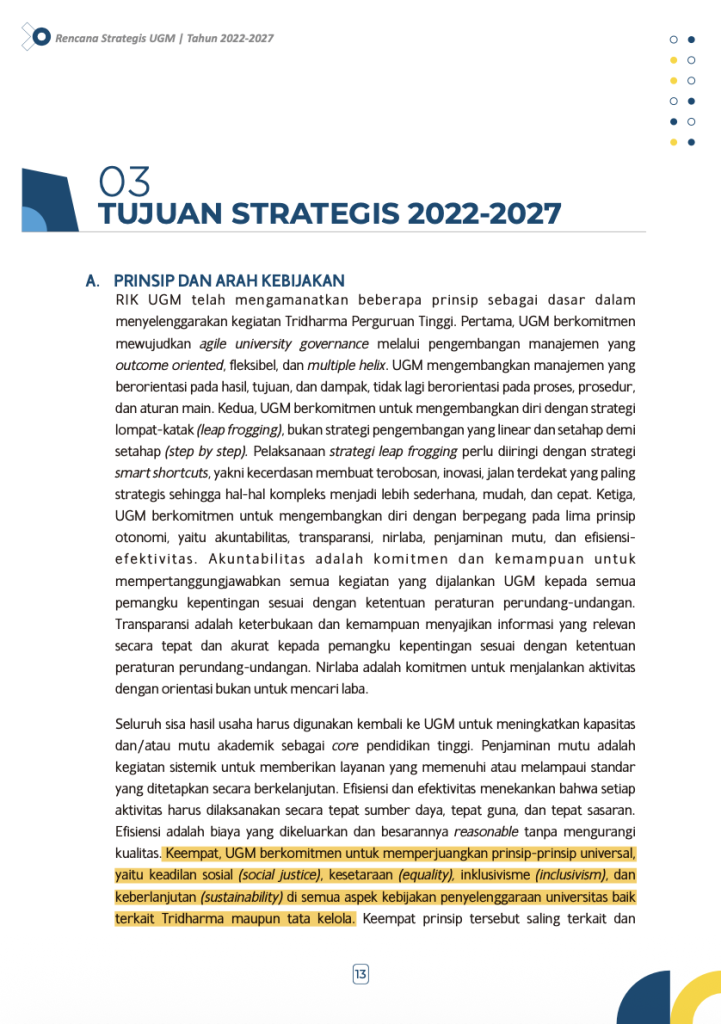
Page 13 states: “…UGM is committed to upholding universal principles—namely social justice, equality, inclusivism, and sustainability—in all aspects of its institutional policies, both in relation to the Tridharma and to university governance.”
Meanwhile, in page 14: “UGM promotes equality for all people by eliminating discrimination based on race, ethnicity, gender, marital status, disability, age, religion, social background, political affiliation, or minority group status (underrepresented minorities).”
Gender Equality Initiatives: UGM actively promotes gender equality through various programs and collaborations. For instance, the university has partnered with the Asia Pacific Women’s Information Network Center (APWINC) at Sookmyung Women’s University to offer specialised training programs for female students, focusing on enhancing skills in information and communication technology (ICT).
Support Services: The university provides counselling and support services aimed at addressing the diverse needs of its community members, including those related to gender identity and expression.
While these initiatives indicate UGM’s dedication to inclusivity, the absence of explicit policies regarding transgender individuals suggests an area for potential development. For the most current and detailed information, it is advisable to consult UGM’s official communications or contact the university directly.
References: