
Universitas Gadjah Mada (UGM) provides specific physical facilities dedicated to interdisciplinary science research teams across applicable disciplines. These facilities are institutionally designated to support collaboration among researchers from multiple scientific fields and enable the integration of disciplinary methods in addressing complex scientific and societal challenges.
UGM has developed a comprehensive ecosystem of laboratories, learning centers, research forests, and innovation hubs that function as shared and dedicated physical environments for interdisciplinary science research.
Innovation and Creativity Center (Gelanggang Inovasi dan Kreativitas – GIK)
Opened as a flagship super-hub, GIK is arguably the most significant physical commitment to interdisciplinary work at UGM. Unlike a traditional faculty building, it is designed as an open ecosystem. The facilities include co-learning spaces, a grand amphitheatre, and specialized creative labs equipped with AI, IoT, and blockchain technology. The function of GIK fully support to Interdisciplinary research and product down streaming that attract and host tenants from both industry and various academic faculties (e.g., arts, technology, and business) to work on joint projects like the France-Indonesia Innovation Year 2026.
Interdisciplinary Learning Centers
UGM operates a network of Learning Centers that function as dedicated interdisciplinary science research facilities, particularly within science-based faculties. These centers provide integrated laboratories, collaborative workspaces, and thematic research groups that support cross-disciplinary research performance.
According to the Rector’s Regulation on Laboratory Management, Article 17, UGM manages Learning Centers to strengthen education, research and development, community service, and collaboration with industry. Each Learning Center facilitates collaboration across multiple scientific disciplines, as illustrated below:
-
Smart and Green Learning Center (SGLC)
-
Engineering Research Innovation Center (ERIC)
The Engineering Research and Innovation Center (ERIC) is a dedicated interdisciplinary science research hub that brings together multiple engineering and applied science domains within a shared environment. It hosts eight Centres of Excellence, including sustainable manufacturing, smart systems, advanced materials, energy, environment, and infrastructure, fostering collaboration across scientific fields.
ERIC offers advanced laboratories, co-working areas, and innovation platforms that support prototyping, collaboration, and knowledge exchange among academia, industry, and government. As a purpose-built hub, it enables the integration of disciplinary methods and enhances cross-disciplinary research performance, facilitating the translation of research outputs into technological innovation.
-
Animal Science Learning Center (ASLC)
Animal Science Learning Center (ASLC) provides integrated laboratory facilities and collaborative research spaces that support interdisciplinary science research across animal science, biotechnology, microbiology, molecular biology, nutrition, and food science. Through the Tropical Animal Research Center (TARC), the facility enables collaboration among researchers from multiple faculties and external partners, integrating life sciences, agricultural sciences, health sciences, and applied technology to address complex challenges in livestock systems and human health.
Research activities apply diverse approaches such as spectroscopy, molecular analysis, and clinical methods, demonstrating strong integration of disciplinary methods. The center also contributes to strategic innovations, including the development of Gama cattle breeds.
Further projects:https://docs.google.com/spreadsheets/d/1zmtOuzbBJf3daicpfnKXxWsOev5TX9d7/edit?usp=sharing
-
Integrated Forest Farming Learning Center (IFFLC)
Integrated Forest Farming Learning Center (IFFLC) supports interdisciplinary research in forestry, environmental science, spatial analysis, and socio-economic studies, enabling integrated approaches to sustainable landscape and ecosystem management.
The Learning Center has supported several interdisciplinary research initiatives, including studies on integrated agroforestry systems combining forest trees with agricultural crops, research on soil fertility improvement in tropical forest landscapes, spatial analysis of watershed management, and ecosystem restoration programs. These projects typically involve collaboration between soil scientists, silviculturists, spatial analysts, and socio-economic researchers to develop sustainable forest management strategies and improve community livelihoods.
-
Agrotropical Learning Center (AGLC)
Agrotropica Learning Center (AGLC) integrates research in biotechnology, bioinformatics, environmental science, and agricultural systems, enabling interdisciplinary teams to combine molecular, ecological, and data-driven approaches in addressing challenges in food systems and natural resource management.
Various interdisciplinary studies have been conducted using AGLC facilities. Examples include research on “Development of Molecular Farming through the Production of SARS-CoV-2 Nucleocapsid Protein in Tobacco Plants” in the field of plant molecular biotechnology, “The Potential of Bacillus velezensis BP1 Secondary Metabolites: Cellular and Molecular Mechanisms as Antibiofilms against the Phytopathogen Ralstonia solanacearum” in the field of agricultural microbiology and biochemistry, and “Optimization of Lactobacillus sp. GMP1 and Weisella sp. GMP12 Lactic Acid Bacteria Powder Production and Its Application in Improving the Quality of Fishery Fermentation Products in the field of food and fishery biotechnology. In addition to producing various scientific publications, AGLC facilitates collaborative research with national and international partners, such as the In Vitro Genetic Engineering Research to Obtain Superior Sugarcane Varieties, which collaborate with PT GMP.
-
Dental Learning Center (DLC)
Dental Learning Center (DLC), through its Integrated Research Laboratory (IRL), facilitates interdisciplinary research involving dentistry, molecular biology, material science, and biomedical engineering, enabling the integration of laboratory-based and clinical research approaches.
-
Advanced Pharmaceutical Science Learning Center (APSLC)
Advanced Pharmaceutical Sciences Learning Center (APSLC) supports interdisciplinary research in pharmaceutical sciences, nanomedicine, bioinformatics, and clinical research, allowing integration between laboratory-based analysis, computational methods, and clinical applications.
Research activities at APSLC are conducted by several interdisciplinary research groups, including the Curcumin Research Center (CRC), Cancer Chemoprevention Research Center (CCRC), Medicinal Plants and Natural Products Research Center, Drug Targeting and Personalized Medicine Research Center, Pharmacoeconomics and Health Technology Assessment Research Center, and the Center of Excellence in Therapeutic Drug Monitoring. These groups bring together expertise and researchers from diverse fields to foster multidisciplinary research, drive innovation, and advance the sustainable development of pharmaceutical science and technology.
-
Teaching Industry Learning Center (TILC)
The Teaching Industry Learning Center (TILC) serves as a dedicated interdisciplinary science research and innovation facility that integrates applied research, education, and industry collaboration within a single physical environment. The eight-storey facility hosts multiple Centers of Excellence and interdisciplinary laboratories, enabling collaboration across diverse fields such as engineering, information technology, creative industries, agro-technology, and socio-economic studies.
TILC is designed to support the “teaching industry” concept, bridging academic research with industrial application and fostering collaboration between researchers, students, industry partners, and government. Through its interdisciplinary laboratories and innovation spaces, the facility enables the integration of disciplinary methods and supports applied research, product development, and real-world problem solving across sectors.
As a shared and purpose-built facility, TILC provides an integrated physical environment for interdisciplinary science research teams, strengthening cross-disciplinary research performance and facilitating the translation of research outputs into industry-relevant innovations.
-
Field Research Center (FRC)
UGM also provides Field Research Center (FRC) facilities, including research forests, agricultural innovation centres, and experimental stations, which support interdisciplinary research involving environmental science, forestry, agriculture, and biodiversity.
These facilities enable interdisciplinary research teams to integrate field-based data collection with laboratory analysis and computational modelling, supporting the integration of disciplinary methods across natural and applied sciences.
FRC integrates a teaching industry approach through the implementation of a “link and match” strategy, ensuring the alignment of academic research with industry needs. The teaching industries at FRC include: CoE Wood Pellet, CoE Cacao, CoE Dairy Milk, CoE Fab Lab and Medical Device. FRC’s facilities are utilized for various research and production activities, including cacao production, Fab Lab and Medical Devices, Dairy Milk Processing, Product Analysis and Quality Control Room, and Incubation and Design Room
To ensure effective management, UGM has established a Laboratory Management Team under the coordination of the Integrated Laboratory Management System, which includes the Task Force for Laboratory System Integration and Learning Center Coordinators. In addition, faculties and schools assign Vice Deans responsible for research and/or community service to assist in coordinating Learning Center activities. UGM has also developed an integrated facility management system to optimize the use of Learning Centers.
Through these Learning Centers, UGM provides dedicated shared facilities where interdisciplinary science research teams can collaborate, integrate methodologies, and generate high-impact research outcomes. To support broader access and utilization, several laboratory and analytical services within these Learning Centers are available through an integrated platform, where users can place service requests via the UGM marketplace at: https://market.ugm.ac.id
Integrated Research and Testing Laboratory (Laboratorium Penelitian dan Pengujian Terpadu – LPPT)
The Integrated Research and Testing Laboratory (LPPT) serves as a central facility providing advanced analytical and testing services for interdisciplinary science research. The laboratory supports collaborative research across chemistry, biology, engineering, environmental science, and health sciences. By providing shared access to advanced instrumentation, LPPT enables the integration of disciplinary methods and supports joint experimental and analytical workflows among interdisciplinary research teams.
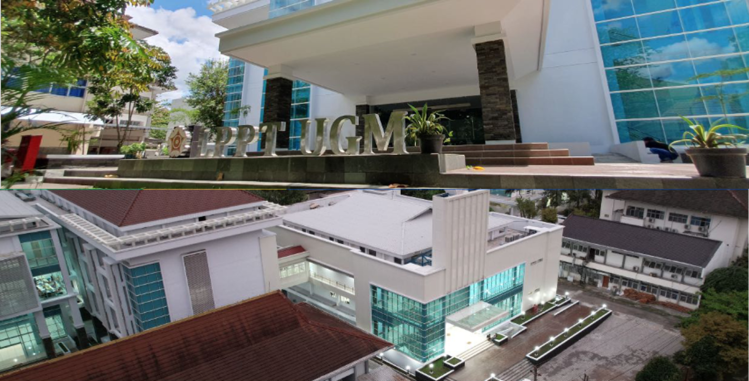
Booklet Profile Integrated Research and Testing Laboratory (LPPT): Integrated Research and Testing Laboratory (LPPT) Profile Booklet.pdf
Wanagama Nusantara
Wanagama Nusantara is a forest research and education ecosystem initiated by Universitas Gadjah Mada (UGM) in collaboration with the IKN Authority and the Ministry of Environment and Forestry. Covering approximately 621 hectares, Wanagama Nusantara supports IKN’s vision as a Forest City. It is expected to serve as a window of the tropical world, representing Indonesia’s global commitment to climate change mitigation and adaptation while reflecting the country’s local knowledge and wisdom. The development of Wanagama Nusantara aims to establish an ecosystem for tropical rainforest restoration and to create a research hub that addresses global challenges in tropical health, biodiversity and forest restoration, renewable energy, green infrastructure, and policy governance.
The research collaboration between IKN and Wanagama Nusantara seeks to activate scientific activities in Nusantara by utilizing Wanagama Nusantara’s facilities at IKN and involving students in research. A key goal is the establishment of the Wanagama Nusantara Research Hub at IKN, which will serve as a platform for disseminating research outcomes, strengthening collaborative networks, and enhancing community engagement and policy recognition within IKN.
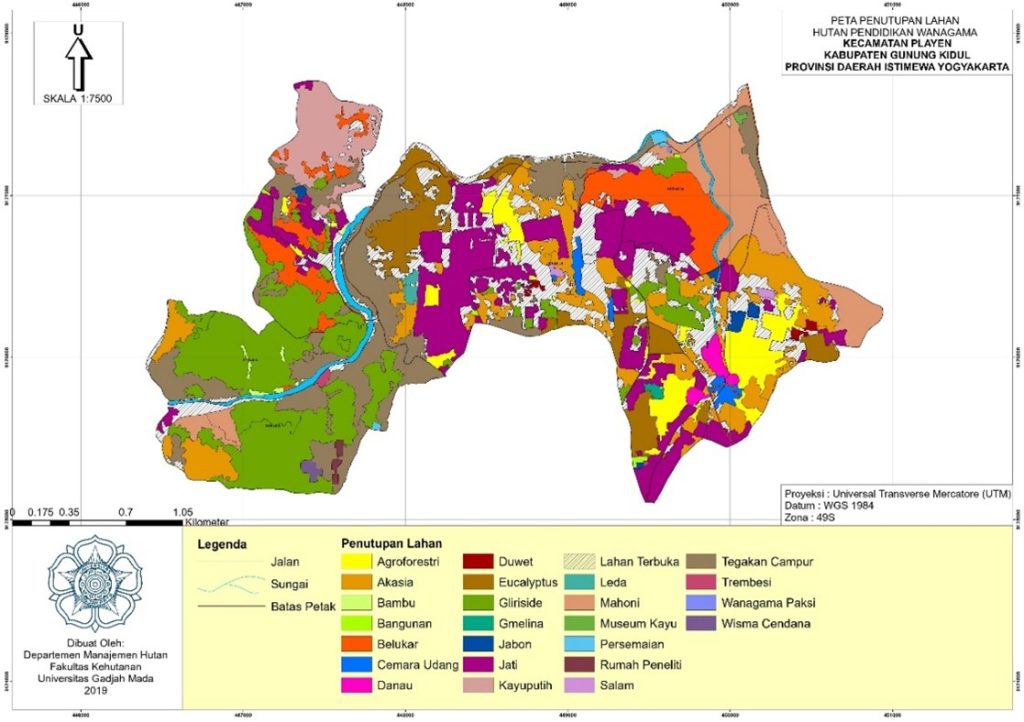
Wanagama Nusantara’s main programs are divided into three areas: the development of educational forest zoning, the establishment of the Institute for Future Life, and initiatives in restoration, reforestation, and enrichment planting. For educational forest zoning, Wanagama Nusantara consists of eight designated zones: the Conservation Zone, Healing Forest Zone, Ecotourism Zone, Agroforestry Zone, Eco-Edu Forestry Zone, Herbal Medicine Zone, Tropical Rainforest Miniature Zone, and Global Forest Zone.Another key program within Wanagama Nusantara is the development of the Institute for Future Life (IFL). Designed as an educational and research facility, IFL will function as a multidisciplinary research center integrated with the smart and green building concept. It is also envisioned as a hub for international research collaboration, supporting UGM’s commitment to sustainable development and scientific innovation.
Wanagama I Gunungkidul
UGM rehabilitated critical land in Gunungkidul, known as the Wanagama Eco-Edu Forest. The status of this forest for conservation and rehabilitation of this area is stated in the Decree of the Indonesian Minister of Environment and Forestry Number 493/Menlhk-Setjen/2015. The Wanagama Eco-Edu Forest is one of the forest areas out of the total amount of 622,25 hectares of forest areas owned by UGM.
Wanagama is a unique ecosystem. Wanagama has various forms of topography, rock layers, soil types, hydrological systems, microclimates, plants, animals, test planting plots, and socio-economic interactions with the surrounding community. Based on this potential, Wanagama can function as:
- Environmental education center: Environmental education that is open to the wider community, educational institutions, nature lovers, environmental observers, government institutions, and private companies both from within and outside the country
- Science Park: A science park with competent speakers and natural resources for research materials, training and knowledge. Starting from plants, animals, soil, earth rocks, society, and places for practice in the open air
- Nature tourism: Beautiful natural nuances and water sources equipped with camping facilities, walking, tracking, jogging, cycling, lodging, courtrooms, joglo, halls, multipurpose rooms, canteens, and parking areas
- Convention forest: A forest that provides materials and facilities to support workshops, work meetings, reunions and relaxing with family.
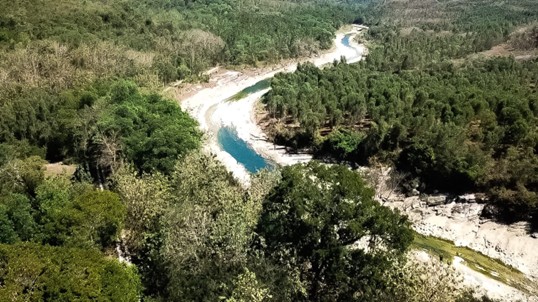
Wanagama has produced 5 studies per year over 41 years. The forms of research vary, especially in books which are divided into textbooks, references, research reports, and seminar proceedings. The topics that are frequently raised are forest soils, plant growth, forest litter, genetic testing, and plant health. Researchers come from the Faculty of Biology, Agriculture, and Geography at UGM, as well as other researchers from outside UGM.
Center for Agrotechnology Innovation (Pusat Inovasi dan Agroteknologi – PIAT)
The Center for Agrotechnology Innovation (PIAT) provides dedicated facilities for interdisciplinary research in agriculture, food systems, environmental science, and bioresource management. The facility integrates experimental fields, laboratories, and innovation platforms that support applied research and technology development. PIAT enables interdisciplinary research teams to integrate agricultural science, environmental analysis, biotechnology, and engineering approaches in developing sustainable solutions for food production and natural resource management. The facility supports both experimental research and applied innovation, strengthening the integration of disciplinary methods in real-world contexts.
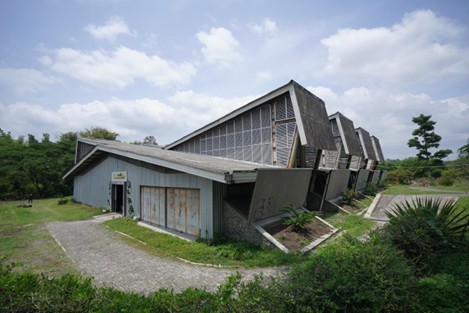
PIAT is the answer to Universitas Gadjah Mada (UGM) in facing the era of the ASEAN Economic Community (MEA) in 2015. PIAT is actively laying a systematic and integrated foundation in realizing the independence of the agro sector as a pillar of the national economy, namely becoming a producer of agricultural commodities which reliable and sovereign. By emphasizing the element of innovation, PIAT utilizes UGM’s land resources from supporting agro-research to become a productive unit that capable to produce innovative agro products. Currently, PIAT UGM has a 35 Ha garden in Kalitirto Berbah Sleman and 151 Ha in Mangunan Imogiri Bantul, which consists of eight (8) leading fields that are implemented, namely;
- Genetic Bank and Seed Production
- Organic and Smart Farming
- Zero Waste Sustainable Fisheries
- Smart Livestock
- Plantation and Bio Pharmacy
- Agro Processing Unit
- Waste Management Technology
- Agroedutainment
Science Techno Park (STP)
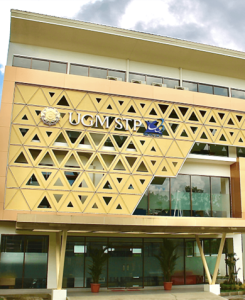
The Science Techno Park UGM (STP-UGM) functions as an interdisciplinary innovation hub that connects research, technology development, and industry collaboration. The facility provides laboratories, prototyping spaces, incubation units, and pilot-scale production facilities that support the development and commercialization of research outputs.
STP hosts interdisciplinary research teams involving engineering, computer science, life sciences, and applied sciences. The facility supports the translation of interdisciplinary science research into innovation outputs, including prototypes, technology-based products, and industry collaborations, thereby strengthening cross-disciplinary research performance.
STP UGM Profile: About UGM Science Technopark.pdf
Study (Research) Centers
To enhance the quality of services and facilities in research units such as Study Centers, an integrated management system is essential. Therefore, the centralization of Study Centers is a program that must be realized. As part of the development of the campus area philosophy, the currently dispersed Study Centers will be centralized into three zones based on their respective scientific foundations: (1) Study Centers based on science and technology (IPTEK), (2) Study Centers based on UGM values and internationalization, and (3) Study Centers focused on environmental and disaster studies.
The zoning process has been gradually implemented since 2023, with the following developments:
- Phase 1 of the zoning initiative in the PAU area of Universitas Gadjah Mada is being carried out in 2024, involving the consolidation of six Study Centers within a single area, along with the implementation of an integrated human resources management system and a unified administrative management system.
- Phase 2 of the PAU area zoning is scheduled for 2025.
- Additionally, zoning will be extended to the Kuningan area.
UGM has several Study Centers offering strategic research topics and offers outstanding collaboration potential for researchers related to interdisciplinary science
- Center for Biological Resources Studies: The center focuses on increasing advocacy and assistance to communities experiencing problems with the conservation, utilization and management of biological resources with interdisciplinary cooperation that is synergistic, effective and efficient in sustainable management of biological resources.
- Center for Biotechnology Studies: The center focuses on developing biotechnology in Indonesia through research, seminars, workshops, research internships, short courses, and assigning lecturers to various universities abroad for doctoral and master programs.
- Center for Disaster Studies: The center focuses on conducting disaster research to contribute ideas related to disaster management in order to support various educational activities and community service.
- Center for Energy Studies: The center focuses on an intern-disciplinary energy study-research activity on green energy (fossil-based and renewable energies). It offers comprehensive solution to develop and implement the smart energy policy and technologies in the frame of engineering & scientific solutions, social, political and economic areas.
- Center for Environmental Studies: The center focuses on conducting a range of basic and applied research activities in the environmental field (strategic environmental assessment, environmental carrying capacity research, environmental information systems, environmental audits, and others).
- Center for Food and Nutrition Studies: The center focuses on promoting research and education in the field of food science and nutrition as well as community development.
- Center for Marine Resources and Technology Studies: The center focuses on conducting various activities in the field of marine and fisheries, in accordance with its core competence and human resources.
- Center for Transportation and Logistics Studies: The center focuses on encouraging changes with innovative ideas for the advancement and development of the transport and logistics sectors to solve local, national, and international problems.
- Center for Women Studies: The center focuses on responding to gender and child issues, upholding women’s and men’s rights to opportunity, recognition, respect, and access to equal services in the community so as to achieve gender equality and justice.
References:
- Rector’s Regulation on Laboratory Management, Article 17
- Gelanggang Inovasi dan Kreativitas
- Integrated Research and Testing Laboratory (Laboratorium Penelitian dan Pengujian Terpadu, LPPT)
- Field Research Center (FRC)
- Wanagama Nusantara
- Wanagama I Gunungkidul
- Center for Agrotechnology Innovation (PIAT)
- Study Centers