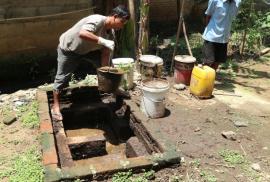
Valuable innovations from cow dung have been developed in many communities. Selopamioro Village, Imogiri, Bantul Regency, Yogyakarta is one of them that is actively processing cow dung waste into an energy source for household fuel.
The Research Team from the Faculty of Law, Universitas Gadjah Mada (UGM), delivered a research about the politicization of religion in the formation of various legal regulations in Indonesia.
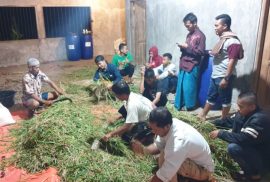
Based on a report by the Central Statistics Agency (BPS) in 2018, the population of breeders continues to decline every year. BPS noted that during 2012-2016, there was a reduction in the number of breeders […].
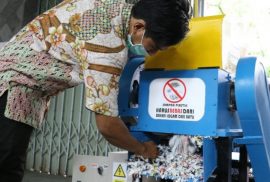
High plastic waste level is still a serious problem facing Indonesia. In fact, Jambeck (2015) places Indonesia as the second largest waste producer after China. This condition is influenced by plastic use among the community.
Indonesia is recorded as the second largest contributor of plastic waste in the world after China. The Ocean Atlas 2017 report says that in one year Indonesia produced 3.22 million metric tons of unmanaged plastic […].
Minister of Industry, Ir. Airlangga Hartarto, M.B.A., M.M.T., accompanied by the Minister of Research, Technology and Higher Education, Prof. H. Mohamad Nasir, Ak, Ph.D, UGM Rector, Prof. Ir.
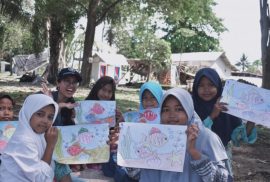
UGM sent 27 students who joined the Student Community Service (SCS-CEL) Program for Disaster Care to one of the tsunami-affected areas in Carita District, Pandeglang, Banten, to help residents recover from the disaster.
Two students from Gadjah Mada University (UGM) have developed energy-efficient emergency lamp innovations. The lamp, called La Helist (Lampu Emergency Hemat Listrik; Trans: Electricity-Saving Emergency Lamp), is a solution for the community in an emergency […].
The term “four pillars of national and state life” used by the People’s Consultative Assembly of the Republic of Indonesia (MPR RI) is said to be confusing because in terms of the language structure and logic […].