

In the context of clean energy utilization to support carbon emission reduction—particularly for Scope 1 and Scope 2 emissions—UGM’s energy-saving efforts have primarily focused on reducing Scope 2 emissions, which originate from the direct use of electricity in buildings.
UGM remains categorized as a low energy consumption international green campus according to the UI Green Metric rankings. In 2024, electricity consumption per person was recorded at 237.24 kWh/person—15% more efficient than the upper limit of the highest-scoring range (250 kWh), earning UGM the maximum score of 5.
One of the programs includes setting a target to reduce electricity consumption by 10%, based on data from the National Electricity Company (PLN). For newly operational buildings (less than three years in use), the target is to maintain a 0% increase in electricity consumption. This initiative is also aligned with the university performance targets, which sets a targeted baseline for implementing systematic energy conservation measures across UGM’s facilities.
UGM’s Building Code recommends that campus buildings be upgraded to become more energy efficient, one of the key approaches being the integration of smart systems. UGM’s Building Code is the university’s technical guidelines intended to guide development planning, building design, and preservation of cultural heritage buildings within UGM. These technical guidelines apply to all of our buildings within the Bulaksumur and Sekip campuses, as well as to buildings outside these areas.
The following guidelines have been enforced to ensure that buildings reach higher energy efficiency:
- Fitting Energy Efficient Equipment: Replacement of conventional lighting with energy-efficient LED systems, installation of motion and daylight sensors, and optimization of air conditioning units to reduce electricity consumption.
- Green Buildings and Green Renovation: Implementation of green building principles during the construction of new buildings as well as renovation projects, including improved insulation, increased use of natural lighting and ventilation, and adoption of renewable energy technologies such as rooftop solar panels.
- Policy and Behavioral Changes: Development of energy-saving policies supported by awareness campaigns, monitoring of energy use through UGM’s very own Building Management System (BMS), and fostering behavioral change among staff and students to promote sustainable energy practices.
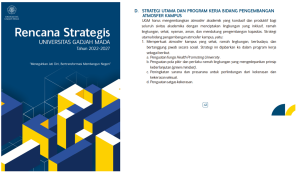
It must be emphasized that upgrading campus buildings to achieve higher energy efficiency cannot be accomplished without the support of green behaviour from the entire campus community. That is why strengthening environmentally friendly mindsets and behaviours that prioritize sustainability concepts (green mindsets) is part of UGM’s main strategy and work plan stressed in the university’s Strategic Plan 2022-2027 (pg.41).
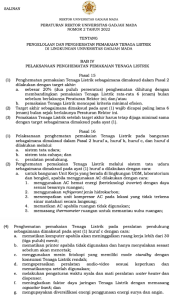
In fact, part of green behaviour is reducing electricity consumption. It is clearly stated in Rector Regulation Number 2 Year 2022 Article 15 that the electricity consumption in UGM must be reduced by 20% compared to the average usage over the six months preceding the enactment of this regulation.
Article 16 of the regulation provides guidelines for implementing electricity savings within UGM buildings. This includes optimising air conditioning systems, lighting systems, and supporting equipment. All students and staff are encouraged to turn off computers when leaving the workspace for more than 30 (thirty) minutes, turn off printers when not in use and only powering them on shortly before printing, operate audio-video equipment as needed and turn it off after use, etc.
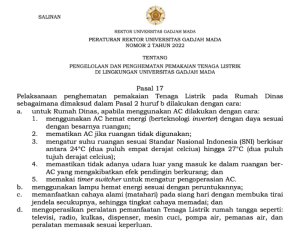
Article 17 demands green behaviour not only in the learning and teaching facilities, but also in the university office buildings. This includes turning off the air conditioning (AC) when the room is not in use and adjusting the room temperature in accordance with Indonesian National Standards (SNI), which range between 24°C and 27°C. Though seemingly small and simple habits, this example of green behaviour can lead to higher energy efficiency.
References: