
Educational Initiatives on Water Management for Local Communities by UGM
Free
Technology Innovation to Anticipate Drought in Agricultural Land as Water Resources Conservation.
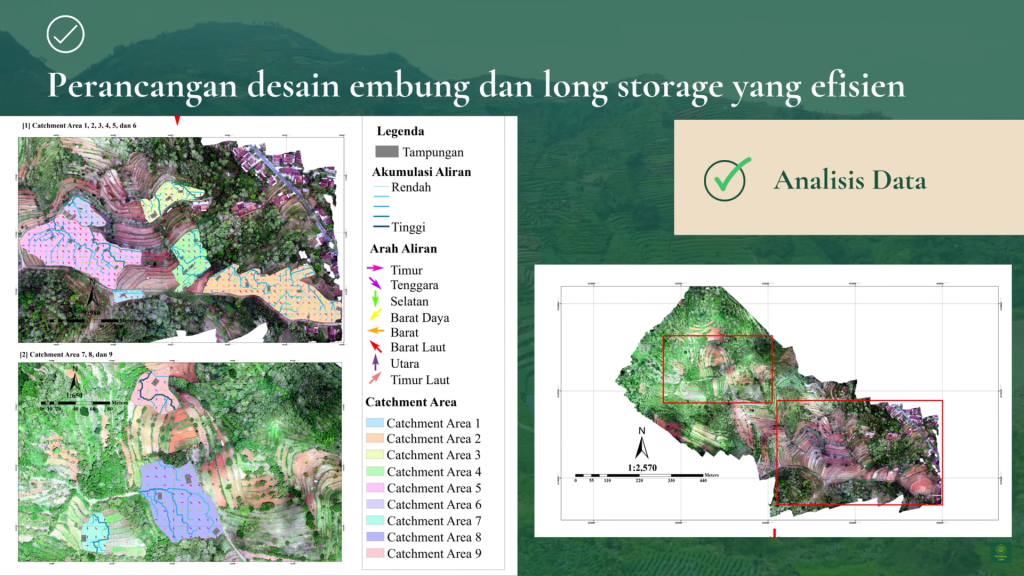
Faculty of Agriculture UGM conducted a water resource conservation program in Nawungan farmland, Imogiri, Bantul, to overcome drought in farmland and make Nawungan a prototype of productive conservation agriculture. This water resource conservation program collaborates with the Lestari Mulyo Farmer Group, an association of Nawungan farmers, to be directly involved in a series of programs.
Rainwater Harvesting
KKN-PPM UGM Students Install Rainwater Harvesting Installation ‘Gama Rain Filter’ in East Kalimantan
Gama Rain Filter, an innovation by UGM hydrology experts, is a breakthrough technology that converts rainwater directly into a source of clean water. This technology is being applied by UGM KKN-PPM students in various locations, including Muara Pantuan Village, Kutai Kartanegara, East Kalimantan. This village is located at the mouth of the Mahakam River, where the majority of the population works as fishermen and farmers.
In addition to installing the rainwater harvesting equipment, the KKN team also installed household-scale independent electricity using solar panels in Tani Baru Village. This initiative, known as Gama Rain Water, is expected to meet the clean water and electricity needs of the community in two of the three villages located on the Mahakam delta coast. A key function of this project is to educate the community on the proper use and maintenance of the technology, ensuring its long-term sustainability and effectiveness.
Kapanewon Ngemplak is one of the subdistricts with the main water absorption advantage in the city of Yogyakarta. Problems of drought and rivers filled with trash hinder the absorption function. Therefore, KKN students took the initiative to install biopori absorption sources to meet the need for clean water in the area. The installation of biopores involves collaboration between students, the government, in this case the Serayu Opak River Basin Agency (BBWS SO), and the community in producing sustainable initiatives and better water resource management.
On the other side, Sembungan Village, located in Sejajar District in Wonosobo, is the highest village on Java Island at 2,300 meters above sea level. The UGM Kejajar Community Service Program Team initiated a rainwater electrolysis device project as an application of appropriate technology. This project aims to provide an effective and efficient solution for supplying clean water to the village community. The application of rainwater electrolysis equipment in Sembungan Village brings a number of benefits and positive impacts to the community. First, this technology is able to provide clean water in an easy and inexpensive way, thereby reducing residents’ dependence on clean water sources that may be difficult to reach or expensive.
UGM Kapuas Bumantara Community Service Program Team Builds Greenhouse for Fish and Plant Cultivation
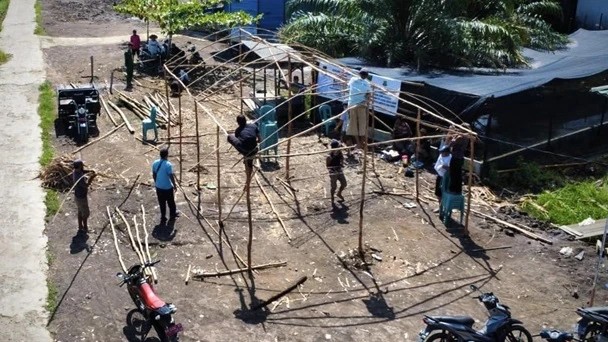
The UGM Community Service Program team in Bina Sejahtera Village, Kapuas Murung, Central Kalimantan, developed a greenhouse innovation. This greenhouse is designed to improve the village’s food security with an aquaponic-based integrated farming system that allows residents to produce fish and vegetables. Students provided education to the local community on how to cultivate fish and horticultural crops using the aquaponic system in the greenhouse, including how to use the system, fertilize, and control pests. This education is expected to result in sustainable local food cultivation.
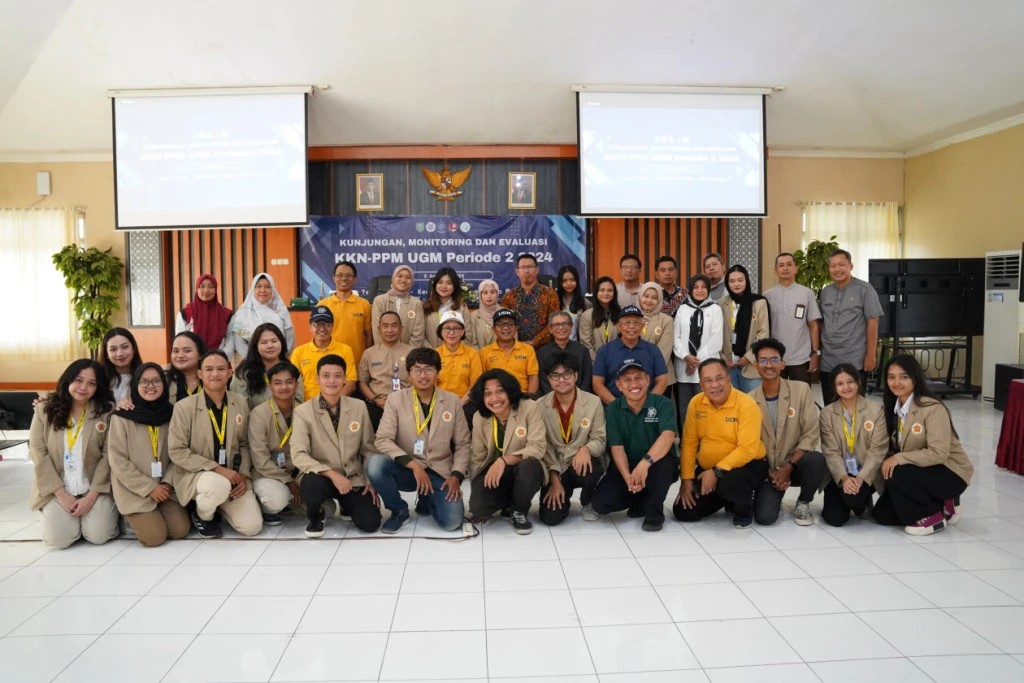
Initiatives through community services at the local level are carried out through the development of tourism potential and the installation of rainwater harvesting systems in the city of Madiun. These initiatives educate local residents and utilize digitalization. The results of this education are expected to develop the local area as a center of Chinese culture with adequate water resource management.
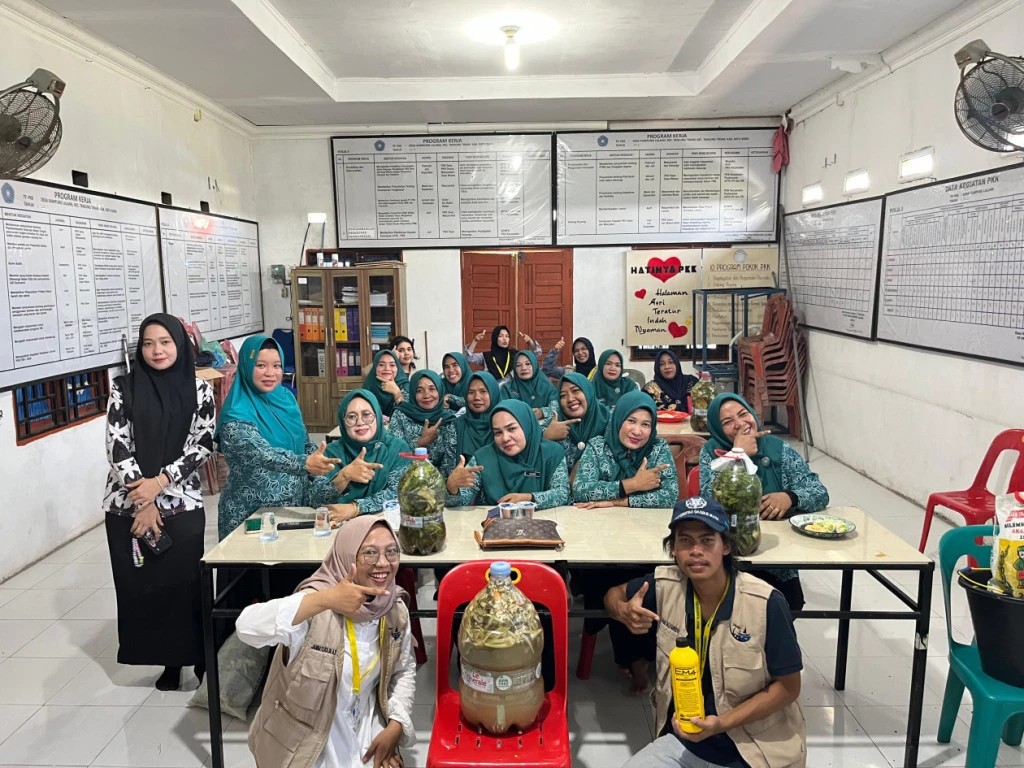
UGM students participating in the Community Service Program continue to contribute to sustainable water management across various regions in Indonesia. In Lalang Village, Batu Bara Regency, students introduced eco-enzyme technology made from fermented fruit and vegetable waste to purify polluted ditch water. This initiative improves water quality and helps inhibit the growth of disease vectors such as mosquitoes that cause malaria.
Significant progress has also been made in the application of rainwater harvesting technologies. In Ngadiharjo Village, Magelang, KKN students assisted residents in implementing a household-scale rainwater harvesting system adapted from the Gama Rain Filter. Constructed using simple and easily accessible materials, this system enhances community access to clean water for daily domestic needs.
On Karampuang Island in West Sulawesi , UGM students installed a rainwater harvesting system to alleviate water scarcity in two hamlets that rely heavily on brackish well water. The system has a storage capacity of 1,200 liters and directly filters acidic rainwater into clean water, thereby ensuring that local residents can fulfill their freshwater needs.
Another impactful initiative was carried out in Purworejo Regency through a collaborative community service program by the Environmental Science Study Program at the UGM Graduate School. The program successfully met the clean water needs of 160 families by channeling spring water through a piping network into an 18,000-liter reservoir, ensuring equitable distribution for all households. The program also developed five boreholes to support irrigation and household water supply. These interventions have brought measurable benefits, with rice production increasing from five tons to seven tons per hectare after the construction of the boreholes. This initiative demonstrates strong collaboration among educational institutions, local government, and communities in addressing water security challenges.
Paid
The Water Pollution Control training program is organized by the Center for Environmental Studies, Universitas Gadjah Mada. The training is offered in both online and offline formats for a designated period and requires a registration fee. The syllabus includes topics such as the identification and characterization of wastewater pollution sources, river discharge assessment, and wastewater treatment and recycling installations.
The Certification Training for the Person in Charge of Water Pollution Control (PPPA) was organized by the Center for Environmental Studies, Universitas Gadjah Mada. The program was delivered under specific terms and conditions and was designed to strengthen participants’ technical competence in water pollution prevention and management. The training syllabus covered a range of topics, including the identification and characterization of wastewater pollution sources, wastewater treatment and recycling installations, the utilization and monitoring of raw water, and other relevant subjects.
Certification Training for Person in Charge of Water Pollution Control Installation Operation (POPA)
The Certification Training for Person in Charge of Water Pollution Control Installation Operation (POPA) was arranged by the Center for Environmental Studies Universitas Gadjah Mada. The training was available with certain terms and conditions.
ICERM aims to develop the concept of water resources and their management by providing a communication platform where professionals and governments worldwide can share their research and project experiences. Last year, ICERM came with the theme “Water Resources Management for Sustainable Living”.
References:
Technology Innovation to Anticipate Drought in Agricultural Land as Water Resources Conservation.
Gama Rain Water at Muara Pantuan Village, Kutai Kartanegara, East Kalimantan
Electrolysis Equipment in Sembungan Village, Initiated by the UGM Kejajar KKN-PPM Team
UGM Kapuas Bumantara Community Service Program Team Builds Greenhouse for Fish and Plant Cultivation
Development of tourism potential and installation of rainwater harvesting systems in Madiun City
Certification Training for Person in Charge of Water Pollution Control (PPPA)
Certification Training for Person in Charge of Water Pollution Control Installation Operation (POPA)