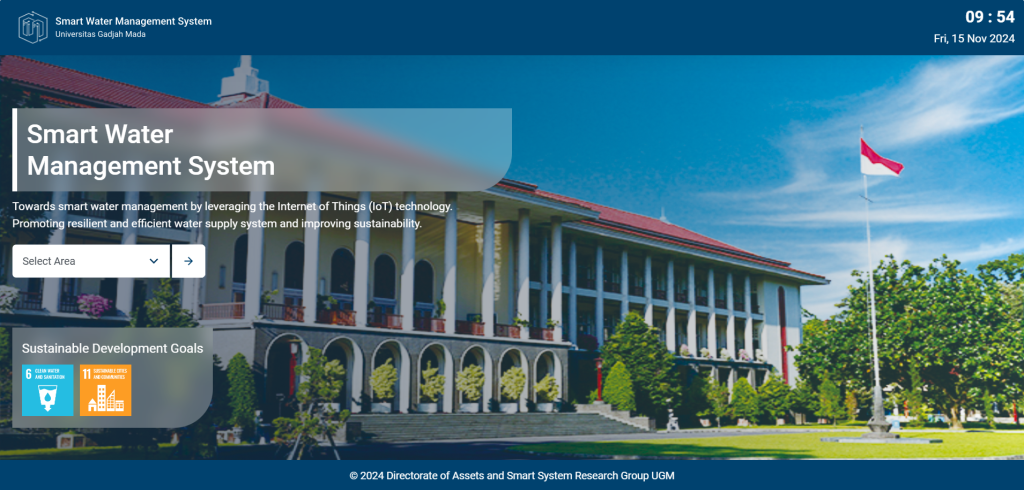
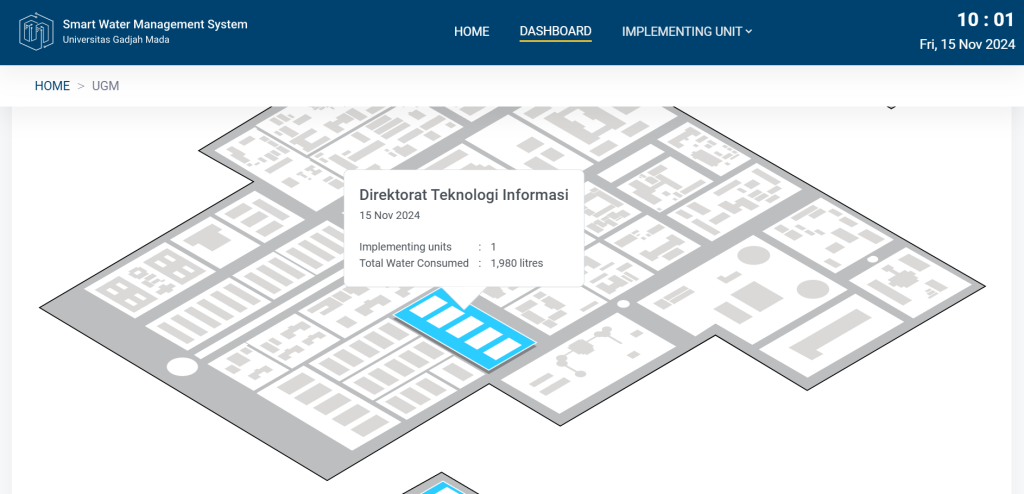
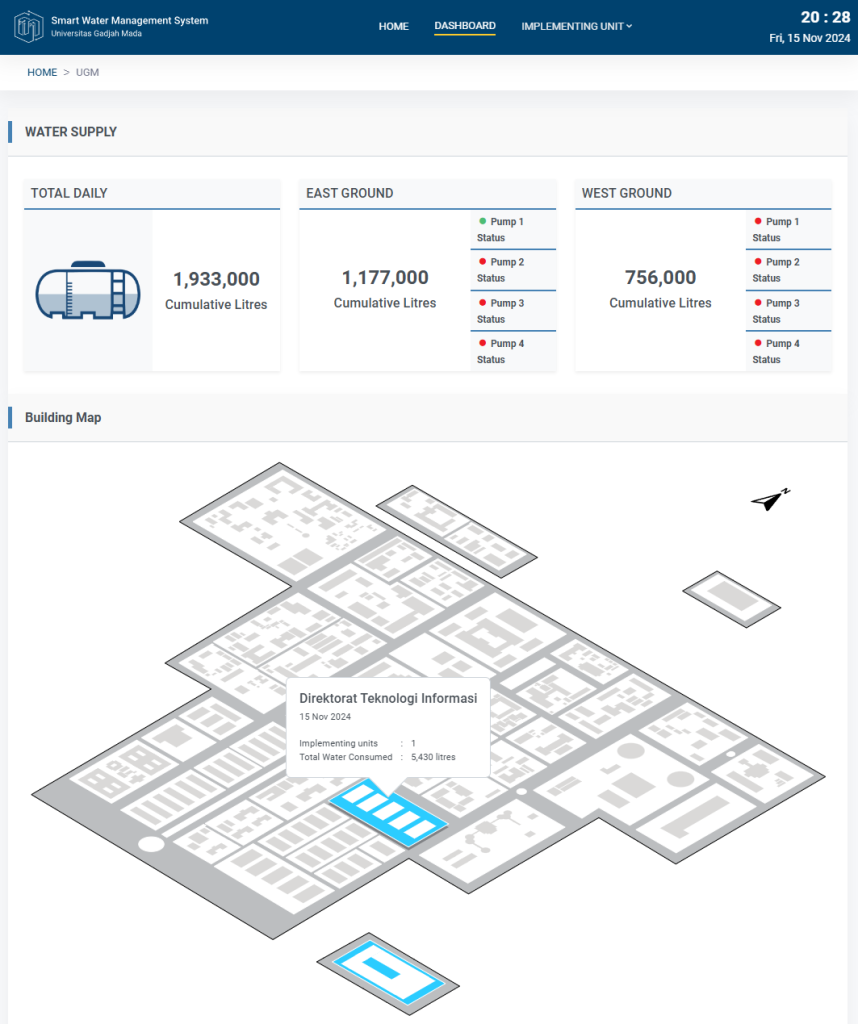
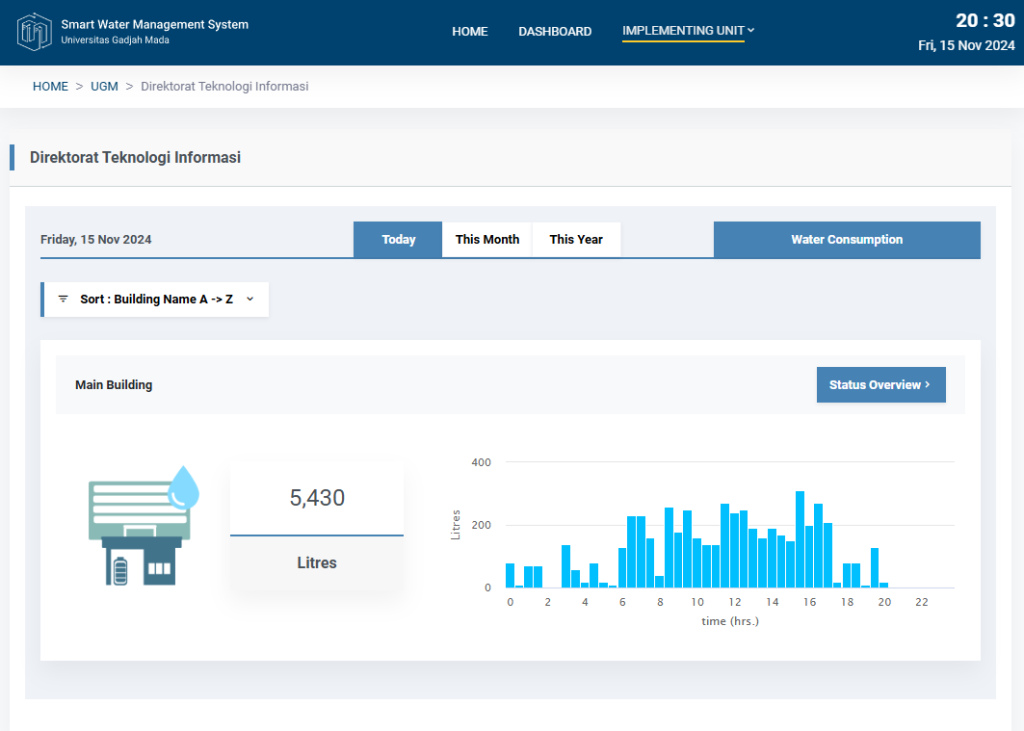
The university has been developing the smart water management system that is spreading in the public space. The building map in the website would detect the use of water consumption in each building. It shows the data per hour, per day, per month, and year, and it is accessible for anyone.
Partial measurement
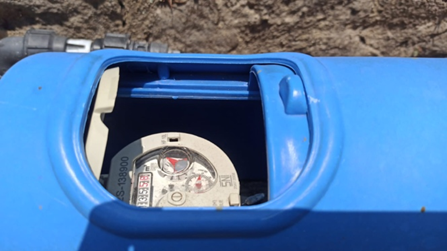
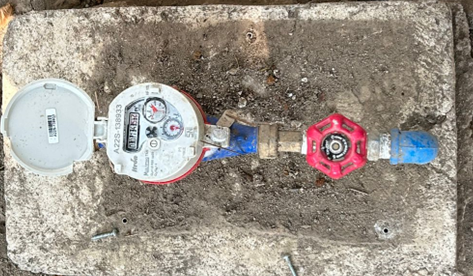
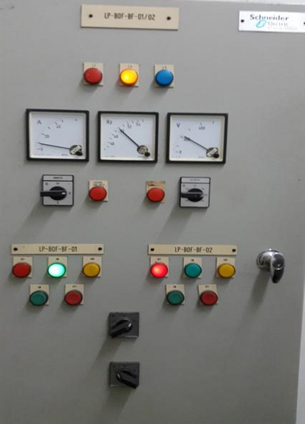
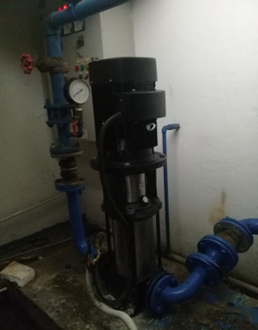
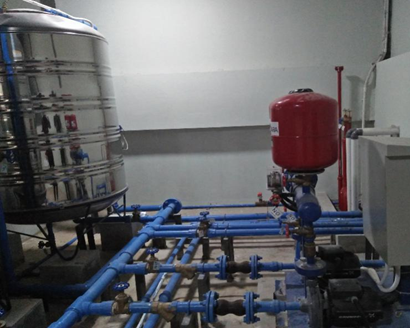
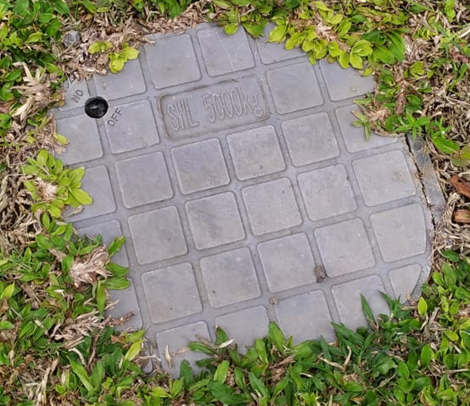
Some of our water meters are dispersed around the campus. There are in PSAP, in the Library of UGM, and a water meter in PS Pariwisata with its water meter monitor campus. The campus also has an automatic water pump for the ground, a water tank, and a standing water level (SWL), which is applied in Field Research Center UGM.
Water usage monitoring has been implemented at UGM, particularly in the Smart Green and Learning Center (SGLC) Building.
Water usage monitoring has been implemented at UGM, particularly in the Smart Green and Learning Center (SGLC) building. The Faculty of Engineering at Gadjah Mada University argues that the concept of environmentally friendly and smart buildings can create sustainable and comfortable living spaces, requiring strategic thinking from experts across the country regarding their design, operation, and maintenance. Collaboration between actors can be accessed at:https://ft.ugm.ac.id/ahli-bangunan-dunia-bahas-praktik-dan-perkembangan-gedung-hijau-dan-cerdas/
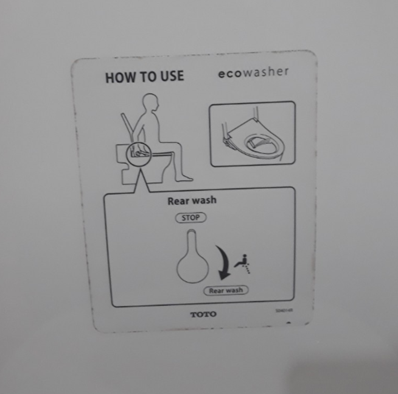
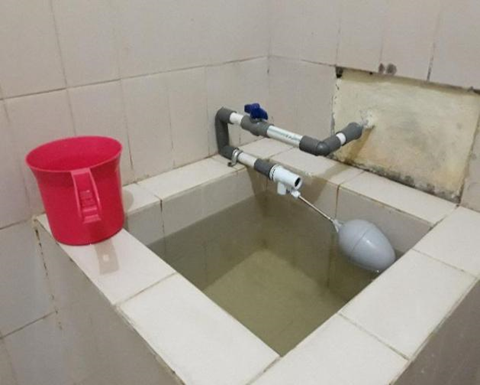
Many bathrooms on campus implement an Ecoflush system; posters within stalls instruct how to use the flush. There are also some Semi-automatic water taps on sinks. Bathroom water basins use a buoy ball tap to prevent water from exceeding the maximum level
Water-efficient appliances in UGM play a crucial role in reducing campus water consumption and promoting sustainability. The water efficient appliances can be found both outside and inside campus buildings to measure the total volume of water used in the university.
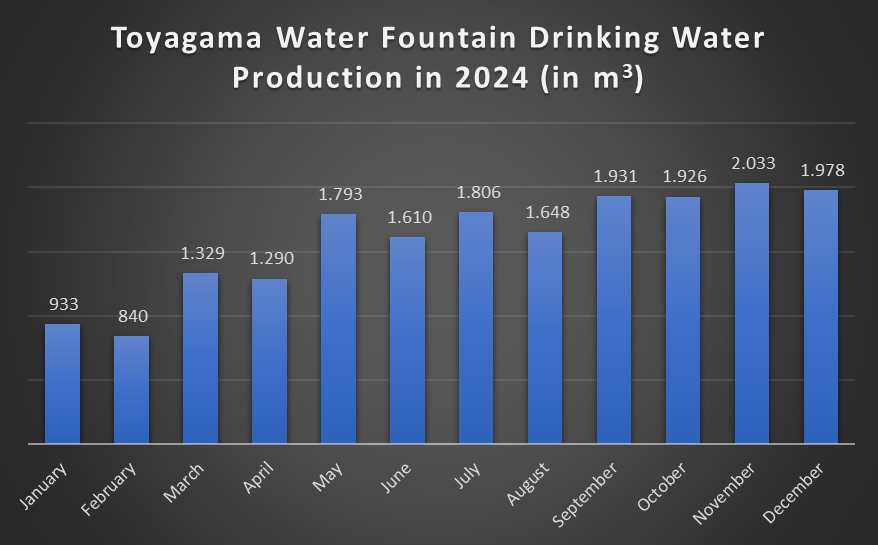
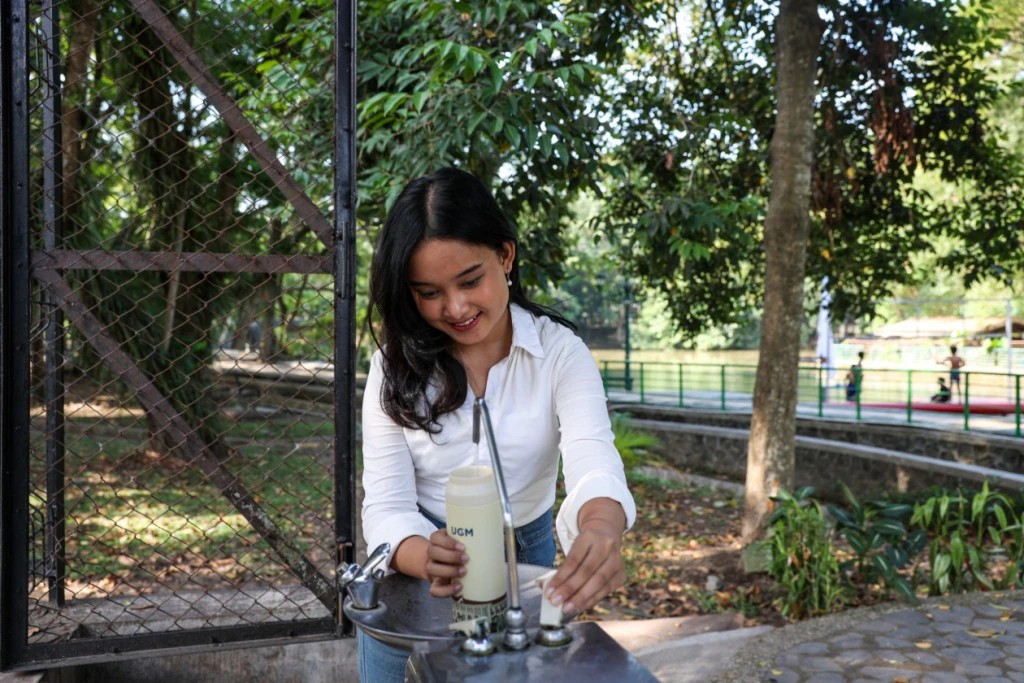
In 2024, the total consumption of treated water at UGM reached 19,117 m³. This number was obtained from the amount of drinking water produced and distributed by UGM’s drinking water system, SPAM Toyagama, which is sourced from groundwater wells: Toyagama Source. PAM Toayagama can produce up to 5000 L of clean water per day, which is equivalent to approximately 500 water bottles (standard 330 ml).