

Smoking exposes the human body to thousands of harmful chemicals, many of which are toxic and can lead to cancer, respiratory issues, and cardiovascular diseases. These health risks are also faced by non-smokers exposed to secondhand smoke. UGM’s smoke-free policy is essential to reducing the prevalence of smoking and its associated risks, and to foster a healthier campus environment for everyone. Ultimately, improved air quality means a safe and pleasant atmosphere that enhances the overall campus experience.
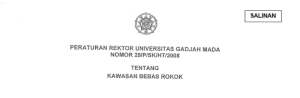
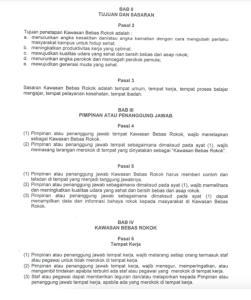
The guidelines for smoking-free areas are specified in Rector Regulation Number 29/P/SK/HT/2008:
- Article 3 of the regulation states that “smoke-free zones include public places, workplaces, educational facilities, healthcare facilities, and places of worship”.
- According to Article 6, in UGM’s workplace, heads of staff or those responsible for workplaces must prohibit everyone, including staff or employees, from smoking in the workplace.
- As for the educational facilities, Article 7 demands that those responsible for educational facilities must prohibit everyone, including students, educators, administrative staff, and other school personnel, from smoking in educational environments.
- UGM has already provided designated areas for smoking zones in Article 10.
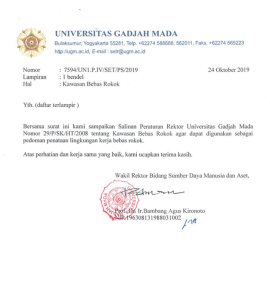
This regulation was subsequently reviewed and reinforced by Circular Letter Number 7594 of 2019, focusing on Smoke-Free Areas.
The implementation of this policy is overseen by the Health Promoting University framework, which serves as a guideline for implementing healthy campus initiatives across universities.
UGM has been part of the HPU network since 2019 and HPU demands Zero Tolerance for Drugs, Tobacco and Alcohol. At UGM, creating health campus environment that is smoke-free requires not only one type of intervention but a variety of programs, including strategies to protect against tobacco smoke by implementing and strengthening Smoke-Free Areas, advocacy networks to enforce Smoke-Free Areas, participation in the development and supervision of Smoke-Free Areas, and monitoring tobacco use and prevention efforts, such as holding campus community meetings to discuss smoking behaviour.
That is why the Center for Behavioral and Health Promotion at the Faculty of Medicine and the Gadjah Mada Medical Center provides a support program for UGM students, staff, and faculty who wish to quit smoking.Though there are many individuals who attempt to quit smoking alone, this strategy is often difficult to sustain and frequently results in relapse. Quitting smoking is easier when individuals access appropriate support systems.
References: