
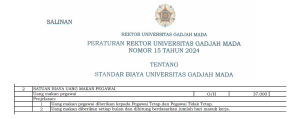
Addressing staff hunger is essential to ensuring the well-being and productivity of employees, particularly in academic settings where nutrition directly affects performance and health. At UGM, staff support is provided through specific policies which have been outlined in the University’s Policy on General Financial Standard 2024 Number 2. These regulations ensure that staff receive daily meal allowances of IDR 37,000, as well as food support worth IDR 120,000 per month for staple items such as rice. These initiatives aim to meet the basic nutritional needs of staff, enabling them to maintain their health and stay productive in their roles.
At UGM, regulatory measures supporting health and well-being are complemented by a range of practical interventions aimed at improving staff nutrition and overall wellness. One notable initiative was organized by the health cluster in the courtyard of the Faculty of Pharmacy’s Primary Health Care Center (PHCC). This collaborative activity, involving the Faculty of Dentistry and the Faculty of Medicine, Nursing, and Public Health, focused on promoting healthy lifestyles among lecturers and educational staff. The program featured group exercise sessions followed by a communal breakfast, fostering both physical well-being and social connection. Through this initiative, the Faculty of Pharmacy, FKKMK, and FKG reaffirmed their shared commitment to cultivating a culture of health awareness and preventive care within the academic community, in alignment with UGM’s broader mission to enhance the quality of life for its members. In addition, the UGM Mosque regularly provides iftar meals or takjil that are open to the public, including staff. At least 1,500 portions are distributed with a variety of menus.
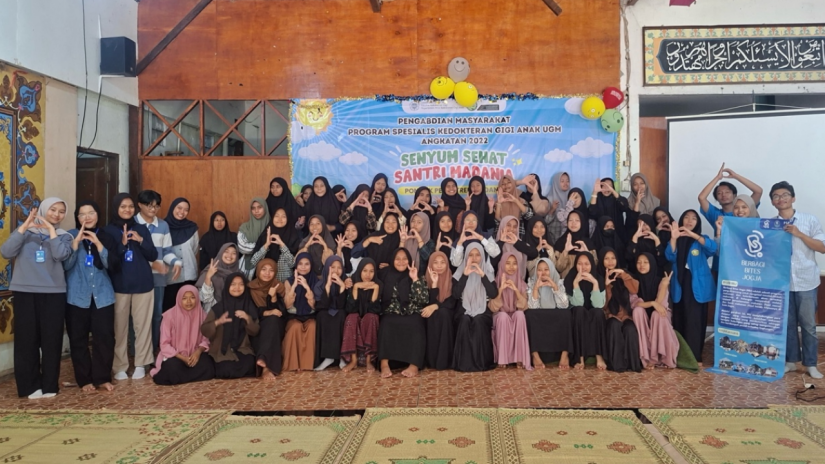
The community service team from the Faculty of Medicine, Public Health, and Nursing provided support to the Berbagi Bites Jogja (BBJ) Community in efforts to reduce food waste. BBJ operates under the Pancasila Study Center UGM, with a mission to rescue surplus food and redistribute it to the campus and local community, which includes staff and faculty.
Over the past eight months, BBJ has successfully recovered more than 1,000 kilograms of surplus food from partner hotels, cafés, and restaurants, and distributed it to over 5,000 beneficiaries, ‘food heroes’. They are called food heroes because they support the food waste reduction program. One of its flagship initiatives is the Open Kitchen program, which processes surplus food from frozen food companies and channels it through partner foundations.
References:
- University’s Policy on General Financial Standard 2024
- The Pancasila Study Center at Gadjah Mada University
- The Faculty of Medicine, Public Health, and Nursing provided support to the Berbagi Bites Jogja (BBJ) Community
- Promoting healthy lifestyles among lecturers and educational staff
- UGM Mosque regularly provides iftar meals or takjil