
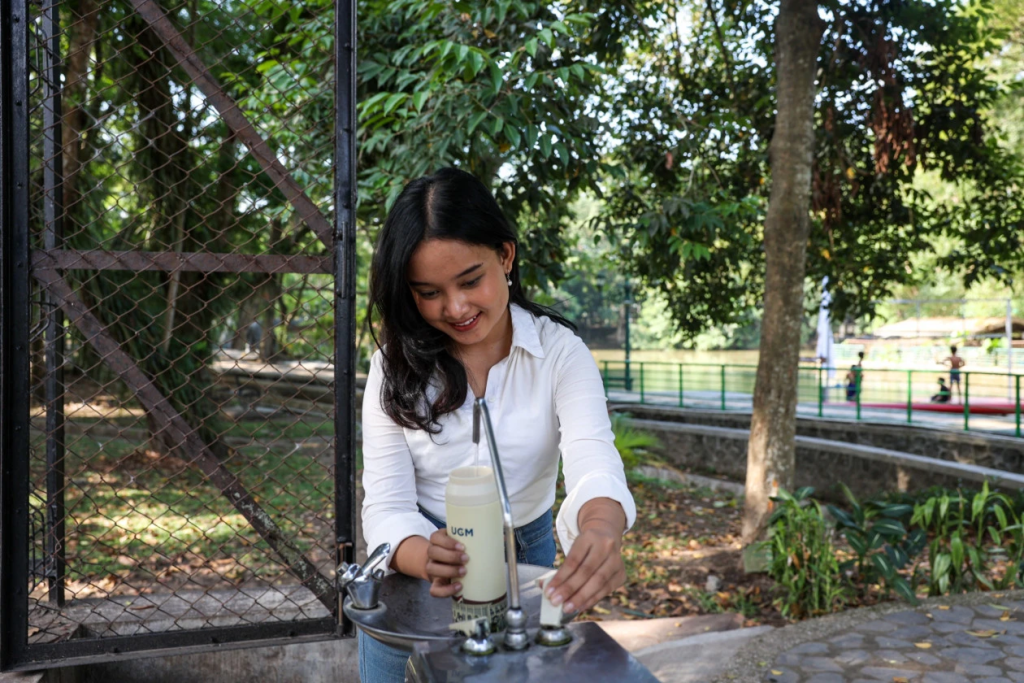
Poverty has multiple dimensions. Not only do people living in poverty experience a lack of insufficient monetary resources, they are often also deprived of basic services such as healthcare, safe drinking water, sanitation facilities, sustainable energy and mobility, housing, etc. By providing basic services on campus, our university is able to take part in improving the quality of life of our community members, particularly those who are struggling with poverty.
Access to Health Check-ups
Government employees face growing vulnerability to non-communicable diseases (NCDs), for instance, cardiovascular diseases and diabetes, most likely caused by sedentary lifestyles, unhealthy work environments, and occupational stress. NCDs arise from risk factors at work and affect worker productivity. NCDs among employees, in this case for UGM students, staff, and faculty, can be prevented by improving working conditions and through workplace health promotion programs.
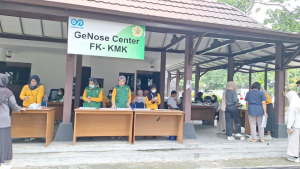
Source: Posbindu SEHATI program
The Faculty of Medicine, Public Health and Nursing’s Health Promoting University (HPU) division once again held the Posbindu SEHATI program in the Faculty’s Genose Center. Posbindu SEHATI is a routine program aimed at early detection of non-communicable
diseases (NCDs). In addition, UGM staff and faculty are also given health education to increase their awareness of healthy lifestyles. This program is also routinely held for students.
The World Health Organization (WHO) reports that 41 million people die each year from NCDs, meaning NCDs account for 74% of all deaths globally. According to data collected by the National Statistics Office of Indonesia from January 1, 2017, to 2022, the number of deaths in the country reached 8.07 million cases, with 7.03 million of them caused by NCDs.
The high risk of NCDs is why it is important for UGM to provide Posbindu SEHATI as a service access in health staff and faculty. Participants undergo a series of health check-ups at 5 different desks. These check-ups include anthropometric measurements (height, weight, waist circumference), blood pressure examination, blood sugar, cholesterol, and uric acid levels. Through Posbindu SEHATI, NCD factors can be detected prematurely, allowing participants to take early steps in preventing the disease from worsening or they can receive medical referral if needed.
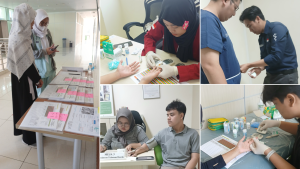
Source: 97 students received health check-ups
The Posbindu SEHATI is also available for UGM students. During one routine program, as many as 97 students received health check-ups for blood pressure, blood sugar, body mass index (BMI), and health consultation. These simple yet important examinations serve as an initial step to detect potential risks of NCDs, such as hypertension, diabetes, or obesity, which often develop without early symptoms, even in the younger population.
Students also received health education on the importance of early detection, balanced nutrition, and regular physical activity. This education is expected to instill the understanding that health is not only about treating diseases but also about preventing them early on. Adopting a healthy lifestyle at a young age provides long-term benefits, from improving study concentration and maintaining stamina to reducing the risk of chronic diseases in the future.
Access to Dental Health Check Up
The Faculty of Dentistry consistently carries out health training activities focusing on dental and oral health as part of the faculty community service program. These activities aim to increase public knowledge and awareness of the importance of maintaining oral hygiene from an early age while also providing practical skills for proper dental and oral care.
The training typically involves lecturers, students, and health professionals who work directly with local communities, both around the campus and in partner regions. The materials cover topics such as healthy lifestyle education, proper toothbrushing techniques, prevention of dental and oral diseases, and simple self-examination methods.
Psychological First Aid (PFA)
Suar Asa, a student organization at the Faculty of Cultural Sciences (FIB), held a Workshop on Psychological First Aid (PFA) and Peer Training. This activity was organized in response to the increasing mental health issues among students, as reflected by the rise in the number of student hospitalization cases at UGM—from 21 cases in 2022 to 51 cases in 2023. Through this workshop, participants were equipped with basic skills in providing Psychological First Aid (PFA), engaged in role-play exercises, and strengthened service programs such as “Teman Cerita” (Story Buddy) and “Teman Sehat dan Berbudaya” (Healthy and Cultured Buddy). This initiative aims to enhance the capacity of peer counselors and peer supporters in offering emotional assistance, while also serving as a preventive and curative effort to maintain student mental health within the FIB UGM community.
Waste Collection on Campus
Every individual generates waste. It is directly relevant to basic services.
As a campus with a population of over 72 thousand people, UGM generates a significant amount of waste each year. Effective waste collection is a core component of UGM’s waste management, serving as the foundation for maintaining a clean, healthy, and sustainable learning environment. It refers to the organized and consistent process of gathering waste from multiple campus sources—such as classrooms, laboratories, cafeterias, and dormitories—before it is safely processed or recycled. On a university campus, this service is essential not only to uphold sanitation and prevent disease but also to minimize pollution, comply with environmental regulations, and foster a culture of sustainability among students and staff. In essence, efficient waste collection is a basic service because it directly supports public health, operational safety, and environmental stewardship within the academic community.
The Faculty of Economics and Business initiated a community empowerment program to raise awareness about waste management and segregation. The program, titled Berbagi Ilmu Sinduadi Sleman Asri (BISSA), is a community service initiative based on a partner village model that aims to empower residents living along the banks of the Code River in Sinduadi Village, Sleman Regency.
Access to Free Drinking Water
Safe and readily available water is important for a person’s overall health and well-being. According to WHO data, at least 1.7 billion people worldwide still drink water from sources contaminated with faeces. Despite global progress, as of 2022, only 73% of the world’s population—around 6 billion people—had access to safely managed drinking water services.
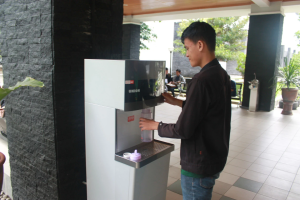
Source: Toyagama Drinking Water Supply System
The Toyagama Drinking Water Supply System (SPAM Toyagama) is a free and ready-to-drink water product sourced from the Umbul Pace Spring and produced by UGM. Toyagama provides piped drinking water accessible through water fountains and dispensers available in every faculty building and main office. It is accessible to the entire campus community. In addition, Toyagama also offers bottled drinking water in gallon containers and bottles of 330 mL, 600 mL, and 1.5 L sizes. Several students have shared testimonials stating that the Toyagama facility is highly beneficial because it is free, convenient, and guaranteed in quality.
Financial Assistance
The Dharma Wanita Persatuan (DWP) of the Faculty of Economics and Business once again provided educational assistance funds for the children of FEB UGM professional staff. The financial aid was granted to eight children of professional staff members, ranging from elementary to high school levels.
The Doctoral Program in Inter-Religious Studies at UGM, supported by the Indonesian Consortium for Religious Studies, conducted a digital literacy program for children and youth in the Baduy Luar community (Banten). The activity combined research on polarization and digital inclusion with training that encouraged participants not only to be digital media users (“followers”) but also content creators (“creators”), including documenting their own culture
through videos and photos for the purposes of educational development, cultural preservation, social connectivity, and reducing inequality.
References:
- Posbindu SEHATI program
- 97 students received health check-ups
- Health training activities focusing on dental and oral health
- Psychological First Aid (PFA) and Peer Training
- Berbagi Ilmu Sinduadi Sleman Asri (BISSA)
- Toyagama Drinking Water Supply System
- Educational assistance funds
- Digital literacy program for children and youth