
Micro, Small and Medium Enterprises (MSMEs) are the backbone of Indonesia’s economy, accounting for 99% of all business units. By the end of 2024, approximately 30.18 million MSMEs were registered in Indonesia (not yet including MSMEs in the agriculture and fisheries sectors). MSMEs play a significant role in Indonesia’s economic growth, accounting for approximately 97% of employment and contributing 57.8% to the country’s GDP. They drive value-added activities and foster inclusive growth through extensive job creation across both urban and rural areas.
Universities such as UGM play an important role in MSME empowerment. Empowering MSMEs provides a platform for entrepreneurs to grow which will drive innovation and creativity, enhancing the competitiveness of local products in the global market. Providing financial support mechanisms and capacity-building training will help push MSME performance.
Digital ecosystem
Source: MSME Business Digitalization Training
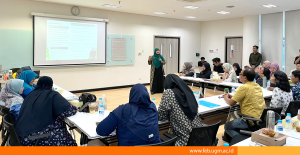
The Faculty of Economics and Business held the MSME Business Digitalization Training. 80 MSMEs from the provinces of Yogyakart and Central Java attended the training. Topics covered include product development and value proposition, cash flow management, the use of artificial intelligence for digital marketing content, social media optimization through content creation, the use of applications for financial reporting (SIDEK-ERP), and techniques and strategies for product photography. MSMEs are encouraged to adopt and integrate digital technologies into their business operations, models, or culture to improve performance, efficiency, or value creation.
One of the topics taught was product photography, which is an essential aspect of digital product marketing. By understanding the key elements of product photography, business owners can enhance the visual quality of their products and build a stronger brand presence in the market. Every product has its own unique visual characteristics, and photography should be able to highlight the product’s strengths.
Another challenge in marketing local MSME products is having to compete with producers who use digital-based marketing. The Faculty of Medicine organized training on digital marketing and the implementation of occupational health and safety (OHS) to improve the economic and health conditions of the Batik Women’s Group (KWB) Pundong II.
The Faculty of Geography organized a free training program targeting 20 MSME owners in Sidoarum Village to enhance their skills and understanding of digital branding, digital marketing, and digital literacy.
Access to Finance and Assets
Source: Low Protein Diet (LPD) Feed Technology Dissemination Program
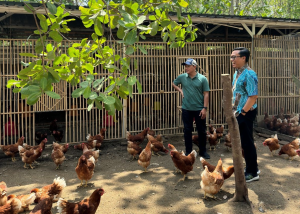
The Faculty of Animal Science implemented a Low Protein Diet (LPD) Feed Technology Dissemination Program for layer chickens in with the Jamblang Genthong Community in Karangtengah Village, Bantul. The program was funded by the UGM Directorate of Community Service (DPKM) to support the village’s layer chicken farming businesses.
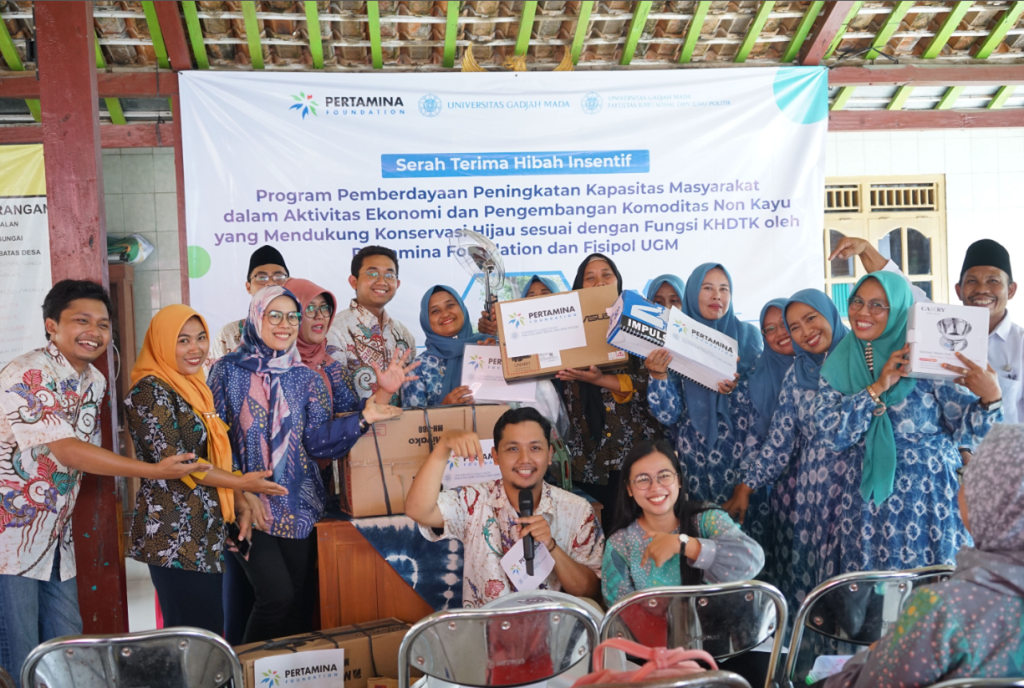
The Faculty of Social and Political Sciences (Fisipol) UGM, in collaboration with the Pertamina Foundation, distributed incentive grants to the community of Ngrawoh Village, Blora Regency to develop non-timber commodities and other local economic activities that support the green conservation of the Special Purpose Forest Area in the region. Besides financial assistance, local start-ups were given community development training targeted at three main groups—farmer-livestock groups, women’s groups, and youth groups. These groups obtained various business insights, such as solving livestock feed challenges, creating batik crafts, and empowering young people.
Capacity Building
The Faculty of Medicine, Public Health, and Nursing mentors several local MSMEs as part of their faculty community service program.
The faculty mentored local business Dewi Pinang through product development, quality assurance, and regulatory preparation (e.g., BPOM licensing). This process equipped the MSME actors with technical and managerial capacity, improving product competitiveness and market readiness. Similarly, the mentorship of Srikandi Lansia Mandiri in ecoenzyme production demonstrates social innovation for economic inclusion, equipping elderly community members with the skills to convert organic waste into eco-friendly cleaning products.
Source: Development of supplementary food products for pregnant women
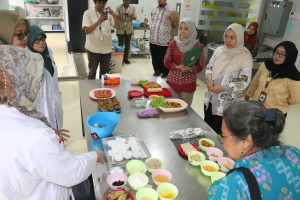
They mentored small business actors in Kapanewon Paliyan in the development of supplementary food products for pregnant women made from bananas and tempeh, two locally abundant food ingredients in the region. These products are designed to be appealing, easy to consume, and meet the nutritional standards for pregnant women. The program enhances both technical skills and entrepreneurial capacity of the business actors, as well as creates new economic opportunities for local MSMEs to produce and supply supplementary foods.
The faculty also mentored First Food, an MSME in sports nutrition, in scaling up and launching its Sport Gel product. First Food received training on product labeling, assistance in obtaining distribution permits and halal certification, and support to expand its marketing through broader online platforms and offline strategies such as reseller networks and e-commerce integration. These activities strengthened the MSME’s technical capacity, business management skills, and market readiness.
Legal Advocacy
The Faculty of Law, in collaboration with the Office of Cooperatives and Small and Medium Enterprises of the Special Region of Yogyakarta (DiskopUKM DIY), held a legal education session for MSME entrepreneurs in Yogyakarta. The event carried the theme “Legal Protection for MSME Entrepreneurs in Yogyakarta from a Civil Law Perspective as an Effort to Minimize Legal Disputes.”
References:
- MSME Business Digitalization Training
- Product photography training
- Faculty of Medicine organized training on digital marketing
- Faculty of Geography organized a free training program targeting 20 MSME owners
- Low Protein Diet (LPD) Feed Technology Dissemination Program
- Ngrawoh Village, Blora Regency
- Faculty of Medicine, Public Health, and Nursing mentors several local MSMEs
- Development of supplementary food products for pregnant women
- First Food, an MSME in sports nutrition
- Legal Protection for MSME Entrepreneurs