UGM provides public access to its campus buildings and heritage sites, supported by campus maps that show building ages, heritage locations, and access routes via main and public roads. Portal gates function as traffic and emissions control points by recording vehicle numbers, but they are not intended to restrict public access for pedestrians or visitors.
3 January
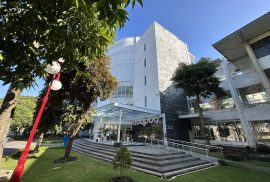
UGM provides public access to the UGM Central Library and 20 faculty/school libraries, with non-UGM visitors able to register at the information desk for access. The library provides on-site borrowing, independent study rooms, discussion spaces, creative lounges, and access to electronic theses and dissertations.
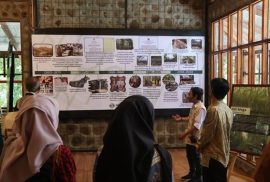
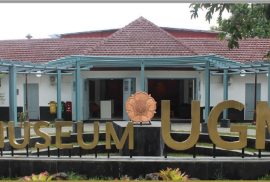
UGM offers public access to several museums and museum-like facilities, including the UGM Museum, the Biology Museum, the Wanagama Wood Museum, and the Orchid Garden at PIAT. These spaces function as educational and cultural resources, remain broadly accessible to school groups, researchers, and the general public.
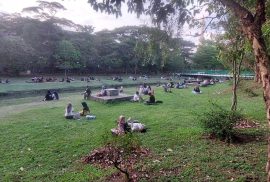
UGM provides free public access to extensive open and green spaces—around 69% of the main campus and 97% of the total land area—including faculty courtyards, arboreta, Wisdom Park, Wanagama Eco-Edu Forest, PIAT fields, and PT Pagilaran plantations. Many of these areas are used by students, staff, and local residents for recreation, exercise, cultural events, and outdoor learning.
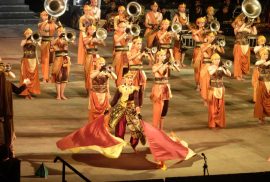
As a microcosm of Indonesia, UGM makes vibrant arts and heritage contributions, including Javanese arts units (Swagayugama, UKJGS), the Gadjah Mada Orchestra, drum bands, and faculty-based angklung ensembles. These groups regularly perform at campus events and external festivals.
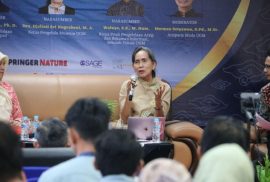
UGM delivers projects to record and preserve intangible cultural heritage at local, national, and regional levels through research, mapping, and scholarly events. Examples of projects are located at the Medang Kingdom’s cultural heritage, Kutai Kartanegara, and Bulungan Regency.
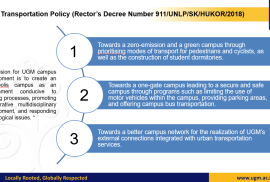
UGM has measured and set targets for more sustainable commuting in Rector’s Decree Number 911/UNLP/SK/HUKOR/2018, encouraging walking, cycling, use of campus shuttles, and other low-emission transportation options.
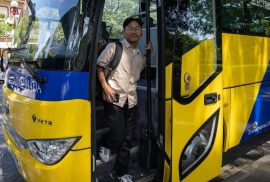
UGM promotes sustainable commuting by providing free campus bicycles, electric bus shuttles, and safe pedestrian pathways to encourage walking, cycling, and public transport use instead of private vehicles.
UGM permits remote working and telecommuting for employees through a blended learning curriculum, Work From Home arrangements, and a condensed workweek option.