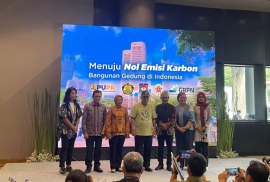
UGM supports government policy development on clean energy and energy-efficient technologies through renewable-energy city planning, national green building roadmaps, and policy recommendations on geothermal-based green hydrogen.

UGM supports government policy development on clean energy and energy-efficient technologies through renewable-energy city planning, national green building roadmaps, and policy recommendations on geothermal-based green hydrogen.
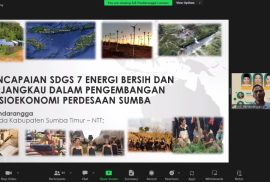
UGM supports low-carbon innovation by assisting start-ups developing green technologies, including bio-pellet fuel, BSF-based waste processing, eco-friendly fertilisers, reforestation and carbon-accounting initiatives, and low-emission construction materials, alongside programs that promote community-level renewable energy solutions.
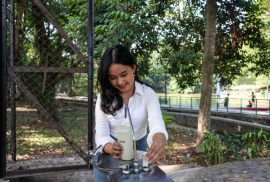
UGM supports local policies by prioritizing PDAM water use and employs smart monitoring, efficient fixtures, and automated systems to ensure effective and sustainable campus-wide water management.
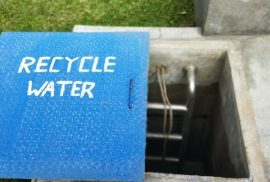
UGM supports Sleman wastewater policies through rainwater and greywater reuse, campus-wide WWTP installations, and faculty-level innovations. RSA, FKG, residences, and DTK operate compliant treatment and recycling systems, reducing pollution and freshwater demand, while community programs provide filtration solutions for affected villages.
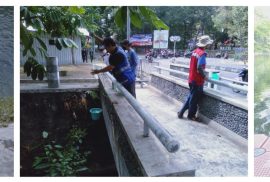
UGM prevents water pollution through STP–WTP installations, campus-wide wastewater treatment, and systematic clean water monitoring of wells, rivers, and lakes. Regular laboratory tests ensure compliance with health standards, while community programs strengthen UGM’s broader environmental and public health contribution.
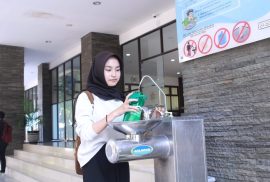
Toyagama provides free, safe drinking water across UGM through 98 water fountains and 43 dispensers equipped with UV and filtration systems. Accessible campuswide, the program supports hydration, sustainability, and plastic waste reduction by encouraging reusable bottles and faculty-level refill facilities.
UGM regulates clean water, drinking water, wastewater, and rainwater systems through Rector Decrees and green building requirements. Implementation includes water-efficient appliances, SPAM integration, rainwater harvesting, greywater recycling, and EDGE/GBCI-certified buildings achieving up to 43% water savings campuswide.
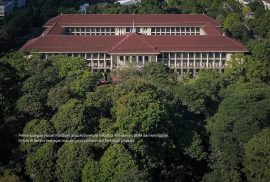
UGM implements water-efficient landscaping using drought-tolerant vegetation and diverse ecological plant areas—including biological forests, arboreta, and newly planted tree species—to enhance biodiversity, strengthen ecological functions, and support climate change mitigation.
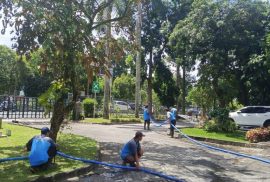
UGM enforces comprehensive water-reuse and management policies—covering storage systems, separate drinking and wastewater installations, rainwater absorption requirements, green-building water efficiency standards, and performance guidelines—to maximise sustainable campus-wide water use.