
The Indonesian government has set a target for New and Renewable Energy (EBT) to account for 23% of the national energy reserve by 2025. This policy is part of Indonesia’s commitment to reduce emissions by up to 29% by 2030.
Renewable energy policies in Indonesia are regulated under Law Number 30 Year 2007 on Energy. Specifically regarding renewable energy, the law mandates that the provision of New and Renewable Energy (EBT) must be increased by both the national and regional governments in accordance with their respective authorities.
As a hub of knowledge and research, UGM stands ready to share our expertise and actively take part in the development of policies related to clean energy and energy-efficient technologies.
Policy development at the regional level
The UGM is one of several institutions of higher education involved in the Net Zero Carbon Communities (NZCC) program. The university is currently represented by the Center for Energy Studies (PSE) in an agenda to transform the city of Makassar in South Sulawesi into a Smart City and a Low Carbon Emission City by integrating renewable energy systems. Our collaborators include several universities both in Indonesia and abroad, such as the Institut Teknologi Bandung (ITB), Pennsylvania State University, the University of Colorado – Boulder. The program is funded by the U.S. Department of State, the U.S. National Science Foundation (NSF), and the Makassar City Government.
Policy development at the national level
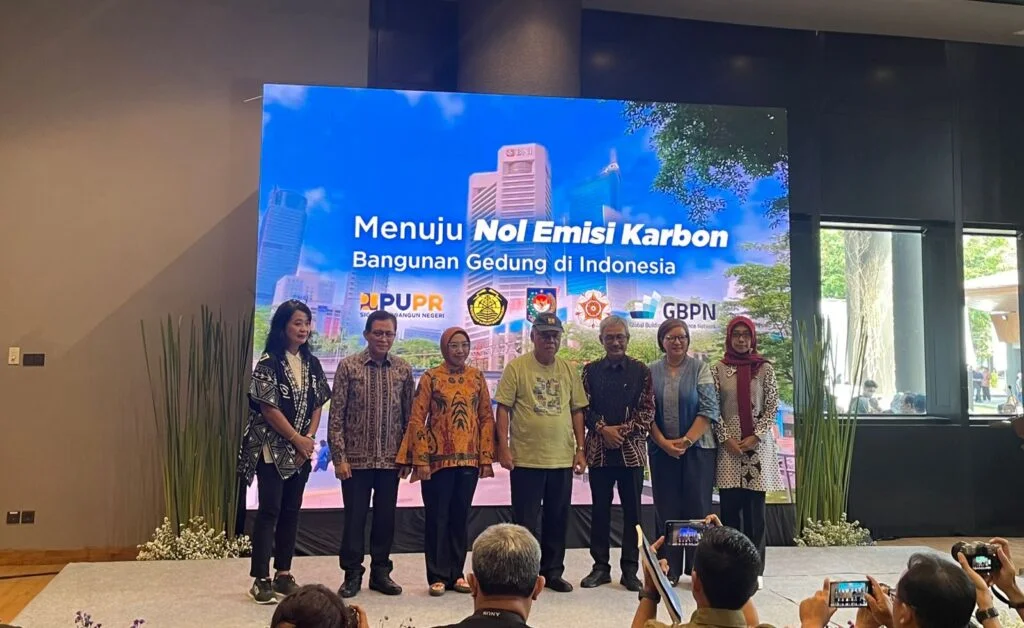
As a concrete step to accelerate the implementation of Green Buildings in Indonesia, three key ministries—the Ministry of Public Works and Housing, the Ministry of Energy and Mineral Resources, and the Ministry of Home Affairs—launched the Roadmap for Green Building Implementation in Indonesia at an event held at GIK UGM. The guidelines maintain energy efficiency as a principle of green buildings.
The Centre for Development of Smart and Green Building (CeDSGreeB) played a vital role as a key contributor in the development of this Roadmap book, through coordination with the Ministry of Public Works and Housing, the Ministry of Energy and Mineral Resources, and the Global Buildings Performance Network (GBPN)
The Center for Energy Studies (PSE) held a two-day sharing session on Green/Clean Hydrogen Certification, emphasizing the critical role of hydrogen as both an energy source and as a commodity, in addition to the need to harmonize regulations and standards between Indonesia and the international community. The session was attended by industry stakeholders, state-owned enterprises, as well as government institutions and relevant ministries.
The center has also conferred with the Ministry of Home Affairs to carry out a Dissemination Event for the Policy Framework Supporting the Implementation of a Just Energy Transition in Indonesia, which received support from the Ford Foundation. Indonesian government agencies and industry actors were present, among them the JETP Secretariat, the Ministry of Energy and Mineral Resources, the Ministry of Home Affairs, the Ministry of Environment and Forestry, the Ministry of Villages, Development of Disadvantaged Regions, and Transmigration, PT PLN (Persero), PT PLN Nusantara Power, PT PLN Energi Primer Indonesia, and Perhutani.
UGM has also prepared policy recommendations for the development of geothermal-based green hydrogen projects and their derivatives, and formulated business plans and strategies for advancing geothermal-based green hydrogen projects and related products in Indonesia’s oil and gas sector. Policy recommendations were based on a study on green hydrogen production at PT Pertamina Geothermal Energy’s Ulubelu Geothermal Power Plant conducted by the UGM Center for Energy Studies.
PT Pertamina Geothermal Energy (PGE) is a state-owned subsidiary of Pertamina Power Indonesia that operates in the exploration, exploitation, and production of geothermal energy. In terms of regulation, the study mapped Indonesia’s national regulations on hydrogen and its derivatives, analyzed existing regulations relevant to PGE’s hydrogen initiatives, assess legal intelligence risks associated with upcoming regulations and identify the necessary steps.
References:
- Transform the city of Makassar in South Sulawesi
- Roadmap for Green Building Implementation in Indonesia
- Key contributor in the development of this Roadmap
- Green/Clean Hydrogen Certification
- Dissemination Event for the Policy Framework Supporting the Implementation of a Just Energy Transition in Indonesia
- Study on green hydrogen production at PT Pertamina Geothermal Energy