
Water Conservation Program Implementation
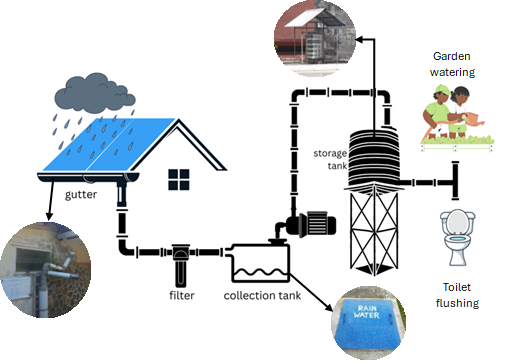
The schematic of the Rainwater Harvesting System at UGM illustrates how rainwater from building rooftops flows through gutters, undergoes filtration, and is stored in a collection tank. From there, the water is pumped to a storage tank and reused for non-potable purposes, such as watering gardens and flushing toilets.
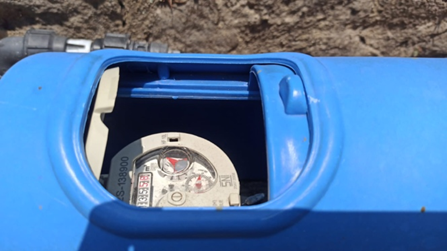
At the Dental Learning Center, the volume of collected rainwater is recorded monthly by a designated staff member. The graph shows varying consumption levels, with the highest use in March (over 70 liters) and the lowest in April (30 liters). UGM also implements Injected Rain Harvesting Systems using drills and infiltration wells, where rainwater flows directly from gutters through a closed pipe into the ground.
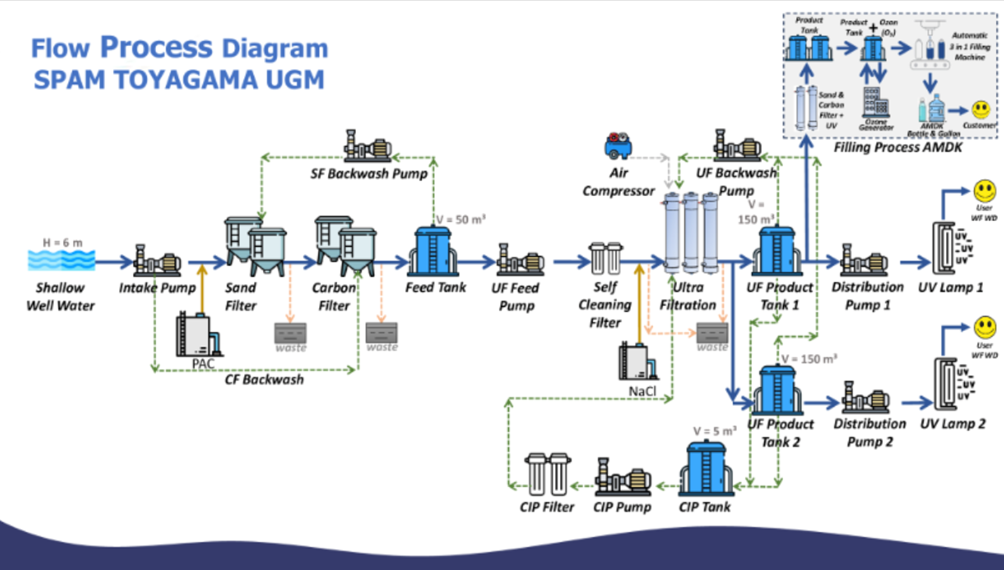
UGM operates a clean water system called SPAM Toyagama, which produces drinking water for the campus community. Water collected from Umpul Pace is processed into potable water and distributed across campus. The system undergoes routine operational and maintenance procedures to ensure water quality.
UGM’s water conservation programs focus on efficient water use and integration of alternative water sources. All campus buildings are equipped with rainwater harvesting systems, supplemented by biopores, porous pavements, and maintained rainwater sewers. Several large retention ponds are also used at the Main Campus (Wisdom Park and the Graduate School pond) and satellite campuses (Wanagama, PIAT, and PT Pagilaran). In 2024, UGM’s best practice at water conservation include:
The installation of 167 infiltration wells at GIK building.
Faculties increase awareness campaigns on conserving water.
Through these initiatives, UGM has successfully reduced its water consumption to fall within the efficient category based on the SNI 7065:2005 standard of 50 liters per day.
Water Recycling Program Implementation
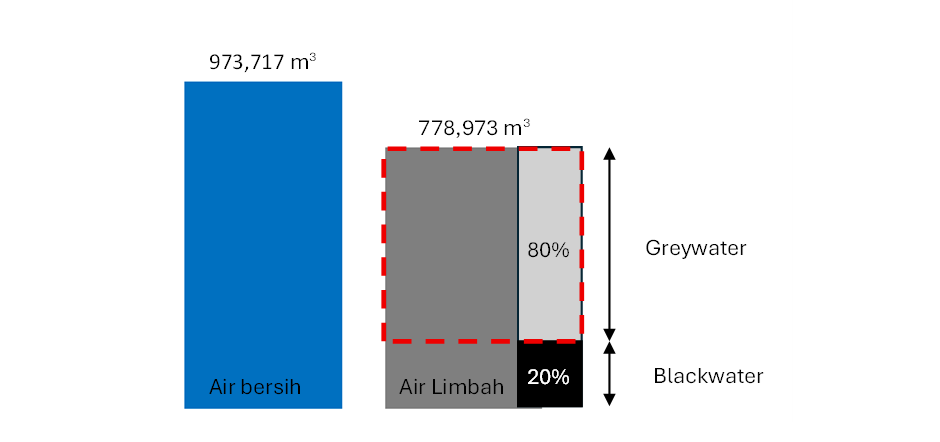
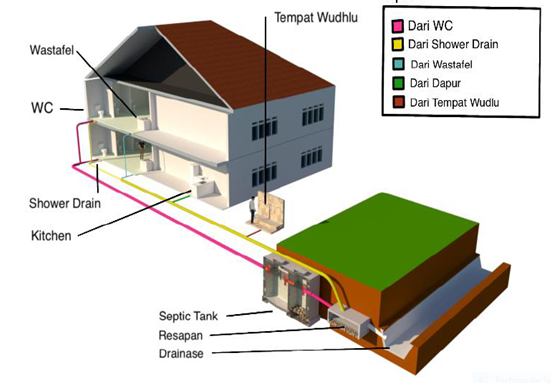
UGM collects and treats greywater for reuse. Approximately 80% of treated greywater is reused annually for watering plants. The first phase of the greywater recycling system captures water from sinks, showers, and other sources on campus, followed by a treatment process. Several faculties, including the Faculty of Engineering, have implemented this system.
Treated greywater is stored in ground collector tanks at the UGM Residence until needed. The rooftop greywater recycling system at Kinanti Residence is used for toilet flushing and garden irrigation. Other water recycling programs include treatment of wastewater at the University Mosque Pond and the reuse of recycled water from the Faculty of Animal Science canteen. UGM applies two treatment methods—upflow and downflow—depending on the system design.
In 2024, UGM implemented several water recycling programs:
Greywater recycling: A system that captures water from showers and sinks, followed by a treatment process, before being reused in garden irrigation.
Rainwater harvesting: A system collects rainwater from building rooftops and reuses it for toilet flushing or garden irrigation. UGM uses both a rainwater harvesting system and an injected rainwater harvesting system.
Other water recycling programs include: the recycling system used for the University Mosque Pond and the Faculty of Animal Science using recycled water from the canteen. UGM uses two methods of water recycling: upflow and downflow.
References: