
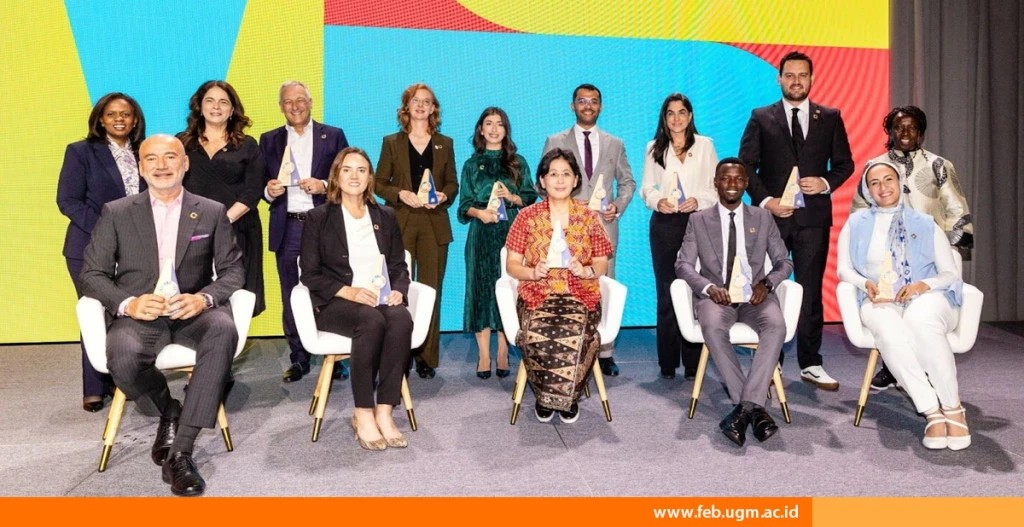
UGM actively promotes women’s empowerment through various mentoring schemes and collaborative efforts, alongside local, national, and even international partners.
Women’s mentoring schemes are led by UGM’s Task Force for the Prevention and Handling of Sexual Violence, established through Rector’s Decree Number 925/UN1.P/KPT/HUKOR/2022. From August to December each year, the Task Force conducts a series of outreach and socialisation activities that engage large groups of students—particularly women—in discussions on sexual violence prevention, consent education, and reporting mechanisms. Based on participation data from these recurring programs, female students consistently make up a substantial portion of attendees, contributing to the university’s benchmark of reaching at least 10% of its female student population annually.
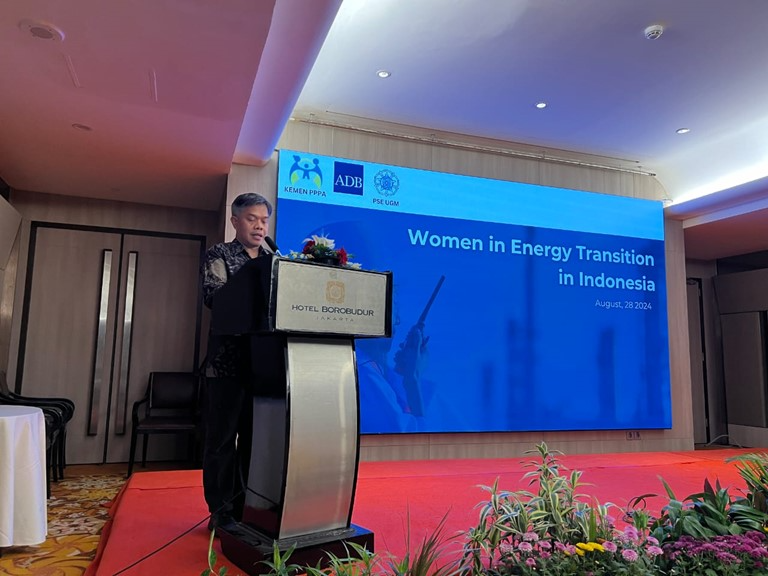
At the global level, the Center for Energy Studies (PSE UGM), supported by the Asian Development Bank and the Ministry of Women’s Empowerment and Child Protection (KPPPA), conducted the landmark study “Women in the Energy Transition in Indonesia.” This initiative highlights the critical yet often overlooked role of women in shaping inclusive and equitable energy policies. The study’s validation event, held in Jakarta, brought together senior policymakers from ministries such as KPPPA, KLHK, Bappenas, Kemendes, and Kemenkeu, alongside international organisations, research institutions, and NGOs.
At the national level, UGM cooperates with the Ministry of Women’s Empowerment and Child Protection, particularly in the launch of the Women and Children Channel on RRI PlayGo—a one-stop platform that provides information services, resources, and training relevant to women’s empowerment. UGM scholars also collaborate with experts from Universitas Indonesia, Universitas Andalas, and other institutions to advance gender justice, including public discussions on interpreting the 30% women’s representation policy in national decision-making. These collaborative initiatives further expand women students’ opportunities to participate in policy discussions, mentorship networks, and national-level empowerment programmes.
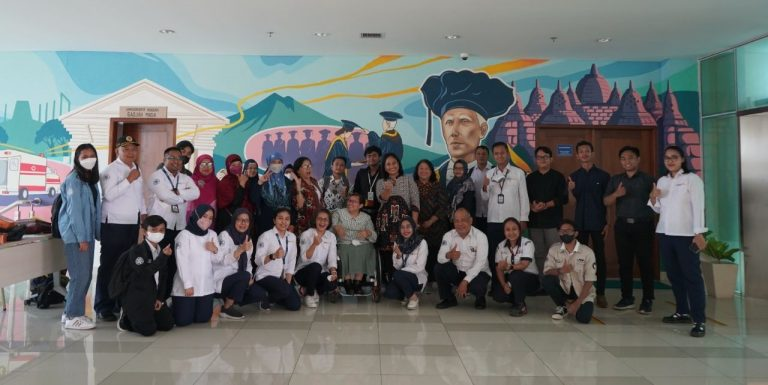
Source: “Gender and Social Justice” online course
UGM also offers a wide range of women’s mentoring schemes through online courses, workshops, webinars, and school-level training programmes. The “Gender and Social Justice” online course, accessible via MOOC UGM, introduces foundational concepts of gender equality and attracts substantial female participation.
The university’s Crisis Center, accessible through SIMASTER vNEXT mobile application (students and employees use this app for all academic academic activities), supports women by addressing crises related to mental health, sexual violence, bullying, and other urgent situations. The center is equipped with a hotline and AI-driven chatbot—aimed to strengthen long-term support and mentoring for women on campus.
In addition, UGM regularly holds empowerment-oriented webinars such as “Realising a Bullying-Free Campus,” featuring all-female speakers and focusing on cyberbullying faced by women. Complementary training sessions, such as “Anti-Toxic: Building Healthy and Meaningful Relationships,” guide students in navigating toxic behaviours and building respectful communication—an essential skill set for supporting women’s wellbeing and leadership development. UGM also provides preventive training on sexual-violence handling for high school and university students, reinforcing the university’s commitment to creating an environment that supports women’s safety, agency, and long-term academic participation.
References: