
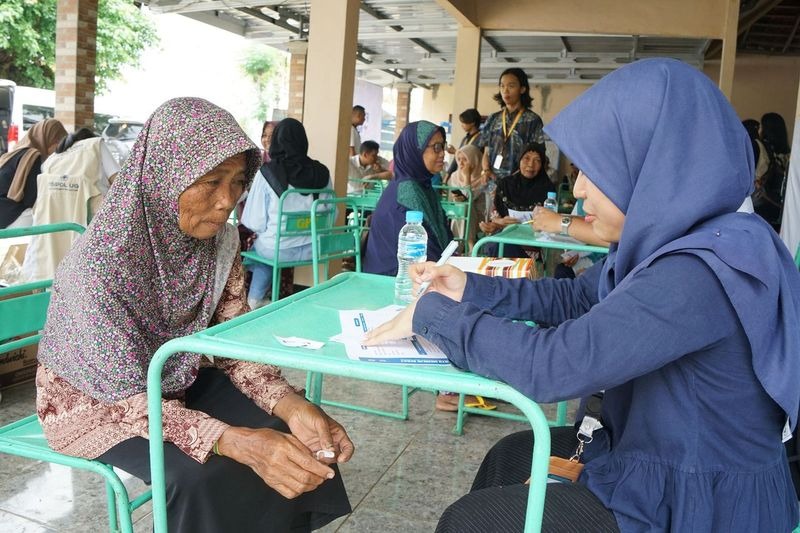
Access to health is shaped by social determinants; the environments where people are born, grow, live, work, and age. In turn, these factors are affected by various economic, social, and political policies and forces. For communities who are socioeconomically disadvantaged, health outreach programs can provide them with the necessary health-related services. Such initiatives may involve deploying community health workers who understand the locals, forming multidisciplinary teams to strengthen collaboration among institutions, or improving access to care by reaching out directly to individuals who are most at risk.
UGM’s health outreach programs have been constructed to help address the pressing health issues still found in Indonesian communities, such as stunting, maternal and neonatal health, non-communicable diseases, and dental and mental health. Our programs are delivered through dedicated community service programs by our students, faculty, and health experts.
In 2013, the Faculty of Medicine, Nursing, and Public Housing initiated the Community and Family Health Care Interprofessional Education (CFHC IPE) program, which aims to train collaboration across health professions. The program works with partner families whose health is monitored and supported jointly by the local health center (puskesmas), neighborhood units (RT/RW), and community leaders (dukuh). The students are guided by Field Supervising Lecturers (DPL) from the health centers and Faculty Supervising Lecturers (DPF) from UGM.
Non-health faculties also have their own dedicated health outreach programs, often in collaboration with health professionals and institutions. For instance, the Faculty of Engineering delivers a routine blood drive with the Sleman Regency branch of the Indonesian Red Cross.
Toddler Stunting and Mother Education
One of the government’s most crucial programs today, in which UGM is actively contributing, is toddler stunting prevention and reduction. Education for mothers and families is crucial for optimizing child growth during the first 1,000 days of life and thus preventing stunting. UGM’s programs to address toddler stunting are centered around reproductive health programs and provide contraceptive services, family planning to reduce early marriage, stunting case audits, training in communication , and health education targeted for young women.
Stunting prevention is a frequent area of interest for UGM’s student community service teams deployed across Indonesia’s 34 provinces, and each team addresses the issue from different angles. At Pokoh Posyandu in Wedomartani Village, Yogyakarta the team held a practical session on preparing healthy complementary foods for breastfeeding and a sensory play activity to 80 mothers and toddlers. Another team deployed in Madaong Village, Labuha, South Halmarera, together with the Harita Nickel corporation, hosted a cooking competition using one of Labuha’s main natural resources—tuna—as the key ingredient to encourage mothers to prepare nutrient-rich foods for their children.
The Faculty of Medicine, Public Health, and Nursing has even developed an innovation product for early stunting detection. GAMA-KiDS is a kit for measuring the length and weight of infants and children aged 0–24 months. Based on these measurements, the kit can determine the nutritional status of infants and toddlers quickly, easily, and accurately.
Innovative research and training sessions alone are not enough—stunting prevention must also be supported through strong policies. For this reason, UGM health experts are involved in developing policy frameworks that provide a legal foundation for stunting reduction. One coordination forum in Gunung Kidul Regency brought together local government stakeholders, NGOs, and community organizers to discuss the implementation of the Presidential Regulation and BKKBN guidelines, which call for a holistic, integrated, and well-coordinated approach to accelerating stunting reduction across sectors.
Health Check-Ups for Senior Citizens
Non-communicable diseases (NCDs) are caused by a combination of genetic, physiological, environmental, and behavioral factors, with hypertension and diabetes being of particular concern due to their high prevalence and their status as major risk factors for cardiovascular diseases. Early detection is especially crucial for senior citizens, who are most vulnerable to these conditions.
Recognizing this need, the Faculty of Social and Political Sciences organized a free health check-up event for the local community in Kemiri Village, Gunung Kidul Regency. The program offered screenings for blood pressure, body mass index, uric acid, blood sugar, and cholesterol, as well as doctor consultations for residents to discuss health concerns and receive recommendations. Such free health services are rare, and many elderly community members often struggle to access healthcare facilities like local health centers (puskesmas), making this outreach effort particularly valuable.
Women Reproductive Health
In Indonesia, failure of reproductive organs remains one of the main causes of female mortality rate, making access to sexual and reproductive healthcare for women especially critical. Encouraging women to engage in open dialogue and receive early education on these issues is essential. In support of this, the Pasar SepaHAM (Selalu Peduli akan HAM) 2024 event offered free cervical cancer screening services to the public. The screenings were conducted through a collaboration between the Fisipol Wellness Center and the Yogyakarta Special Region branch of the Indonesian Planned Parenthood Association (PKBI DIY).
In some cases, we provide medical supplies and essential goods directly to communities, such as women’s necessities—soap, shampoo, sanitary pads, and other daily items—donated to the residents of the Muhammadiyah Orphanage for Girls in Prambanan, Kalasan. Access to sanitary products remains limited due to high costs and gaps in knowledge about proper hygiene.
Quality Healthcare for Persons with Disabilities
Receiving quality healthcare is a right for everyone, including individuals from disadvantaged socioeconomic backgrounds. Persons with disabilities are among those who often face the greatest difficulties in accessing proper healthcare and health education, as their needs are compounded by various physical and social limitations.
Understanding these challenges, graduate students from UGM’s Faculty of Medicine, Public Health, and Nursing and the Graduate School routinely provide free health check-ups, dental examinations, and physiotherapy services for persons with disabilities at the Pinilih Disability Fitness Center (RKD) in Argorejo Village, Bantul Regency. Through this program, participants with disabilities and their families receive essential health screenings and physiotherapy support that might otherwise be difficult for them to access.
References:
- Community and Family Health Care Interprofessional Education (CFHC IPE)
- Faculty of Engineering routine blood drive
- Preparing healthy complementary foods for breastfeeding
- Prepare nutrient-rich foods for their children
- GAMA-KiDS
- Legal foundation for stunting reduction
- Free health check-up
- Pasar SepaHAM (Selalu Peduli akan HAM) 2024
- Provide medical supplies and essential goods directly to communities
- Pinilih Disability Fitness Center (RKD)