
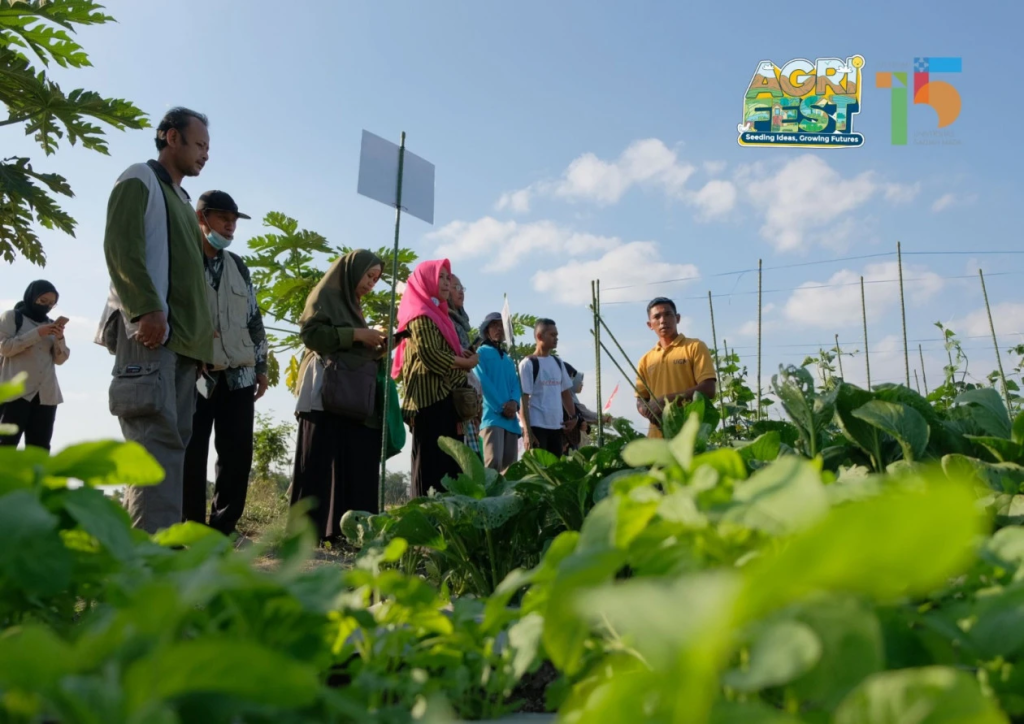
Source: UGM Siap Gelar Pameran Hasil Inovasi Teknologi Pertanian di Agrifest 2024
Policies
At UGM, sustainability in food procurement is reinforced through various institutional policies, including Rector’s Regulation Number 8 Year 2020, Rector’s Regulation Number 12 Year 2022, and the revised Rector’s Regulation Number 12 Year 2024. These regulations emphasize the importance of sourcing food and agricultural products that support environmental sustainability and the preservation of genetic diversity. Moreover, Circular Letter Number 1797 Year 2020 strengthens the implementation of these guidelines by ensuring that procurement processes align with sustainability goals and local agricultural development. By adhering to these regulations, UGM actively supports the preservation of biodiversity while promoting sustainable farming practices. This commitment not only benefits the university but also contributes to the broader goal of achieving sustainable food systems and equitable sharing of agricultural resources.
Practices
UGM is committed to protecting local and high-quality plants to keep food sources sustainable for both the campus and nearby communities. At the Agrotechnology Innovation Center (PIAT), the Genetic Bank collects and preserves plant genes from different regions in Indonesia and abroad. This research helps prevent the loss of plant diversity and supports more sustainable farming. The plants are tested at PIAT before being shared with local farmers to grow and develop further.
In 2024, PIAT promoted the concept of circular farming in its daily operations. PIAT UGM developed several interrelated agricultural business ecosystem models to create a sustainable ecosystem. PIAT recognizes that achieving food security requires cross-disciplinary collaboration and pentahelix partnerships involving academics, the business world, government, community, and media so that the nation’s goal of food security can be achieved.
PIAT also sells its fresh garden produce, especially vegetables, at Pasar Krempyeng Boge, a weekly market held at the UGM Academic Hospital every Wednesday. The market promotes PIAT’s products while supporting small local businesses and Women Farmers’ Groups. Through this collaboration, UGM shows how teamwork between researchers and the community can create real, lasting benefits for people and the environment.
References: