
Sources: Faculty of Biology Develops Cooperation in Hikapel Melon Cultivation with KAGAMA KALTIM
Sustainable food refers to food that is produced, consumed, and managed in ways that protect nature, support human health, and ensure long-term food security. According to WWF, sustainable food practices emphasize choices and habits that reduce environmental impact, support biodiversity, and promote responsible consumption.
UGM is taking concrete steps to provide its students, staff, and faculty with sustainable food options. This effort involves reviewing how food on campus is purchased, processed, and served, with a strong emphasis on sourcing ingredients locally. Local procurement is prioritized for two primary reasons: reducing carbon emissions associated with long-distance food transportation and supporting the local economy by purchasing from nearby farms and vendors.
Through partnerships with local farming communities, UGM ensures the availability of seasonal produce, which promotes fresher and more environmentally friendly food consumption. The university also serves locally raised beef produced without growth hormones and routine antibiotics, aligning with healthier and more sustainable food standards.
To strengthen these efforts, UGM has introduced several supporting initiatives, including the Canteen Guidebook, which encourages campus food providers to adopt sustainable practices, and ongoing food and agriculture research conducted at PIAT (Pusat Inovasi Agro Teknologi). These initiatives collectively reinforce UGM’s commitment to building a sustainable and responsible campus food system.
The Faculty of Economics and Business (FEB) canteen at Gadjah Mada University (UGM) offers digital menu access through QR code scanning (book menu). The digital menu includes all the available dishes, making it easy for students and visitors to browse the menu quickly, conveniently, and in an environmentally friendly manner. The variety of dishes offered includes both traditional and modern dishes, and provides options for students and visitors on a vegan diet, although not specifically categorized as vegetarian or vegan. Furthermore, all food waste in the canteen is managed as organic waste, used as maggot feed, which is then processed into fish feed within the FEB building.
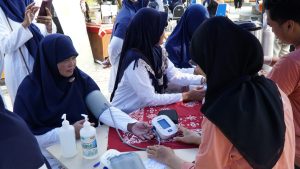
Meanwhile, the Pasar Krempyeng Boge, hosted by the UGM Academic Hospital, is a monthly food bazaar aimed at offering environmentally-friendly food choices on campus and to the local community. This program is organized through collaborations between the UGM Academic Hospital, the UGM Agrotechnology Innovation Center (PIAT), and local Micro, Small, and Medium Enterprises (MSMEs). The food and ingredients are sourced from local MSMEs and farmers to promote health and support local agriculture, and are then sold during the bazaar.
Sources: Pasar Krempyeng Boge RSA UGM
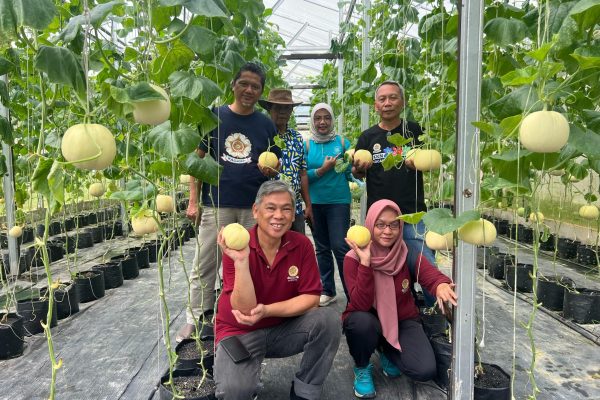
Last year, Universitas Gadjah Mada (UGM) launched several initiatives to address sustainable food choices by introducing preservative-free snack innovations, including the Hikapel melon, a nutrient-rich export-quality product developed by Prof. Dr. Budi Setiadi Daryono and his team from the Faculty of Biology. Building on this success, UGM is now promoting the commercialization of Hikapel melons through cultivation projects in East Kalimantan. Since September 2024, this initiative has involved collaboration with KAGAMA East Kalimantan and the Nusantara Independent Agricultural and Rural Training Center (P4S) to develop Hikapel melon farming in Sei Seluang Village, Samboja District, Kutai Kartanegara Regency.
Hikapel melons not only hold potential as a competitive agricultural commodity but also contribute to improving farmers’ welfare through more efficient cultivation techniques. To support this goal, ongoing training and technical assistance are provided to farmers to encourage broader and more sustainable cultivation practices.
References: