Author: L

  • Programs Designed to Provide Support for Underprivileged Students from Low or Lower-Middle-Income Countries to Study in UGM

    The allocation of scholarships to students coming from low- and lower-middle income economies is crucial in promoting SDGs 1: No Poverty that advocates for the safeguarding of the poor and the vulnerable through social protection policies. UGM, as a part of international society, supports international students from developing countries in the form of accessibility to obtain scholarships (partial or full scholarships) which covers tuition fee, living cost, research grants, medical insurance as well as other student support services, including soft skills and Indonesian language skill. 

    Some examples of the scholarships are GMIF (Gadjah Mada International Fellowship) and KNB (Kemitraan Negara Berkembang/Developing Country Partnership). UGM also provides Non-Aligned Movement (NAM) Scholarship 2023. The program is prioritised for countries in the southern hemisphere and in need of financial assistance.

    Developing Countries Partnership (KNB) Scholarship

    The Developing Countries Partnership (Kemitraan Negara Berkembang or KNB) Scholarship is a flagship initiative aimed at supporting students from low- and lower-middle-income countries. To date, it has been awarded to over 1,600 students from 97 countries. The KNB scholarship provides full funding for Master’s and Doctoral degree programs, covering tuition fees, air travel, living expenses, and health insurance. To ease students’ transition to life in Indonesia, the program also includes preparatory courses in Bahasa Indonesia, fostering smoother cultural and academic integration. The KNB scholarship is rooted in the philosophy of advancing education across developing countries, recognizing education as a powerful tool in the fight against poverty. By providing access to higher education for students from low- and lower-middle-income countries, the program not only empowers individuals but also equips them to contribute meaningfully to their communities and economies.

    Non-Aligned Movement (NAM) Scholarship

    Another program that UGM offers is the Non-Aligned Movement (NAM) Scholarship. This program provides an opportunity for students from Non-Aligned Movement member countries, which primarily consist of low- and lower-middle-income nations, to pursue a Master’s degree at UGM. Established in collaboration with the NAM Centre for South-South Technical Cooperation, the scholarship covers key academic expenses, including tuition fees, research costs, living allowances, and air tickets. Beyond academic support, the NAM grant recognizes the transformative power of education in reducing poverty and fostering development. By promoting cultural enrichment through integration and exchange, the scholarship enables students to experience a comprehensive educational journey in Indonesia. This program reflects a broader commitment to strengthening collaboration among South-South countries while addressing educational disparities.

    Scholarships for Global South Countries

    To expand access to education and promote cultural understanding, UGM offers a variety of scholarships  tailored to students from ASEAN, the Global South, and countries with strong diplomatic ties to Indonesia.

    The Gadjah Mada International Fellowship (GMIF) is another scholarship program available at UGM, designed for students from ASEAN countries and the Global South, including those from low- and lower-middle-income nations. This scholarship aims to cultivate future leaders who can address development challenges in their home countries while contributing to global progress. By fostering international collaboration, the GMIF aligns with UGM’s mission to provide innovative solutions to pressing global issues.

    Additionally, the Darmasiswa Indonesian Scholarship encourages students from countries with diplomatic ties to Indonesia to immerse themselves in Indonesia’s language, arts, and culture. Through these programs, UGM not only promotes education but also facilitates the integration of foreign students into its social and cultural environment, fostering mutual understanding and cooperation among diverse communities.

    Lastly, the Indonesian AID Scholarship (TIAS) is a grant program by the Indonesian government aimed at supporting the Sustainable Development Goals (SDGs), particularly in education. Rooted in the spirit of the Asia-Africa Summit and South-South Cooperation, the program develops the skills and expertise of future leaders from partner countries of Indonesia, empowering students with the skills and knowledge needed to drive progress in their home countries. TIAS provides scholarships for various educational levels, including associate, bachelor, professional, and master’s degrees, primarily targeting government officials or individuals recommended by their governments.

    References:

    1. https://admission.ugm.ac.id/2023/01/11/knb-scholarship-2023/
    2. https://oia.ugm.ac.id/scholarship-incoming-programs/
  • Strategies Implemented at Supporting UGM Students from the Lowest Household Income Bracket to Successfully Finish Their Academic Pursuit

    The Universitas Gadjah Mada Strategic Plan outlines the goal of admitting students from the lowest 20% of household income levels, as indicated on page 36 of the Universitas Gadjah Mada Strategic Plan 2022-2027 and page 46 of the Performance Report regarding the Affirmation and Bidikmisi Program Students. UGM provides a range of financial and academic support programs to ensure that students from low-income families can pursue their education without barriers. In 2022, UGM distributed Rp 304.5 billion in financial support to over 18 thousand students. This support is a result of cooperation with 165 partners in the form of 192 types of scholarships. This number represents a 3.08 % increase compared to the amount of financial support distributed in 2021 of Rp 295.4 billion. This feat reflects how UGM continues to ensure financial constraints do not stand in the way of students accessing education and reaching their academic potential.

    Tuition Fee Subsidies

    UGM implements a unique tuition system where the Uang Kuliah Tunggal (UKT), or single tuition fee, is set below the Biaya Kuliah Tunggal (BKT), the estimated full cost of education per semester. This policy complies with the Indonesian Ministry of Education Regulation No. 25 of 2020, which mandates that tuition fees at public universities cannot exceed the full cost of education per semester.

    UGM’s single tuition fee system is divided into eight levels, with the highest level still capped at or below the full cost of education per semester. Data from the past five years shows that over 90% of UGM students benefit from tuition subsidies, with the majority (49.5%) falling into tuition levels 3, 4, and 5. Only 9.2% of students pay the highest tuition level, reflecting that the university implements substantial financial support for the majority of its students. The university’s holistic approach ensures all students, regardless of financial background, have the necessary resources and support to pursue their studies and contribute to their communities.

    In addition to tuition subsidies, UGM provides scholarships and financial support partnerships with other government and non-government bodies. These range of financial assistance programs to support students in pursuing higher education are categorised into tuition payment support, full scholarship programs, and zakat-based community engagement assistance.

    Tuition Payment Support

    To ease the financial burden of tuition payments, UGM collaborates with Bank Syariah Indonesia (BSI) to provide the Smart Edu BSI Hassanah Card program, which allows students to pay their tuition fees in 0% interest instalments. Through the university’s Simaster platform, students can choose instalment plans of three or six months, with applications processed within two weeks to ensure accessibility and convenience.

    Scholarship Programs

    For students requiring full scholarships, UGM offers several programs funded by the government, corporate partners, and employment-linked initiatives. Government-funded scholarships include the Kartu Indonesia Pintar (KIP-Kuliah), which covers full tuition and living expenses for low-income students, and the Afirmasi Pendidikan Tinggi (ADik) program, which supports students from 3T regions, including Papua and children of migrant workers. In 2023, UGM provided scholarships to 6,715 students through KIP-Kuliah and 149 students through ADik.

    To address reduced government quotas, UGM also engages alumni networks to secure additional funding, benefiting over 18.5% of its student population. Corporate-funded scholarships, supported by organisations like Bank Indonesia, PT Indomegah Sehat, and OCBC NISP Syariah, focus on high-achieving students with financial need. Additionally, employment-linked scholarships such as the Beasiswa Ikatan Kerja, in collaboration with PT Musi Hutan Persada, provide full tuition coverage for the final semesters, monthly living allowances, and guaranteed employment upon graduation.

    Zakat-Based and Community Engagement Assistance

    UGM also integrates community engagement with financial assistance through its zakat-based programs. The PTH Scholarship and Volunteers Batch 30 initiative provides living allowances in three scholarship tiers and transportation stipends while involving students in zakat distribution activities. This approach not only supports students financially but also promotes social responsibility and community involvement, reflecting UGM’s commitment to fostering well-rounded and socially conscious graduates. Together, these programs ensure that financial challenges do not impede students’ academic and personal growth at UGM.

    Sources:
    https://ft.ugm.ac.id/pembayaran-ukt-dengan-cicilan-0-3-bulan-dan-6-bulan-menggunakan-kartu-kredit-bsi-hasanah-card/
    https://www.jawapos.com/pendidikan/013286924/ugm-terima-6715-mahasiswa-kip-kuliah-dan-adik-khusus-warga-papua-hingga-anak-pmi
    https://ugm.ac.id/id/berita/23542-enam-program-beasiswa-bagi-mahasiswa-ugm-dibuka-bulan-maret-2023/
    https://s1.fkt.ugm.ac.id/beasiswa-ikatan-kerja-pt-musi-hutan-persada-2023/
    https://rumahzis.ugm.ac.id/informasi/pembukaan-beasiswa-pth-dan-relawan-angkatan-30/6229/
    https://ugm.ac.id/id/berita/23378-18-ribu-mahasiswa-ugm-dapat-dana-beasiswa-pendidikan/
    https://ugm.ac.id/id/berita/23380-ugm-tetap-berkomitmen-memberikan-beasiswa-kepada-mahasiswa/ 

  • UGM Initiatives Aimed at Enrolling Students Belonging to the Most Economically Challenged Households Nationwide

    The University Strategic Plan outlines the goal of admitting students from the lowest 20% of household income levels, as indicated on page 36 of the Universitas Gadjah Mada Strategic Plan 2022-2027  and page 46 of the Performance Report regarding the Affirmation and Bidikmisi Program Students. In 2023, Universitas Gadjah Mada (UGM) welcomed 14.209 students through this initiative, highlighting its dedication to inclusivity, which aims to implement social protection systems to significantly cover the poor and vulnerable by 2030.

    Performance indicators in UGM’s strategic plan target 20% of students receiving Afirmasi and Bidik Misi programs

    To broaden access to higher education, UGM has introduced several admission pathways specifically designed for students from economically disadvantaged backgrounds. One notable pathway is the Penelusuran Bibit Unggul (PBU) program, which features the PBUTM (Penelusuran Bibit Unggul Tidak Mampu), aimed at assisting low-income students. Open for applications from March 28 to April 12, 2023, the PBU program includes various categories, such as PBUTM and PBU 3T, which target students from underdeveloped regions. These pathways are crucial for recognising diverse talents beyond traditional academic performance, thus fostering an inclusive educational atmosphere.

    The PBUTM initiative is particularly focused on aiding academically talented students facing financial difficulties. By ensuring that economic barriers do not hinder educational opportunities, UGM enables deserving candidates to follow their academic dreams. Applicants must meet specific criteria, including maintaining academic excellence and adhering to family income limits, along with presenting a valid Kartu Indonesia Pintar-Kuliah (KIP-Kuliah) and relevant documentation to confirm financial need.

    UGM’s dedication to inclusivity is further demonstrated through the PBU 3T pathway, which aims to support students from regions facing socio-economic hardships. This initiative not only promotes educational accessibility but also aligns with national development objectives by nurturing young talents from remote areas. The PBU 3T program places a strong emphasis on leadership skills and academic potential, requiring candidates to meet high school accreditation standards and obtain nominations from their principals. Through partnerships with local governments and organisations, UGM seeks to identify and assist potential students from these communities.

    To give a chance for students from the 3T regions to register at UGM, UGM held their UM UGM Computer Based Test in 7 cities throughout Indonesia. The cities (Jakarta, Medan, Pekanbaru, Balikpapan, Kupang, Yogyakarta, and Makassar) are located in Sumatera, Jawa, and Sulawesi islands, and were selected to approach students who wish to study at UGM without needing to travel to Yogyakarta.

    Additionally, UGM’s alumni association, KAGAMA, plays a pivotal role in collaborating with local authorities to ensure that capable students from 3T regions are acknowledged and supported. This cooperative effort underscores the significance of regional partnerships in advancing equitable education access. UGM’s strategies to admit students from the lowest financial quintile reflect a strong commitment to social responsibility and educational equity. By implementing programs such as PBUTM and PBU 3T, the university is making substantial progress in ensuring that all deserving students, regardless of their financial backgrounds, can achieve their academic aspirations and positively impact society.

    This success can be seen in the Faculty of Medicine, Public Health, and Nursing UGM (FKKMK) which experienced an increase of 8% in students from the affirmative programs this year, making 37% of the total student body at FKKMK UGM (FKKMK UGM students from 3T has increased). This number exceeds the minimum percentage of the required 20% from low-income and 3T regions as stated in Ministry of Education, Research, and Technology Regulation Number 48/2022 verse 19.

  • UGM Best Practices to Support Students from Low-Income Families to Complete University

    UGM has implemented various programs to help students from low-income families, proving its commitment to equity and inclusiveness in education. KIP Kuliah is the most notable scheme aimed at providing critical financial assistance required for tuition and other crucial resources. This initiative has recently been promoted by the university, as it has extended the application window for the year 2023 so that more people can apply, thus upholding the principle of education for all.

    Kartu Indonesia Pintar (KIP) Kuliah

    Apart from financial assistance, UGM offers a number of supportive measures, such as a laptop loan program for students who cannot afford a laptop of their own. This initiative has been successful and positively appreciated, as it enables the students to immerse themselves fully in their studies. In addition, Kafegama, which is an alumni association, has also contributed by supplying those in need with laptops, which has improved the learning process of the students. Understanding the importance of academic success, UGM provides students with free breakfast meals during examinations to minimise stress and encourage healthy eating.

    Financial assistance in the form of scholarships to students has also been implemented within the institution. In particular, these funds are expected to boost students’ morale and reduce pressures associated with the tuition fee. Moreover, Rumah ZIS UGM (Rumah Zakat, Infaq, dan Shodaqoh) extends crucial support to students from low-income families by distributing zakat funds and basic necessities. This is evidence of UGM’s commitment to providing equal access to educational resources.

    The student laptop lending program by Ditmawa UGM aims to support students in need by providing them with laptops for academic purposes.

    In recognition of the difficulties experienced by students, UGM has created legal consultation services in the form of a Research Center. This initiative helps to educate students about their rights and the relevant legal services available to them to help tackle any legal issues that may be encountered during their education. By creating a well-rounded support structure that also includes other areas such as financial support and educational services, as well as legal aid, UGM reinforces its position as a student-oriented institution which seeks the welfare of its students.

    These initiatives show that UGM has a clear and effective structure for mobilising more support for low-income students, as opposed to the UN’s target of building effective social protection systems. As UGM meets the diverse demands of its student population, it improves the reach of education and plays a role in fostering a fairer society. It also shows in its continuous efforts that the university understands the challenges brought by poverty to the students and that it has a purpose of providing relevant assistance for the students to succeed in higher education.

    References:

    1. KIP Kuliah Ditmawa
    2. KIP Kuliah Recipients Class of 2023
    3. Registration for KIP Kuliah UGM 2023 New Student Extended Until August 30
    4. How to Register for KIP Kuliah for UGM Students Class of 2023
    5. Laptop Loan Service for Students
    6. Various Stories of New UGM Students Who Received 0 Rupiah UKT and Laptop Assistance
    7. Kafegama’s Contribution to FEB UGM: Laptop Assistance to FEB UGM Students
    8. UGM Scholarship Class of 2023
    9. UGM Provides Free Breakfast for Students During Semester Exams
    10. Rumah ZIS UGM Scholarship
    11. Legal Consultation and Assistance Center for Students

    University-free support for low-income families is provided through various programs listed in table below (scholarship list January – December 2023).

    Scholarship for Low-Income Families

    NoTitle of Student Support ProgramType of Student SupportFree/ SubsidizedUnit in ChargeDescription
    1Bidikmisi, KIP Kuliah, and Afirmasi Dikti
    https://ditmawa.ugm.ac.id/2023/01/heregistrasi-semester-genap-2022-2023-mahasiswa-penerima-bidikmisi-kip-kuliah-dan-afirmasi-dikti/
    Tuition Fee AssistanceFree and Subsidized available based on student financial statusDirektorat KemahasiswaanRe-registration of Bidikmisi, KIP Kuliah, and Dikti Affirmation recipient students. For students whose assistance period has expired, the amount of UKT follows the policies of each Faculty.
    2OCBC NISP Syariah Education Fund Assistance Scholarship
    https://ditmawa.ugm.ac.id/2023/01/pembukaan-pendaftaran-beasiswa-bantuan-dana-pendidikan-ocbc-nisp-syariah-tahun-2023/
    Financial Aid, Internship, Career OpportunitiesSubsidized (IDR 5,000,000.00/student/semester)OCBC NISP SyariahThe scholarship program is designed to support Indonesian students in need of financial assistance during their university studies.
    3PT Indo Megah Sehat Scholarship
    https://ditmawa.ugm.ac.id/2023/01/pembukaan-pendaftaran-beasiswa-pt-indo-megah-sehat-tahun-2023/
    Financial Aid, Internship, Career OpportunitiesSubsidized (IDR 2,500,000.00 per student)PT Indo Megah SehatScholarship program aims to support talented yet financially disadvantaged students at UGM. The program focus on students from specific fields like law, dentistry, accounting, and more. In addition to financial support, the program offers internship opportunities and potential career paths within PT Indo Megah Sehat.
    4Van Deventer-Maas Indonesia Scholarship
    https://ditmawa.ugm.ac.id/2023/02/pembukaan-pendaftaran-van-deventer-maas-indonesia-scholarship-2023-2024/
    Financial Aid, Capacity BuildingSubsidized (IDR 750,000.00/month)Van Deventer-Maas IndonesiaThe Van Deventer-Maas Indonesia Scholarship program provides financial support and capacity building opportunities for UGM students. The program offers a monthly allowance of Rp 750.000,00 for up to eight semesters, as well as opportunities for exam bonuses, TOEFL bonuses, and free capacity building programs. To be eligible, students must be undergraduate students (S1/D4) from the 2020, 2021, and 2022 cohorts, have a minimum GPA of 3.00, be under 27 years old, not be receiving any other scholarships, and come from a financially disadvantaged background. The application period is from February 10th to March 10th, 2023, through ers.vdms-scholarship.org and Simaster.
    5Dato’ Low Tuck Kwong Scholarship Odd and Even Semester 2022/2023 (Academic Achievement Category – Economically Disadvantaged and Final Project Category)
    https://ditmawa.ugm.ac.id/2023/03/pembukaan-pendaftaran-beasiswa-dato-low-tuck-kwong-semester-gasal-dan-genap-2022-2023-kategori-prestasi-akademik-ekonomi-kurang-mampu-dan-kategori-tugas-akhir/
    Financial AidSubsidized (IDR 4,200,000.00 – 5,000,000.00/student/semester)Dato’ Low Tuck KwongThe Beasiswa Dato’ Low Tuck Kwong program offers financial aid for students who demonstrate academic achievement and come from economically disadvantaged backgrounds. It covers both odd and even semesters of the 2022-2023 academic year.
    6Adaro Foundation Scholarship 2023-2024
    https://ditmawa.ugm.ac.id/2023/04/penawaran-beasiswa-adaro-foundation-2023-2024/
    Financial Aid, Leadership DevelopmentSubsidized (IDR 800,000.00/student/semester)Adaro FoundationThe Beasiswa Adaro Foundation program offers financial aid and opportunities for leadership development to UGM students for the academic year 2023-2024.
    7UGM Scholarship Class of 2022 Even Semester Academic Year 2022/2023 and Odd Semester Academic Year 2023/2024
    https://ditmawa.ugm.ac.id/2023/04/beasiswa-ugm-angkatan-2022-semester-genap-ta-2022-2023-dan-semester-gasal-ta-2023-2024/
    Financial Aid, Academic AssistanceSubsidized (IDR 3,000,000.00/student/semester)Universitas Gadjah Mada (UGM)The Beasiswa UGM program supports students from the 2022 cohort for both the even semester of 2022-2023 and the odd semester of 2023-2024 with financial aid and academic assistance.
    8Marga Pembangunan Jaya Foundation Scholarship for the 2023/2024 Academic Year
    https://ditmawa.ugm.ac.id/2023/06/beasiswa-yayasan-marga-pembangunan-jaya-tahun-akademik-2023-2024/
    Financial Aid, Development ProgramsSubsidized (IDR 6,000,000.00/student/semester)Marga Pembangunan Jaya FoundationThe Marga Pembangunan Jaya Foundation Scholarship program offers subsidized financial aid and development programs for the academic year 2023-2024.
    9Jardine UGM Scholarship 2023
    https://ditmawa.ugm.ac.id/2023/07/informasi-pembukaan-pendaftaran-beasiswa-jardine-ugm-scholarship-tahun-2023/
    Financial Aid, Leadership Development, Community EngagementSubsidizedJardine FoundationThe Jardine UGM Scholarship program aims to support outstanding and potential students at UGM who are committed to social progress. It provides financial aid for tuition and living expenses, with a focus on leadership development and community involvement.
    10Dato’ Low Tuck Kwong Scholarship Odd and Even Semester 2023/2024 (Academic Achievement Category – Economically Disadvantaged)
    https://ditmawa.ugm.ac.id/2023/08/penawaran-beasiswa-dato-low-tuck-kwong-semester-gasal-dan-genap-2023-2024-kategori-prestasi-akademik-ekonomi-kurang-mampu/
    Financial AidSubsidized (IDR 4,200,000.00/student/semester)Dato’ Low Tuck KwongThe Beasiswa Dato’ Low Tuck Kwong program offers financial aid for students who demonstrate academic achievement and come from economically disadvantaged backgrounds.
    11Erlangga Scholarship
    https://ditmawa.ugm.ac.id/2023/08/penawaran-beasiswa-erlangga/
    Financial Aid, InternshipSubsidized (IDR 7,500,000.00/student/semester)Penerbit ErlanggaThe Beasiswa Erlangga program provides financial aid for students at UGM and offers internship opportunities at Penerbit Erlangga.
    12“Bayan Peduli” Education Scholarship Program 2023
    https://ditmawa.ugm.ac.id/2023/08/penawaran-beasiswa-pendidikan-bayan-peduli-program-2023/
    Full Scholarship (Financial Aid, Living Expenses, Exam/Research/Thesis Costs, Graduation Costs, Transportation/Accommodation, Books)FreeBayan PeduliThe Beasiswa Pendidikan “Bayan Peduli” program offers a full scholarship that covers tuition, living expenses, exam/research/thesis costs, graduation costs, transportation/accommodation, and books for students at UGM.
    13BSI Scholarship Inspiration Program Starting in 2023
    https://ditmawa.ugm.ac.id/2023/09/bsi-scholarship-inspirasi-program-mulai-tahun-2023/
    Financial Aid, Internship, Leadership Development, TrainingSubsidized (IDR 3,000,000.00/student/semester)Bank Syariah Indonesia (BSI)The BSI Scholarship Inspirasi program provides financial aid, internship opportunities in the Islamic economy sector, leadership development, and training in Islamic finance.
    14KIP Kuliah Pengganti
    https://ditmawa.ugm.ac.id/2023/11/kip-kuliah-pengganti/
    Financial AidSubsidizedKementerian Pendidikan, Kebudayaan, Riset, dan Teknologi (Kemendikbudristek)The KIP Kuliah Pengganti program provides financial aid for students who meet specific criteria and are not eligible for the regular KIP Kuliah program. It covers tuition fees (UKT) and living expenses.
    15Education Fee Assistance (UKT)
    https://ditmawa.ugm.ac.id/2023/11/bantuan-biaya-pendidikan-ukt/
    Financial AidSubsidized (IDR 2,400,000.00/student/semester)Universitas Gadjah Mada (UGM)Education Fee Assistance (UKT) program provides financial assistance to cover tuition fees (UKT) for students who are facing financial difficulties.
    16PT Bank KEB Hana Indonesia Tbk Scholarship
    https://ditmawa.ugm.ac.id/2023/11/penawaran-beasiswa-pt-bank-keb-hana-indonesia-tbk/
    Financial AidSubsidized (IDR 10,000,000.00)PT Bank KEB Hana Indonesia TbkThe PT Bank KEB Hana Indonesia Tbk Scholarship program offers financial support of Rp 10.000.000,00 (ten million rupiah) to students in IT or IT-related fields. The scholarship is awarded once and lasts until July 2024.
    17Gadjah Mada Peduli Scholarship Odd Semester 2023/2024
    https://ditmawa.ugm.ac.id/2023/11/beasiwa-gadjah-mada-peduli-semester-gasal-2023-2024/
    Financial AidSubsidized (up to IDR 4,000,000.00 per student per semester)Universitas Gadjah Mada (UGM)The Gadjah Mada Peduli scholarship program provides financial assistance to students who are facing financial difficulties. The scholarship is awarded for the odd semester of the 2023/2024 academic year.
  • UGM Delivers Financial Resources to the Local Community to Encourage the Development of Sustainable MSMEs

    To stimulate economic development and support marginalised communities, UGM has included financial aid to local startups that focus on green business practices as part of its programs. This effort aligns with the United Nations’ Target 1.4, which advocates for equitable access to economic resources, basic services, and financial assistance for all individuals, particularly those who are disadvantaged. UGM’s strategic framework integrates funding options with a comprehensive support system designed to help emerging entrepreneurs flourish.

    UGM Startup Grant Program
    Source: Innovative Academy – Startup Grant

    One notable initiative is the Startup Grant program, launched by the Directorate of Business Development and Incubation in partnership with the Asian Development Bank (ADB). This program reflects UGM’s commitment to bolstering local entrepreneurial efforts. The PRIME STeP initiative provides startup founders with a wide array of resources, including mentorship, shared workspaces, global networking opportunities, and multi-year financial backing. Additionally, participants have access to UGM’s various resources, such as labs and research facilities, to support their business growth. The primary objectives of this program include speeding up market and user research through advanced tools, encouraging deep technology innovation in line with Industry 4.0, and creating partnerships with UGM’s business units, industry players, and government bodies to aid startups in their growth.

    To be eligible for the Startup Grant, applicants must be students, faculty, staff, alumni of UGM, or community members with diverse backgrounds. Each startup team must have at least two members, including at least one woman, to promote gender diversity in entrepreneurship. The program seeks out innovative, technology-driven products that showcase clear business value and fit within the market. Participants must submit a pitch deck containing vital information about their startup, including a budget, with funding requests limited to 250 million rupiah. The program uses an activity-based assessment model, evaluating success based on activities that comply with UGM’s guidelines.

    Moreover, the Innovative Academy has introduced its Startup Program & Talent Batch #11 Incubation, inviting entrepreneurs to join a vibrant ecosystem aimed at cultivating innovative startups. This initiative provides participants with the necessary resources and support to enhance their business ideas. Importantly, the top three startups from this cohort will be nominated for multi-year funding under the PRIMESTeP initiative in 2024.

    Registration for the Startup Program was accessible for an entire 24-hour day during the application period, with the incubation program kicking off in July 2023. This initiative also shows UGM’s commitment to developing talent and innovation in the entrepreneurial ecosystem, where everyone has the right to access the necessary resources and support to pursue entrepreneurship. UGM enhances the community’s economic resilience and helps realise sustainable development goals by investing in local startups and advocating for financial inclusivity.

  • UGM Assistance to Local Micro-, Small and Medium-sized Enterprises (MSMEs)

    UGM is dedicated to empowering local communities by fostering financially and socially sustainable businesses. Through mentorship programs, training workshops, and access to university facilities, UGM provides education and resources to support entrepreneurial growth and community development.

    Mentorship Programmes

    UGMPreneurs and Business Matching
    Source: https://tp.ugm.ac.id

    The UGMPreneurs program and Business Matching event held in September 2023 is a structured platform to support both students and local MSMEs (Micro, Small, and Medium Enterprises), fostering entrepreneurial skills and initiating collaboration. Business experts shared insights to building efficient supply chains and navigating the business world, and mentorship opportunities for participants. The program emphasises collaboration between universities, businesses, and local communities as a strategy to strengthen the entrepreneurial ecosystem and address challenges faced by start-ups and MSMEs. By hosting this program, UGM can prepare students and MSMEs to compete in the global market while fostering local economic growth.

    Training on Duck Farming
    Source: https://pengabdian.ugm.ac.id/

    In July 2023, UGM’s Directorate of Community Service and the Batanghari Regency Tourism, Youth, and Sports Office hosted a training program on  duck farming as a viable business model for the local youth in Batanghari villages, helping them develop entrepreneurial skills. The training covers both theoretical and practical aspects, including the benefits of duck farming, management of duck farming operations, feed processing, agricultural business management, and marketing strategies. The program includes field practice where participants directly learn from successful duck farming entrepreneurs. The training is designed to enable participants to implement the skills and knowledge gained immediately upon returning to their villages, fostering rapid economic and entrepreneurial growth at the local level.

    Training Workshops

    Digital Marketing Training for MSMEs
    Source: https://jogja.voi.id

    FEB UGM, in collaboration with Creativago and RISPRO LPDP research funding program, provided free training and mentorship to local MSMEs  in Yogyakarta. The program includes face-to-face sessions held at UGM, covering theoretical material, discussions, and hands-on practice in content creation, guided by experienced professionals. Participants were able to learn Digital Marketing, Social Media Optimization, Creative Writing, Graphic Design, Basic Photography, Advanced Photography, Effective Communication with Customers, and Consultation Clinics. These modules were taught by industry experts, hoping to address the challenges MSMEs face in transitioning to digital platforms by equipping them with skills to optimise their businesses and expand their market reach.

    Food Packaging Training
    Source: https://pengabdian.ugm.ac.id

    The Directorate of Community Service (DPKM) also organized a training program focused on improving the packaging of food products for MSMEs​ in March 2023. The training provided foundational knowledge on: food processing according to standard regulations, types of packaging materials and their applications, designing and labeling product packaging, and product registration procedures for processed foods. Participants received hands-on technical guidance and an evaluation of their packaging designs, equipping them with practical skills to implement improvements directly into their businesses. The training specifically targeted food MSMEs, addressing common challenges such as limited knowledge of packaging design and its impact on product marketability and pricing. By providing expertise and resources, the program helps MSMEs overcome the barriers of low-quality packaging, enabling them to increase product value and compete in broader markets.

    Training Session on Packaging, Marketing, and Promotion
    Source: https://biologi.ugm.ac.id

    A similar training program was organized, this time to enhance the quality and marketability of local MSME products in Padukuhan Malangrejo through focused training on packaging, marketing, and promotion techniques. The program targeted women entrepreneurs especially, equipping them with skills to improve their businesses and contribute to the local economy.

    Access to University Resources and Facilities

    FEB UGM Partnered with the Jetis Village MSME Forum to hold E-Sharing Training
    Source: https://koranbernas.id

    UGM students also take part in initiatives to support local start-ups. The Student Executive Board of FEB partnered with the Jetis Village MSME Forum, a local business forum, to hold an e-sharing training for 30 microbusiness owners from Jetis and Celep. Supported by local leaders, the training covered product aesthetics, uniqueness, and digital marketing, featuring insights from industry experts. Participants from diverse fields, including food, crafts, and fisheries, expressed hope for long-term growth, while local leaders praised the initiative’s role in supporting sustainable MSME development in Indonesia.

    MSME Outlet at University Club Hotel
    Source: https://pengabdian.ugm.ac.id

    Besides collaborating with local governments, UGM also collaborates with large corporations to strengthen and train local start-ups. For instance, together with PT BNI and PT Gama Multi, UGM established an exhibition outlet for local MSMEs at the UGM University Club Hotel. Through this outlet, local MSMEs embrace an opportunity to market their products to the public. These products are advertised in an e-catalogue.

    E-Catalog of MSME Products
    Source: https://law.ugm.ac.id

    Legal and Regulatory Education

    Seminar on Business Law for MSMEs
    Source: https://law.ugm.ac.id

    Training programs are not the only method to support local businesses. UGM also does so from seminars, such as the seminar hosted by UGM’s Faculty of Law on business law for MSMEs in, addressing legal regulations. Key speakers provided insights into legal principles, business licensing, and compliance requirements. To conclude the text, you should summarize UGM’s overarching contributions and reinforce their commitment to empowering local communities and supporting sustainable businesses.

    In short, UGM demonstrates a comprehensive and impactful approach to supporting local MSMEs through targeted education, mentorship, training workshops, and access to university resources. These initiatives not only equip entrepreneurs with essential skills and knowledge, but also foster financially and socially sustainable businesses, contributing to broader community and economic development.

    Sources:

    1. UGMPreneurs 2023 and Business Matching Event: Unlocking Quality Entrepreneurship Opportunities 
    2. Duck Farming Training
    3. DPKM Organizes Training on Food Processing and Packaging of Processed Products 
    4. Packaging, Marketing, and Promotion Techniques
    5. E-Sharing Training for 30 Microbusiness Owners 
    6. MSME Outlet at University Club Hotel 
    7. E-Catalogue for Business Outlets
    8. Seminar on Business Law
  • Zero Emission Vehicles Policy on Campus

    Universitas Gadjah Mada’s Development Plan (RIPK) 2005 – 2015 provides instruction to develop the educopolis area, which is a conducive environment for the learning process in the context of developing multidisciplinary collaborations and responsive to ecological issues. The campus bike service management policy is one manifestation for this vision. In addition to physical health, the use of bicycles in the campus environment is also expected to support a friendly environment between students as prospective national leaders in various fields of expertise.

    The means of transportation infrastructure on campus are arranged to consider various aspects, such as: safety, comfort, provision of fresh air, and connectivity between various parts of the campus. For this reason, priority is given to different types of transportation modes: the first priority of transportation development is pedestrian, followed by non-motorized vehicles, public transportation, and finally private motor vehicles. Beginning in mid-2011, the University organized Campus Bicycle services as described in this website (http://sepedakampus.ugm.ac.id/#/). Campus Bicycles is a further development of the UGM Green Bicycle which was initiated in 2005 by the Center for Tourism Studies (PUSPAR), Center for Transportation and Logistics Studies (PUSTRAL) and Center for Environmental Studies (PSLH). Campus Bicycles are provided for free in all faculties and units in UGM campus. In addition, Agrotechnology Innovation Center (PIAT UGM) develops an innovation of a green motorcycle. This green motorcycle is fueled by biogas and used for internal activities in PIAT.

    Figure 8 and Figure 9 describe that the campus bicycle service at Universitas Gadjah Mada has already implemented an integrated computerized system. And then, figure 4 explains how to use campus bicycles. Because of pandemic COVID 19, the usage of campus bicycles decreased in 2020. Electric shuttle buses in Figure 13 will be operated in December 2021 with 14 bus shelters. For the meantime, the shuttle buses are only used by the university staff to commute within the campus.

    Bicycles owned and listed  by the Directorate of Assets are 1,188 (link below). UGM also has 2 electric shuttle buses and 3 electric shuttles. Thus, the total number of ZEV owned by UGM is 1,193 units.

    Additional evidence link:

    http://sepedakampus.ugm.ac.id/#/

    https://pk4l.ugm.ac.id/peta-sepeda-kampus/

    https://dppa.ugm.ac.id/sepeda-kampus/

    Number of campus bicycle:
    https://docs.google.com/spreadsheets/d/15eeJ2gqT-2ZtIRGTAaGnhTPKUe9az_3d/edit?usp=sharing&ouid=101064786276301633803&rtpof=true&sd=true


    Figure 1 Bicycle Shelter Location (Universitas Gadjah Mada, Indonesia)


    Figure 2 Students enjoy cycling around the Campus (Universitas Gadjah Mada, Indonesia)


    Figure 3 Campus Bike (Universitas Gadjah Mada, Indonesia)


    Figure 4 Standard Operating Procedure Campus Bicycle Services


    Figure 5 Campus Bicycle Pamphlet


    Figure 6 Computerized System


    Figure 7 Campus bike rental list


    Figure 8 List of campus bicycle sparepart


    Figure 9 Campus bicycle usage chart in 2019


    Figure 10 Campus bicycle usage chart in 2020


    Figure 11 Bicycle rental data (Universitas Gadjah Mada, Indonesia)

    Month Number of Transaction Total Work Day Daily Average Note
    January 1396 21 66
    February 3942 19 207
    March 2045 15 136
    April Covid-19 Pandemic
    May Covid-19 Pandemic
    June 2 2 1 Covid-19 Pandemic
    July 16 7 2 Covid-19 Pandemic
    August 16 7 2 Covid-19 Pandemic
    September 8 6 1 Covid-19 Pandemic
    October 5 4 1 Covid-19 Pandemic
    November 5 4 1 Covid-19 Pandemic
    December Covid-19 Pandemic
    TOTAL 7435 85 87  


    Figure 12 Green Motorcycle (Universitas Gadjah Mada, Indonesia)


    Figure 13 Two electric shuttle buses


    Figure 14 Planned route for the electric shuttle buses


    Figure 15 Three Electric Shuttle


  • UGM Lecturers Attend Nuclear Weapons Ban Pact Meeting in Vienna, Austria

    UGM Lecturers Attend Nuclear Weapons Ban Pact Meeting in Vienna, Austria

    Lecturer of the Department of International Relations, UGM Fisipol, Muhadi Sugiono, attended the Meeting of the States Parties, Treaty on the Prohibition of Nuclear Weapons (TPNW) in Vienna, 21-23 June Austria. Muhadi Sugiono was present at the meeting as part of the activists of the International Campaign to Abolish Nuclear Weapons (ICAN), an international civil society coalition organization for the abolition of nuclear weapons, which won the 2017 Nobel Peace Prize.
    According to Muhadi, this meeting has significant meaning because it took place during international political developments where there is a possibility of nuclear war. There is a war between Russia and Ukraine going on in Europe, the rivalry between the United States and China in the Asia Pacific, and tensions in the Middle East and the Korean Peninsula. “All involve countries that have or indicate having nuclear weapons,” said Muhadi on Monday (27/6).

    Muhadi said this meeting reflects the presence of TPNW as an important part of the international nuclear regime to abolish nuclear weapons. Some countries are not state parties, including those that oppose the TPNW in the meeting. It shows that we cannot ignore the existence of TPNW. One of the countries that rejected TPNW claimed that their country opposed TPNW, but its policies were very much in line with the TPNW.

    The results of the meeting showed that the participants conveyed a strong message and a high commitment from the countries that managed to overcome the pessimism that TPNW would not survive because it was not supported by big countries and nuclear weapons owners. “The meeting not only resulted in a declaration affirming the commitment of the states parties to fight for the realization of a world free from nuclear weapons, but also all countries become parties to the TPNW, and all nuclear weapons are destroyed,” he said.

    Source: https://www.ugm.ac.id/id/berita/22637-dosen-ugm-hadiri-pertemuan-pakta-pelarangan-senjata-nuklir-di-wina-austria


  • UGM Students Represent Indonesia at Youth Ecosperity Dialogue 2022

    UGM Students Represent Indonesia at Youth Ecosperity Dialogue 2022

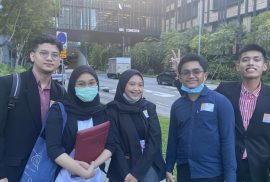
    Five UGM students participated in this year’s Youth Ecosperity Dialogue (YED) held on 5-10 June at the Singapore Management University (SMU), Singapore.

    The five students are Marhippu Immanuel Hutagaol, Tarissa Junita (Vocational School), Ricko Kusuma Putra, Ari Firmansyah (Faculty of Engineering), and Alifia Sekar Sriwijaya (Faculty of Social and Political Sciences).

    “We are among the 13 delegates from Indonesia at the event,” said Marhippu on Thursday (23/6).

    YED 2022 is a forum for young leaders to exchange ideas and collaborate to form solutions to sustainability challenges in business and industry. YED is hosted by the College of Integrative Studies and supported by Temasek Foundation in partnership with Ecosperity Week 2022.

    “Through this dialogue, we are deepening our insights into sustainable practices in industry and business,” he said.

    As many as 80 youths from ASEAN, China, Hong Kong, Taiwan, and India gathered and discussed sustainable business and industrial development.

    “We want industry and businesses to achieve their success without causing adverse environmental impacts. As we only have one earth, we agree on the need to protect the earth as a good legacy for future generations,” said Marhippu.

    Source: https://ugm.ac.id/id/berita/22625-mahasiswa-ugm-ikut-berpartisipasi-dalam-youth-ecosperity-dialogue-di-singapura