Month: March 2025

  • Student Representation in UGM’s Governing Body

    The UGM Board of Trustees (Majelis Wali Amanat or MWA) is the highest governing body in the university. 

    As regulated in the Board of Trustees Regulation Number 4 Year 2014 Chapter 41, the members of MWA consist of the Minister, the Sultan of Yogyakarta, the Rector, representatives of the general public, and members of the university, including students, faculty, and staff. 

    UGM recognizes that proper student representation in the Board of Trustees is vital to ensure that students — as key stakeholders — have a voice in decisions that directly impact their academic life, welfare, and campus experience. Policies become more relevant, balanced, and responsive when shaped with input from those they affect. Student perspectives help align governance decisions with real student needs and challenges. By involving its students, UGM fosters openness, encouraging transparency in the university’s decision-making. 

    The procedure of selecting Board’s members is regulated by Rector Regulation Number 1 Year 2016 and the election is conducted prior to the election of a new Rector. Therefore, for the Rector’s election in 2022, the election of the Board’s members was conducted in 2021 and they will sit in the Board from 2021 to 2026.

    UGM also has an academic senate which functions to establish policy, provide recommendations, and monitor academics (Board of Trustees Regulation Number 3 Year 2021). This senate consists of professors and lecturers from various faculties as well as officers with certain positions.

    Student representatives in the Board of Trustees are elected for a one-year term and can be re-elected for another term. Like the other 19 members of the Board, the student representative is tasked with formulating the university’s general policies. 

    The student representative in the Board of Trustees for the 2024/2025 period has already been elected.

  • The Annual Rector’s Report

    The university’s annual Dies Natalis brings together all students, staff, and faculty each year and invites the university’s partners. UGM’s Rector holds a speech to report the university’s achievements and share the minutes to the annual general meeting.

    The celebrations in 2024 were especially vibrant as the university celebrated its 15th Lustrum.  The celebrations were designed to involve all elements of UGM’s academic community, including faculty members, students, alumni, and even the local community. This event is not only a celebration, but also a moment for reflection and self-evaluation, ensuring that UGM remains at the forefront in nurturing a generation of the nation that is both high-quality and full of integrity.

    The Rector’s 2024 Report delivered during this occasion serves as a vital reflection of the university’s progress, reaffirming UGM’s commitment to transparency, accountability, and continuous excellence.

  • The Teams in Charge of Advancing Sustainable Development at UGM

    UGM has an Office of Sustainability within the University Quality Assurance and Reputation Unit. Based on the UGM Chancellor’s Decree No. 1100/UN1.P/KPT/HUKOR/2024 on the Manager of the Office of Sustainability, the manager is tasked with implementing the UGM Sustainable Development Programme, strengthening the university’s reputation related to sustainability; coordinating the mainstreaming of the UN Sustainable Development Goals (SDGs) in the tridharma in university policy; facilitating dialogue among stakeholders to work together in achieving the UN SDGs; monitoring and evaluating the achievement of the UN SDGs at the university; and providing scientific input, innovation, and evidence-based policy recommendations and strategies to achieve the UN SDGs. 

    To facilitate and synergize UGM’s activities in education, teaching, and community service (Tridharma) to the contribution of sustainable development, UGM is committed to establishing the SDGs Center. The Center maps all university activities that are in line with SDGs including inserting the SDGs content in courses and Student-Community-Services (KKN), developing campus internal capacity and building a sense of ownership of SDGs, identifying priorities, opportunities, and the Global Action Plan in implementing SDGs, as well as ensuring the internalization of SDGs into university strategies, policies and work are sustainable.

    UGM SDGs Center plays its role in achieving Sustainable Development Goals as the national development targets, by providing innovations and solutions for SDGs, creating current and future SDGs implementers, demonstrating how to support, adopt and implement SDGs, and developing partnerships and leadership between sectors to guide in responding to SDGs.

    Aligned with the objectives of the SDGs Centre, UGM is dedicated to enhancing capacity and establishing sustainable development units at the faculty level. One prominent example is the Faculty of Geography, which contributes through its Sustainable Development Geography UGM program. The Faculty of Geography frequently organizes seminars focused on development themes, such as the “Sustainable Development Goals (SDG’s) Seminar Series #101: Becoming Sustainability Agents from the Lecture Bench.” This initiative actively promotes the Sustainable Development Goals (SDGs), with particular emphasis on the social development pillar, specifically Goal 3, “Good Health and Well-being,” and Goal 4, “Quality Education.”

    Since 2016, UGM has initiated the development of policies aimed at preventing and addressing harassment. This effort was formalized through the issuance of the UGM Chancellor Decree Number 1699/UN1.P/SK/HUKOR/2016, which provides Guidelines for the Prevention of Harassment at UGM. In 2019, UGM reinforced its commitment by introducing the Health Promoting University (HPU) program, which aspires to create a healthy and supportive environment for the entire UGM academic community. As part of this program, a Zero Tolerance for Violence, Bullying, and Harassment Working Group was established. Further, in 2020, UGM implemented Rector’s Regulation Number 1 of 2020, which focuses on the prevention and management of sexual violence within the UGM community. Following the issuance of Permendikbudristek No. 30 of 2021 in 2022, UGM aligned its internal policies with this regulation by establishing the Task Force for the Prevention and Handling of Sexual Violence on 3 September 2022.

  • The UGM Annual Financial Report

    To ensure transparency, accountability, and responsible resource management, UGM publishes an annual audited financial report on the university’s website that is accessible to the public. This report demonstrates how the university’s funds are allocated and utilized each year to support all activities of education, research, and community service. It is the university’s hope that making these reports open to the public fosters trust, allowing UGM’s many stakeholders — including students, parents, government, and partners — to assess the institution’s financial health and integrity.

    The university’s Audited Financial Report for 2024 can be accessed here.

  • University Sustainability Committee

    UGM demonstrates a strong commitment to integrating the Sustainable Development Goals (SDGs) into its university framework. To best integrate and monitor the implementation of the SDGs, the university established the UGM SDGs Center: Inaugurated on August 28, 2019, by the Ministry of National Development Planning, the UGM SDGs Center aims to synergize the university’s activities in education, teaching, and community service to contribute effectively to sustainable development.

    UGM is proactive in programs on sustainability:

    Integration into Curriculum and Community Service: UGM incorporates SDG-related content into its courses and the Student-Community Service Program (KKN-PPM), ensuring that students actively participate in projects aligned with sustainable development. This approach embeds the SDGs within the academic experience, making them relevant and applicable to all students.

    Commitment to Inclusive Education: Reflecting its dedication to SDG 4 (Quality Education) and SDG 1 (No Poverty), UGM provides various support programs for students from low-income families, including scholarships, peer counseling, and other assistance, ensuring equitable access to education.

    Recognition and Rankings: UGM’s efforts have been internationally recognized, with the university ranking among the world’s top 50 institutions contributing to SDGs 1 (No Poverty), 7 (Affordable and Clean Energy), and 9 (Industry, Innovation, and Infrastructure) in the 2023 THE Impact Rankings.

    Through these initiatives, UGM ensures that education around the SDGs is meaningful, relevant, and accessible to all students, preparing them to contribute effectively to sustainable development in their future endeavors.

    In addition, the university has formed several committees handling various issues in the field of sustainable development. The committees put the Head of the Integrated Health Services Bureau as the person responsible for the overall operation. They are formed into working groups handling particular thematic areas. The committees put the Head of the Integrated Health Services Bureau as the person responsible for the overall operation. These working groups handle particular thematic areas, such as:

    1. Health Literacy Working Group Team
    2. Physical Activity Working Group Team
    3. Healthy Eating Patterns Working Group Team
    4. Mental Health Working Group Team
    5. Working Group Team for Establishing a Healthy, Safe and Disabled Friendly Living Environment
    6. Reproductive Health Working Group Team
    7. Zero Tolerance Violence and Bullying Working Group Team
    8. Zero Tolerance Working Group Team on Tobacco, Alcohol and Drug Abuse 

    UGM also formed a Task Force for Preventing and Handling Sexual Violence. Through this task force, a series of education programs was carried out in the form of socializing SOPs and Guidelines for Handling Sexual Violence in the academic community. The university also dedicates a specialized website for reporting incidents of sexual violence at UGM.

  • UGM’s Student Union

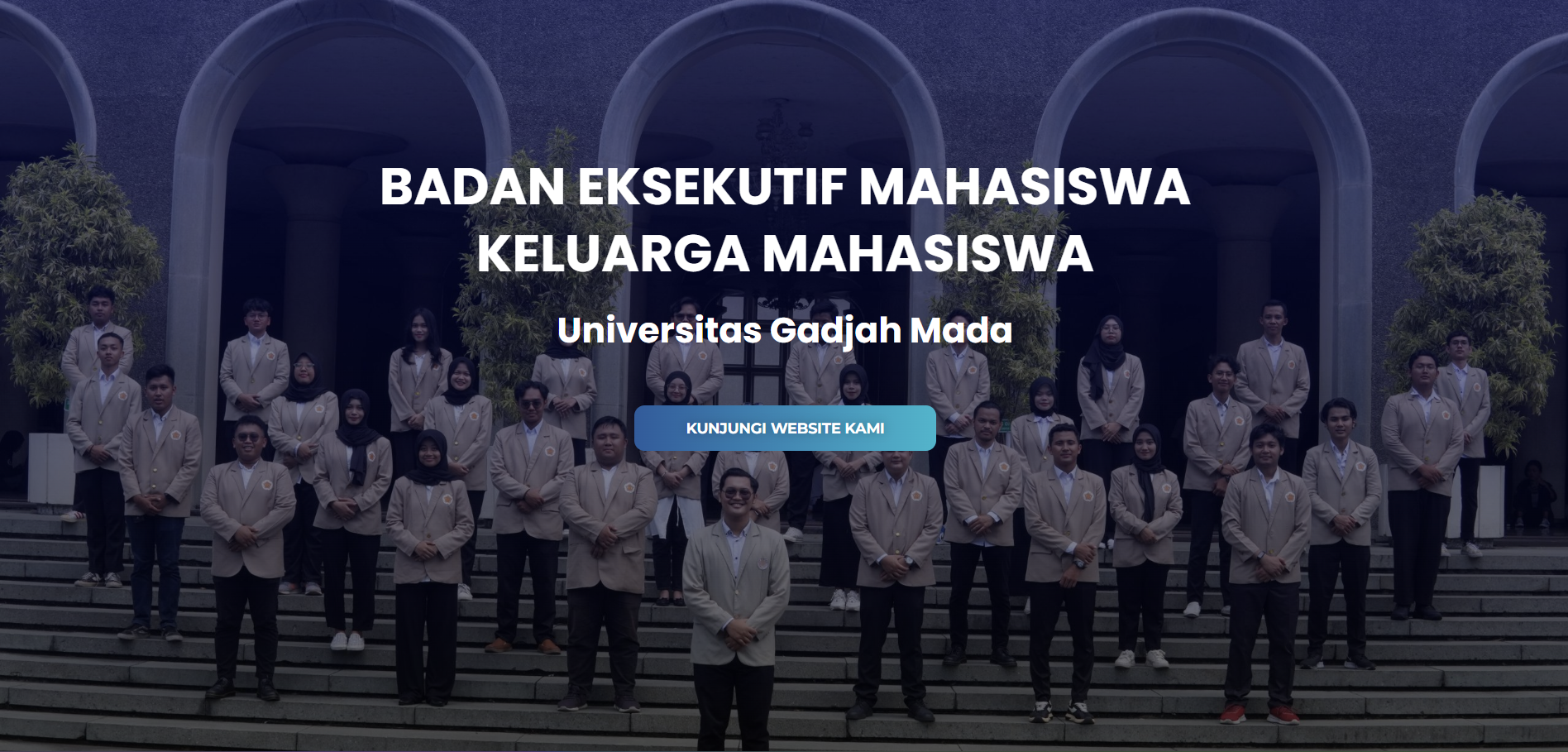
    The Student Executive Board (BEM) KM UGM is the university’s student union that acts as a forum for activism and self-development of UGM students. BEM KM facilitates various activities that support the academic, social, and leadership capacity of UGM students. There are several points of the Student Executive Board agenda:

    1. Student Affairs: Inclusive student services to accommodate and become a medium of access for students’ basic needs, development, and welfare.
    2. Community: Containing community service to encourage development and ignite community welfare.
    3. Movement: Presenting issue-based movements in the corridor of an advocative paradigm that is active, participatory, and impactful.
    4. Internal: Building an internal organisation based on the principles of mutual cooperation, humanism, adaptiveness, and creating participatory, transparent, and accountable organisational governance.
    5. External: Creating relationships with entities outside BEM through collaborative, egalitarian, and humanist principles.

    The university understands the significance of student unions and encourages their activities in the Rector’s Regulation Number 1 2017. As mentioned in Article 5, Paragraph 3, this gives students the right to establish student unions under the supervision of the Directorate of Student Affairs (Article 5, Paragraph 2). 

    The student unions provide a platform for students to engage in the learning governance environment as well as carry out good organisational practices, including providing governance input to the university, support for students (e.g. scholarship platform), and organising social activities (knowledge dissemination, advocacy, service programmes, and various forms of community empowerment activities.

    Source: Student Executive Board

    The Student Executive Board oversees 50 Student Activity Units. Therefore, all students can develop their talents, leadership, teamwork, and social responsibility according to their own strengths and character.

    UGM’s Student Executive Board is connected/affiliated to a wider national student union body, such as the Student Executive Board in Indonesia (BEM SI), BEM Nusantara, and the National Student Alliance (AMI).

    The student union elects its leadership, allowing students to vote. In UGM, the election of the Student Executive Board is organised by the Student General Election Commission.

  • Supporting and Facilitating a Holistic Ethical Organizational Culture

    Our organisation develops clear ethical values (e.g., diversity, honesty, respect, fairness) and these are enshrined in a publicly available strategic document

    It is regulated in Rector’s Regulation Number 21 Year 2021 (Article 4) that all faculty members must uphold academic freedom, freedom of academic platforms, academic etiquette, and scientific autonomy.

    In the field of Education, Academic Policy within the faculty provides related standards and directions with the development and implementation of an integrated learning process based on the principle of academic freedom. For example, these are mentioned in the Senate Decree of Mathematic and Natural Science Faculty Number 1/SF-FMIPA/SK/2020 page 8.

    Our university provides training based on clear ethical values at all levels of the organisation

    There is an office for ethical compliance within our institution, with a designated official with oversight on ethical matters across the institution. 

    The University Honors Council (DKU) is an instrument of the Academic Senate (SA) which has the authority to independently conduct examinations and make decisions on alleged violations of the code of ethics. (pg. 2; Article 15 pg. 7)

    Our organisation has an internal reporting system to assure the confidentiality of whistleblowers or a grievance procedure for staff concerning an employment matter

    UGM has a reporting system through Sistem Informasi Aspirasi Publik (SIAP) UGM to assure the confidentiality of whistleblowers or a grievance procedure for staff concerning any violation. The reporting system is provided for both internal and external stakeholders. In the Reporting Violation Form, KAI evaluates the adequacy and reliability of internal controls to provide assurance that UGM rules, laws and policies have been complied with and implemented.

    Our organisation support and facilitate a holistic ethical organisational culture

    Our organisation is committed to fostering and upholding clear ethical principles, including diversity, honesty, respect, and fairness, which are firmly embedded within strategic documents that are accessible to the public. The ethical framework is outlined in the UGM Lecturers’ Code of Conduct , specifically Article 4, which emphasizes adherence to the university’s vision, mission, and foundational goals. This commitment includes embracing the principles of the Tridharma of higher education, safeguarding academic freedom, ethics, and autonomy, and preserving the integrity and reputation of UGM and its academic staff. 

    Furthermore, it mandates compliance with institutional regulations, acceptance of responsibilities with full accountability, avoidance of falsifying information, and upholding confidentiality. To ensure these ethical values are understood and practiced, UGM provides comprehensive training across all organizational levels. This includes the Basic Training (Latsar) for education personnel and  Basic Training for Permanent Lecturers  featuring modules such as the Actualization of UGM Values. The institution also houses an ethics compliance office to oversee ethical matters, represented by the University Senate, Faculty Senate, and Council of Professors. Additionally, UGM has established an internal reporting system to address grievances and ensure whistleblower confidentiality. Since 2024, the UGM Whistleblowing System (WBS)  has been upgraded, providing a platform for members of the UGM community to report violations, such as abuses of authority, unethical behavior, gratuities, and harassment. The system ensures anonymity and protection for whistleblowers while implementing a centralized mechanism for prompt and appropriate follow-up on reports, thereby maintaining the integrity of the institution.

  • UGM’s Policy on Anti-bribery and Corruption

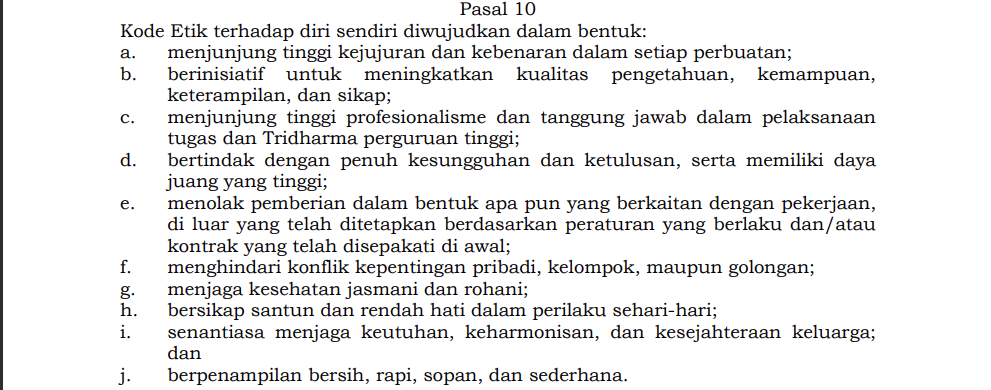
    The University has made several efforts as a form of commitment that seeks to reduce organised crime. This has been regulated in the Rector’s Regulation Number 21 Year 2021 (Article 10). One of the ways to regulate bribery and corruption is for academic staff to refuse gifts in any form related to work beyond what has been determined based on applicable regulations and/or contracts that have been agreed upon in advance. Article 10 states that, in ten sections of the Code of Ethics, lecturers are bound to uphold honesty and professionalism in carrying out their duties and the Tridharma of higher education.

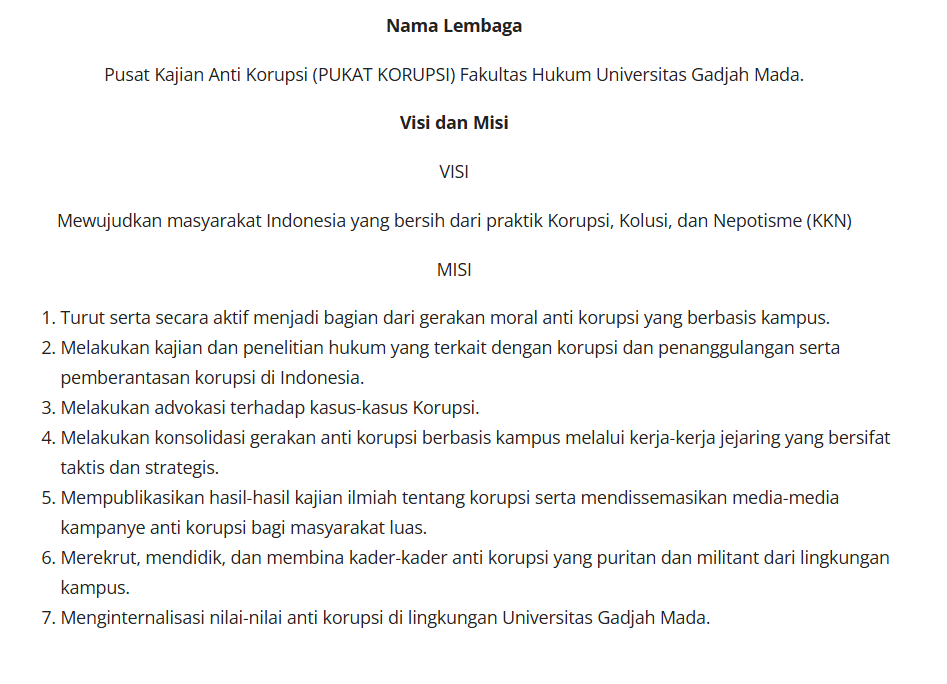
    The implementation of the regulation was realised by establishing the Center for Anti-Corruption (PUKAT) to systematise the anti-corruption movement by identifying the roles and positions that each element can play. PUKAT has a mission to actively participate in:

    • Conducting legal studies and research related to corruption and the prevention and eradication of corruption in Indonesia.
    • Conducting advocacy on corruption cases.
    • Consolidating the campus-based anti-corruption movement through tactical and strategic networking works.
    • Publish the results of scientific studies on corruption and disseminate anti-corruption campaign media for the wider community.
    • Recruiting, educating, and nurturing puritanical and militant anti-corruption cadres from the campus environment.
    • Internalising anti-corruption values within Universitas Gadjah Mada.

    There are other commitments from the campus to eradicate corruption and bribery of leaders through the implementation of risk management and integrity zone planning at Universitas Gadjah Mada. The implementation of risk management is in line with the mandate of the Directorate General of Higher Education and Research regarding the development of Integrity Zones in all Faculties and Schools within UGM, which has the same principles to realise Good University Governance (GUG).

    UGM also commits to eradicating corruption and bribery through the Integrity Zone – Corruption Free Area (ZI/WBK) program. In this program, the Faculty of Engineering has achieved a Corruption Free Area (WBK) predicate and is ongoing to achieve a Clean and Serving Bureaucratic Area (WBBM) predicate.

  • UGM Committee on Diversity, Equity, Inclusion, and Human Rights

    UGM is committed to anti-discrimination as directed by Trustee Board’s Regulations Number 1 Year 2023 about University Strategic Plan 2022-2027 (pg. 14, UGM guarantees that the campus environment is a safe and comfortable ecosystem, free from sexual violence, other violence, bullying, mental health problems, discrimination, and friendly to people with disabilities). The regulation in 2023 is the continuation of the Trustee Board’s Regulations Number 1 Year 2020 about University Strategic Plan 2017-2022 which also regulates discrimination (pg. 20, inclusive campus development with an anti-discrimination spirit based on race, ethnicity, ethnicity, gender, marital status, disability, age, religion, minority group, etc.). UGM guarantees the rights of all women including staff and students to be treated equally. Based on the Trustee Board’s Regulations Number 1 Year 2021 concerning Campus Master Plans (pg. 13, pg. 25), UGM is fighting for universal principles, namely social justice, equality, inclusivism, and sustainability in all aspects of university administration policies.

    Specifically related to sexual violence, UGM is committed to maintaining standards of human values and dignity at UGM, as well as protecting the entire UGM community from all forms of sexual violence as stated in the Rector’s Regulation Number 1 Year 2020 (Article 2) and updated in Rector’s Regulation Number 1 Year 2023 (Article 2). UGM also provides prospective students from all pathways a fair admissions process and will not discriminate against ethnicity, religion, race and intergroup, etc. as clearly stated in the Rector’s Regulation Number 3 Year 2023 Article 2 Verse e.

    UGM’s Commitment to Gender Equality: Systematic Measurement and Monitoring of Women’s Application Rates

    Universitas Gadjah Mada (UGM) is committed to promoting gender equality and ensuring equitable access and participation for women across all university activities. 

    The commitment is first reflected in the student admission process. Rector’s Regulation Number 3 of 2023, amended by Rector’s Regulation Number 4 of 2023, outlines the principles governing the admission of new students to undergraduate and applied undergraduate programs at Universitas Gadjah Mada (UGM). It emphasises the concept of fairness in student admission processes, stated explicitly in Rector’s Regulation Number 11 Year 2019 Article 9.  Admission is conducted based on fairness and equality, ensuring that opportunities are open and accessible to all prospective students, regardless of socio-economic background, gender, ethnicity, or religion. The regulation is aimed at creating an inclusive and non-discriminatory admission process, aligning with UGM’s mission to uphold diversity and excellence.

    Non-discrimination policy also guarantees equal treatment for all individuals, regardless of gender. This is articulated in the Trustee Board’s Regulations Number 1 Year 2023, which emphasises the creation of a safe and inclusive campus environment free from sexual violence, bullying, and discrimination. The university’s Strategic Plan for 2022 – 2027 outlines a commitment to inclusivity and gender equality. It ensures that women have equal opportunities in applications, admissions, and participation in Initiatives addressing gender issues through research, seminars, public discussions, training and community service. This is mostly led by the UGM’s Women’s Studies Center, established in 1991. These efforts directly and indirectly impact gender equality within the university and the broader community.

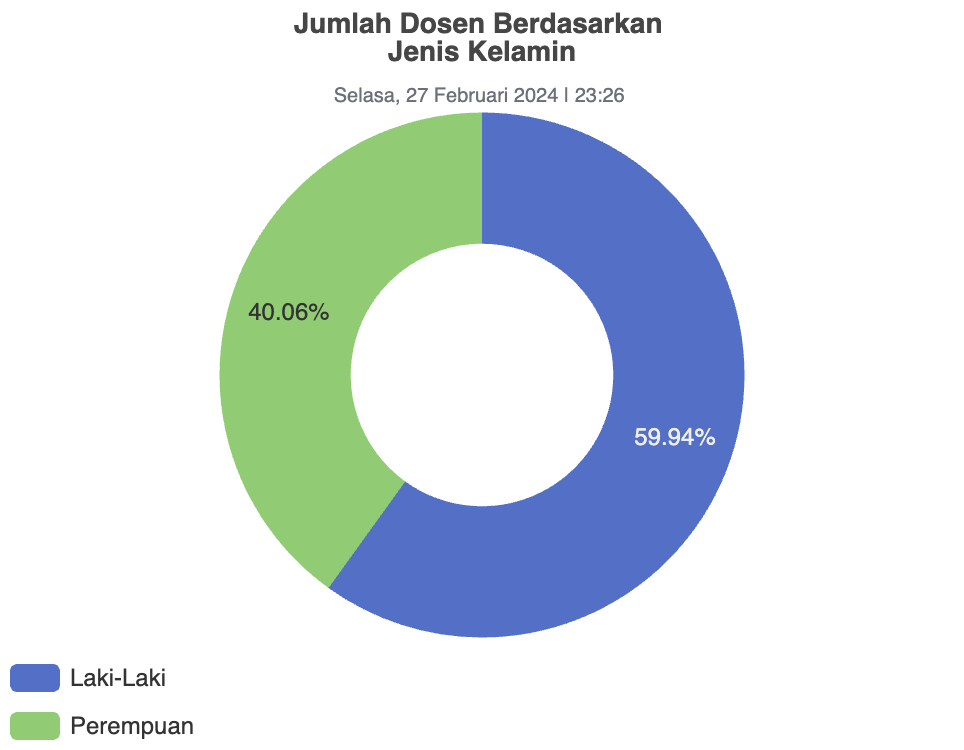
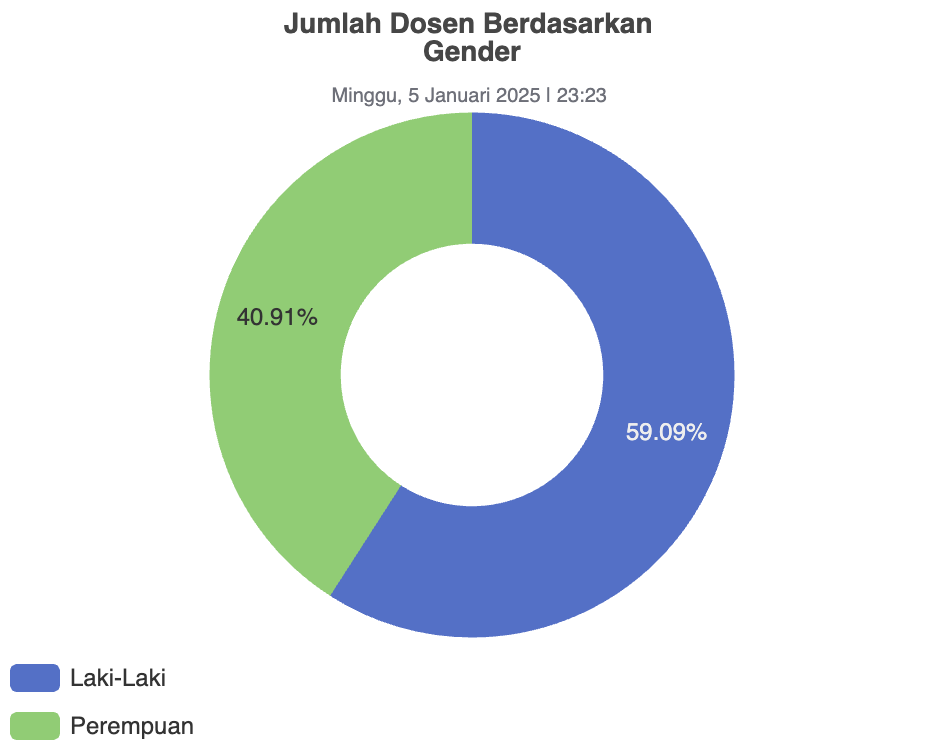
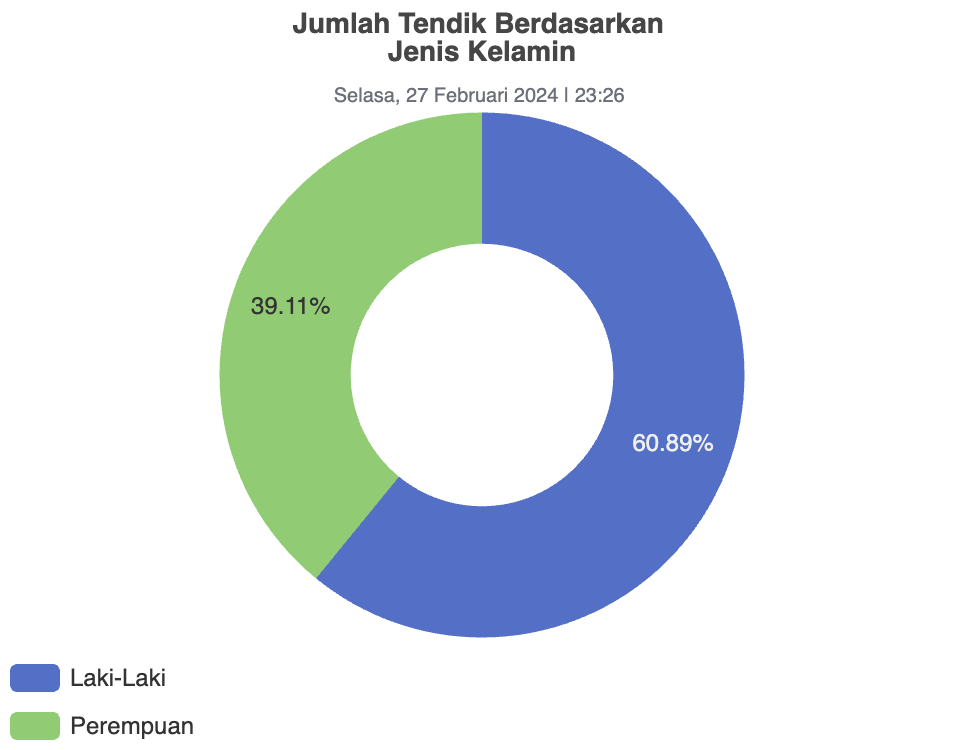
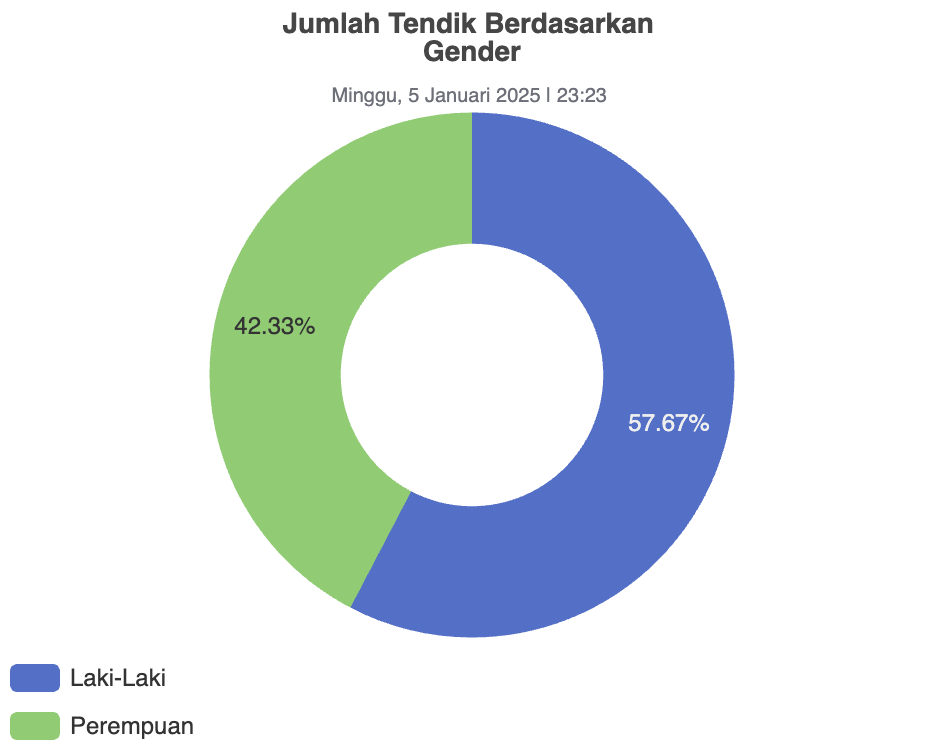
    UGM’s commitments to gender equality addressed all types of enrollment, including employee enrollment. The outcomes of implementing these policies have not only proven the increasing rate of student female admission and graduation rates but also increased the number women rate of faculty and staff. The figure below shows the percentage of women and men for UGM’s faculty and staff in the years 2023 and 2024.

    (a) Percentage of Women and Men in UGM’s Faculty for the years 2024 and 2025 

    (b) Percentage of Women and Men in UGM’s Staff for the years 2023 and 2024

    The figure above shows the percentage of women and men for UGM’s faculty and staff in the years 2023 and 2024. Pie charts are available through the Directorate Human Resources website.  

    Non-Discrimination

    Universitas Gadjah Mada (UGM) is committed to fostering an inclusive and equitable environment for all its community members. While specific policies addressing non-discrimination for transgender individuals are not explicitly detailed in publicly available documents, UGM’s overarching non-discrimination policies encompass all individuals, regardless of gender identity.

    Key Policies and Initiatives:

    • General Non-Discrimination Policy: UGM’s commitment to non-discrimination is reflected in its policies that prohibit discrimination based on race, ethnicity, religion, gender, and other characteristics. These policies aim to ensure equal opportunities and treatment for all students, faculty, and staff. This commitment is outlined in the Board of Trustees Regulations Number 1 Year 2023, which emphasises the creation of a safe and comfortable campus ecosystem, free from sexual violence, bullying, and discrimination
    • Gender Equality Initiatives: UGM actively promotes gender equality through various programs and collaborations. For instance, the university has partnered with the Asia Pacific Women’s Information Network Center (APWINC) at Sookmyung Women’s University to offer specialised training programs for female students, focusing on enhancing skills in information and communication technology (ICT).
    • Support Services: The university provides counselling and support services aimed at addressing the diverse needs of its community members, including those related to gender identity and expression.

    Maternity Policy

    One such regulation is the Rector’s Regulation Number 22 of 2021 on Employee Leave at UGM, which governs various types of leave for employees, including maternity leave. The specific provisions regarding maternity leave are detailed in Chapter III, which outlines the different categories of leave available to staff members. Within this chapter, maternity leave is discussed under the section dedicated to “Cuti Melahirkan” (Maternity Leave). This section specifies the eligibility criteria, duration, and procedures for applying for maternity leave at UGM. To apply for maternity leave at UGM, employees are required to submit the following documents:

    1. Leave Application Form: This form can be downloaded from the official UGM website at http://ugm.id/formcuti (see Figure 1).
    2. Medical Certificate: A doctor’s certificate confirming the expected delivery date. These documents should be submitted to the relevant administrative department within UGM to process the maternity leave request.

    Paternity policy

    Rector’s Regulation Number 22 of 2021 at Universitas Gadjah Mada (UGM) outlines the policies regarding leave entitlements for permanent employees. This regulation actually encompasses various types of leave, including annual leave, sick leave, maternity leave, paternity leave, bereavement leave, and study leave. 

    Rector’s Regulation Number 22 of 2021 at Universitas Gadjah Mada (UGM) also includes provisions for fathers in relation to childbirth. Specifically, Article 9 addresses Paternity Leave (Cuti Melahirkan bagi Pegawai Laki-Laki), granting male employees leave to support their spouses during childbirth. This provision underscores UGM’s commitment to fostering a supportive work environment that acknowledges the importance of paternal involvement in early childcare. It is a UGM commitment to ensure fathers can participate in childcare duties.