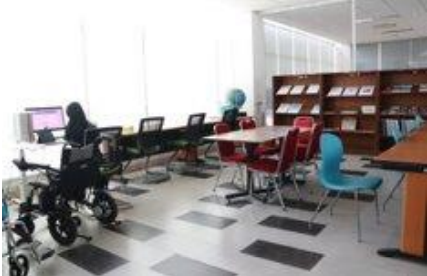
Month: March 2025

  • UGM’s Sustainability/Climate Action Policy

    Towards an Eco-Friendly UGM: Sustainability in Action

    UGM is committed to fighting for sustainability. Sustainability is more than just an environmental commitment—it is a universal principle that transcends disciplines, cultures, and industries. As a guiding framework, sustainability integrates ecological balance, social equity, and economic resilience to ensure that current and future generations can thrive. UGM aims to achieve sustainability in all aspects of university administration policies.

    Based on the Board of Trustees Regulation Number 1 Year 2021 concerning the Campus Master Plan (pg. 22. pg. 25), UGM is committed to providing infrastructure that is smart, healthy, comfortable, safe, and sustainable. This includes the development of a green campus with minimal carbon emissions, achieved through programs such as zero-waste initiatives, recycling, reuse, the use of renewable energy, and the promotion of environmentally friendly behaviours.
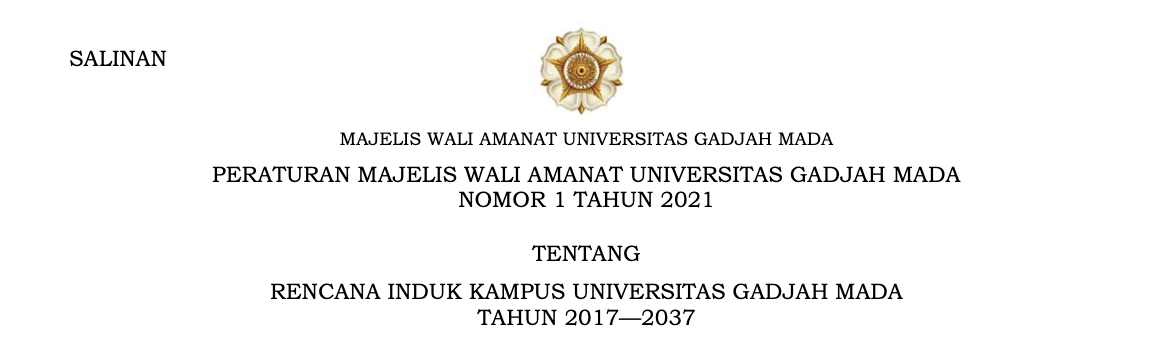
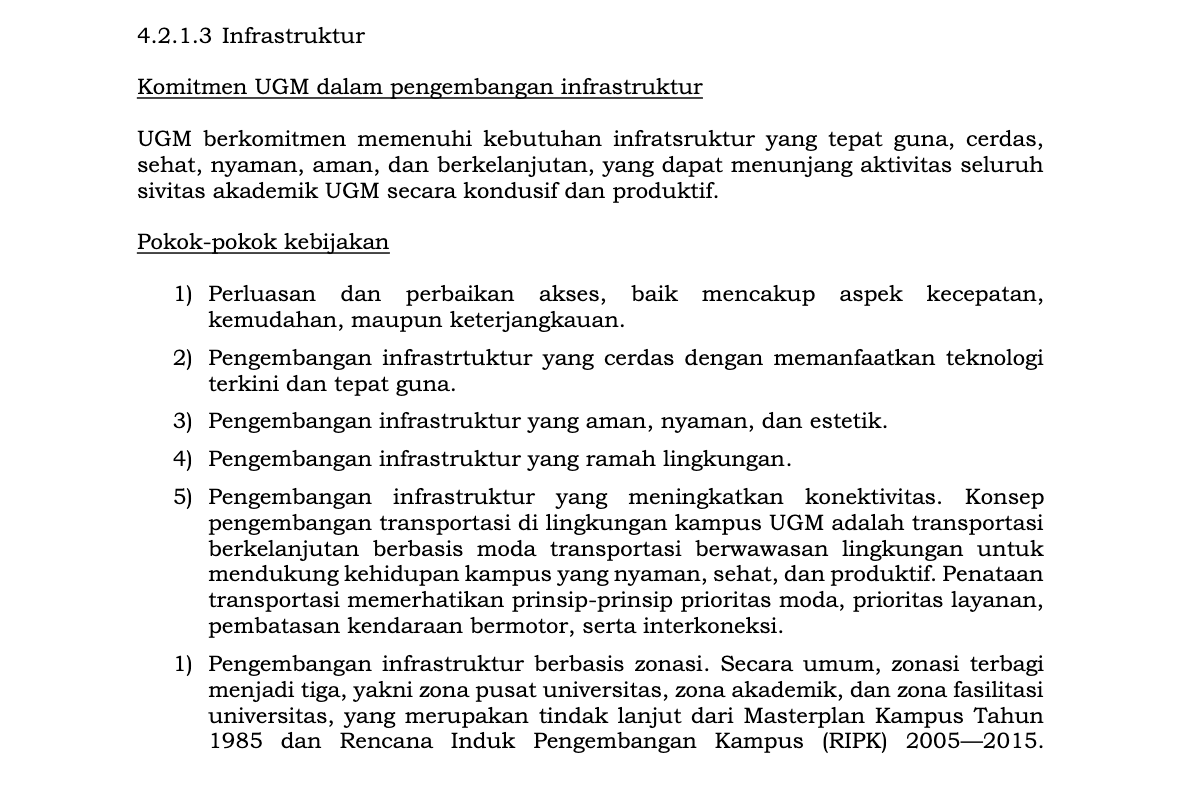
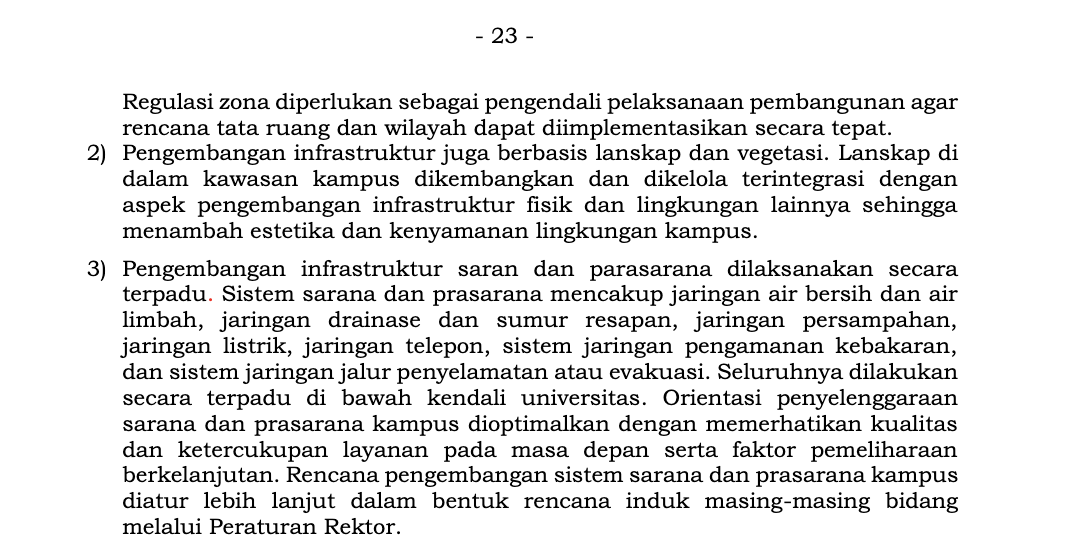
    UGM has several circular letters regarding sustainability/climate action, most of which are available on the Circular Letter Regarding the Implementation of SDGs at UGM webpage.

    Policies on Environmentally Responsible Behavior

    Environmentally responsible behaviour within the campus community is essential to fostering sustainability. Campuses such as UGM can reduce their carbon footprint and conserve natural resources. Campuses consume large amounts of energy, water, and materials. Environmentally conscious behavior—such as energy conservation, waste reduction, and sustainable transportation—helps minimize this depletion of resources. 

    In order to fortify and encourage environmentally responsible behaviour, UGM has put in place several policies that apply to all students and staff. Without the existence of university policies, sustainability efforts may be inconsistent and short-lived. Regulations create a formal commitment that integrates environmental responsibility into campus operations, research, and student life. 

    Most recently, UGM has published the Circular Letter Number 16839/UN1.P/HK.02/2024 which outlines the guidelines and commitments to foster environmentally responsible behaviour within the university community, with a specific emphasis on carbon management and the adoption of clean energy solutions. It aims to promote sustainable practices among students, faculty, and staff as part of the institution’s efforts to reduce greenhouse gas emissions, lower its ecological footprint, and contribute to global environmental sustainability.
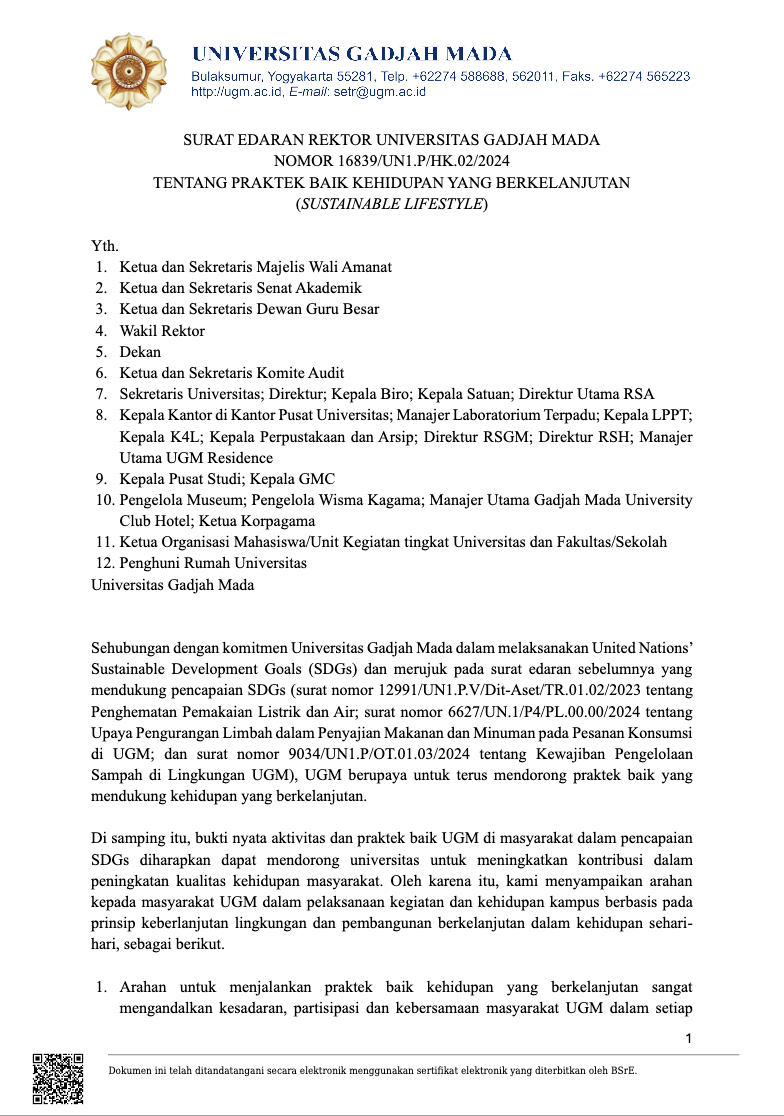
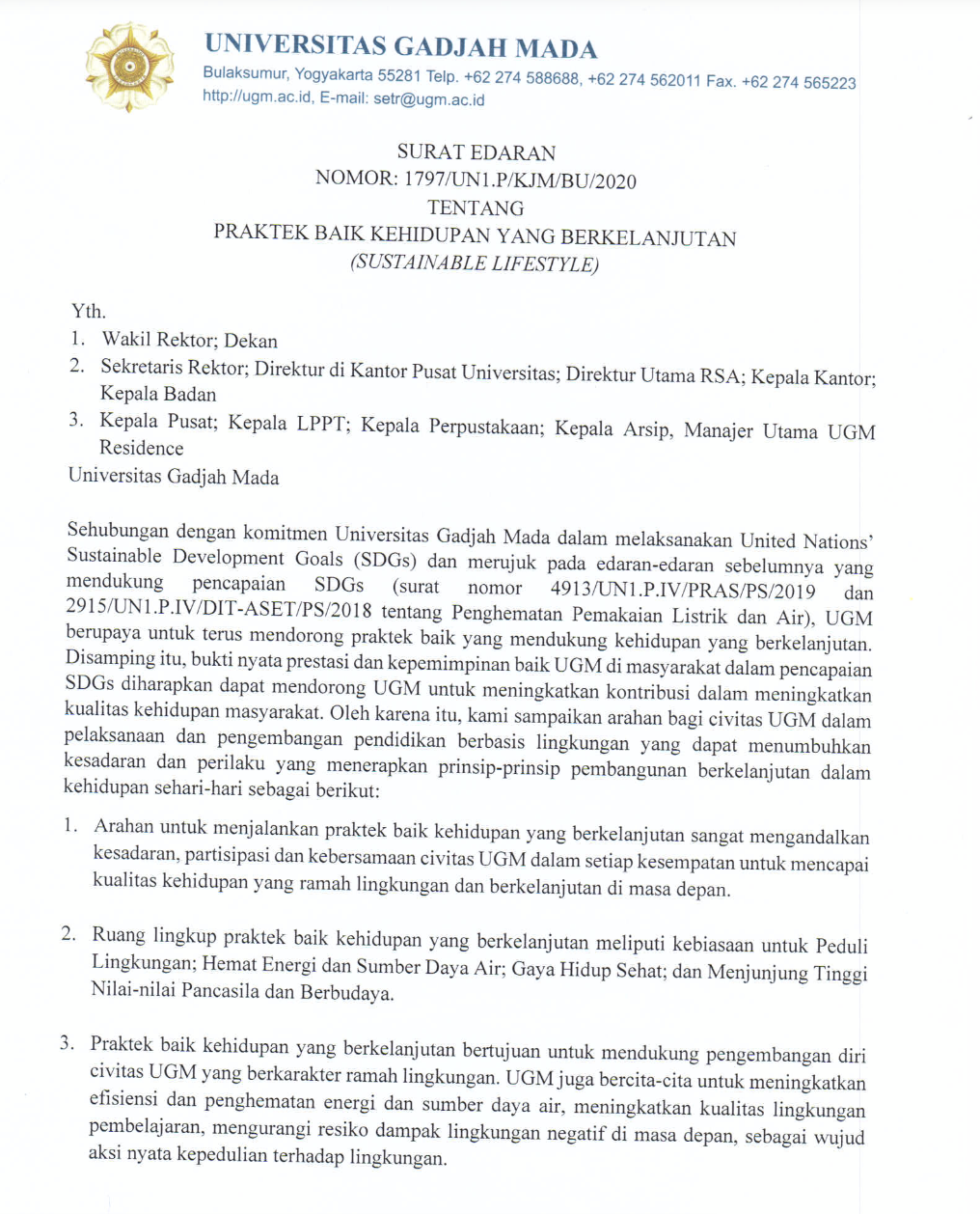
    Circular Letter Number 1797/UN1.P/KJM_BU/2020 on Sustainable Lifestyle served as a precursor regulation to the current regulation.
    Policies on Campus Waste Management

    Effective campus waste management is equally critical. Campuses produce large amounts of paper, plastic, electronic, and organic waste. Proper waste management in institutions of higher education such as UGM will minimize landfill waste, pollution, and greenhouse gas emissions. Not to mention, recycling and composting programs help reduce the ecological footprint of the university.

    The latest regulation is Appeal No. 3206/UN1.P5/BMS/TR.01.03/2025 1 concerning Campus Waste Management in UGM’s Central Office The appeal details the placement of trash bins in the building and the process of sorting the waste into three categories. In addition, all work units in the Central Office must appoint a staff to manage waste in their respective work units, who are then tasked with disposing of waste from the work unit to a temporary waste storage area south of the KPU. Waste disposal time is carried out every working day at 15.00 to 15.30 WIB.
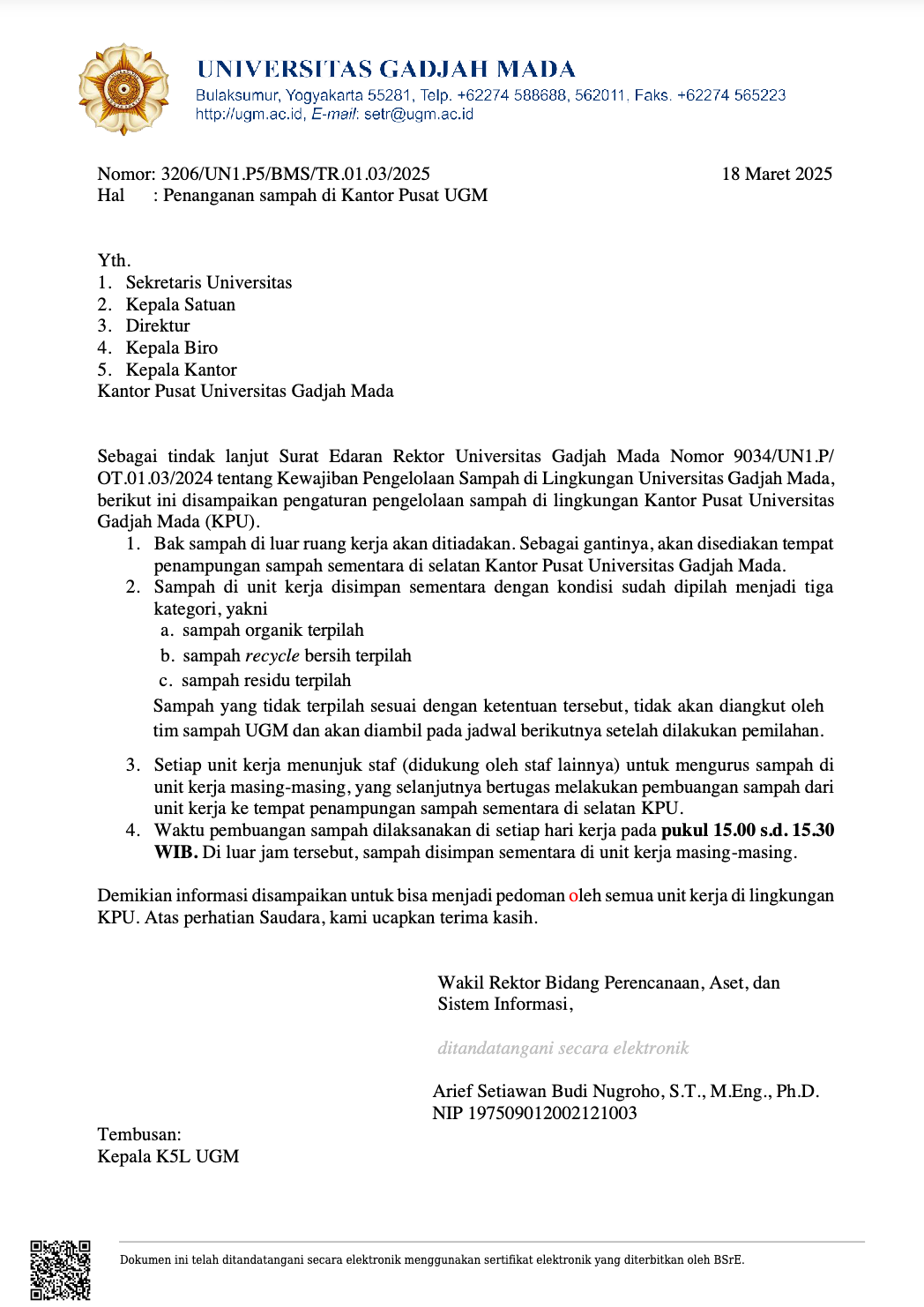
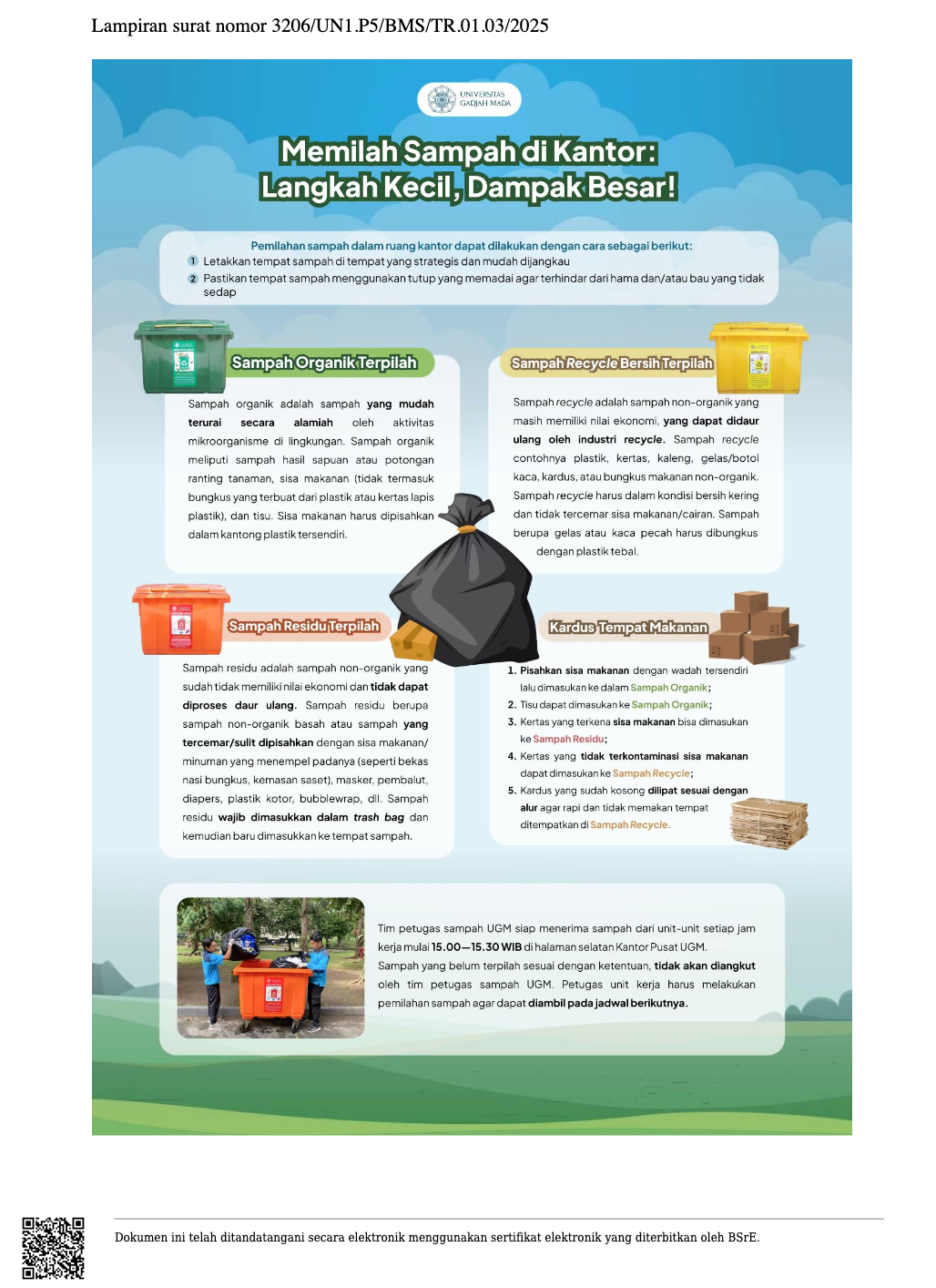
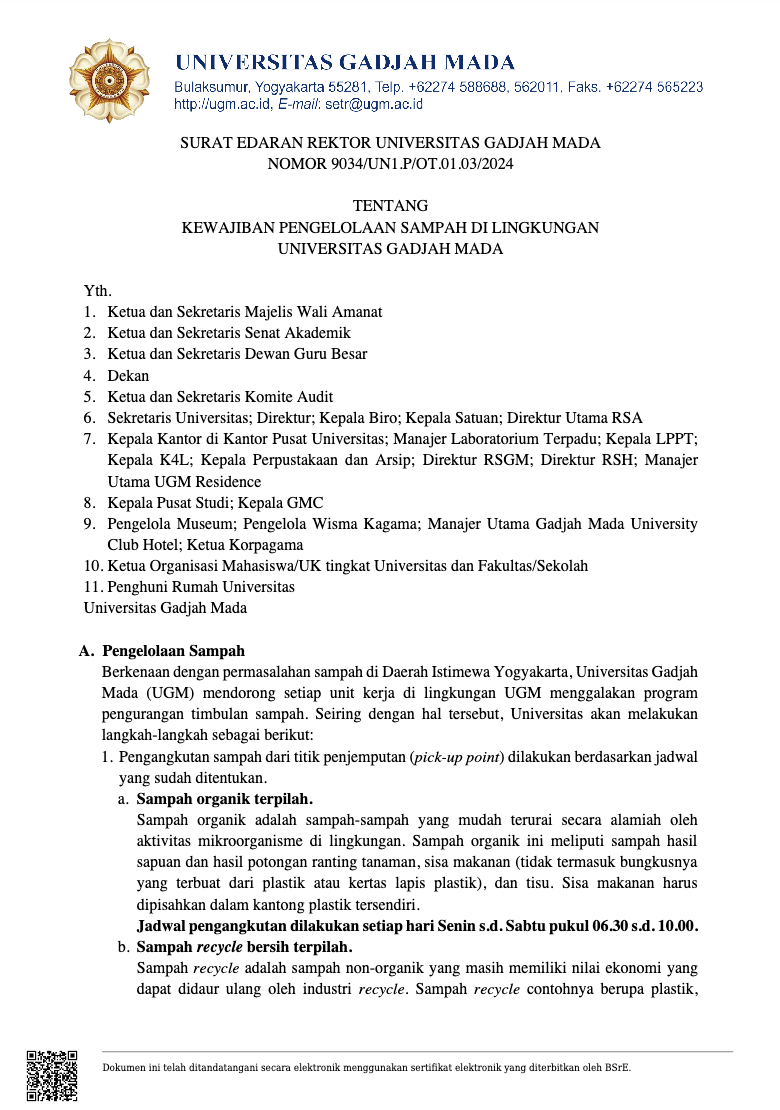
    This appeal supports the Rector’s Circular Letter Number 9034/UN1.P/OT.01.03/2024. This regulation mandates all university units to comply with campus waste management policies, reinforcing the necessity of food waste tracking within UGM’s sustainability framework.
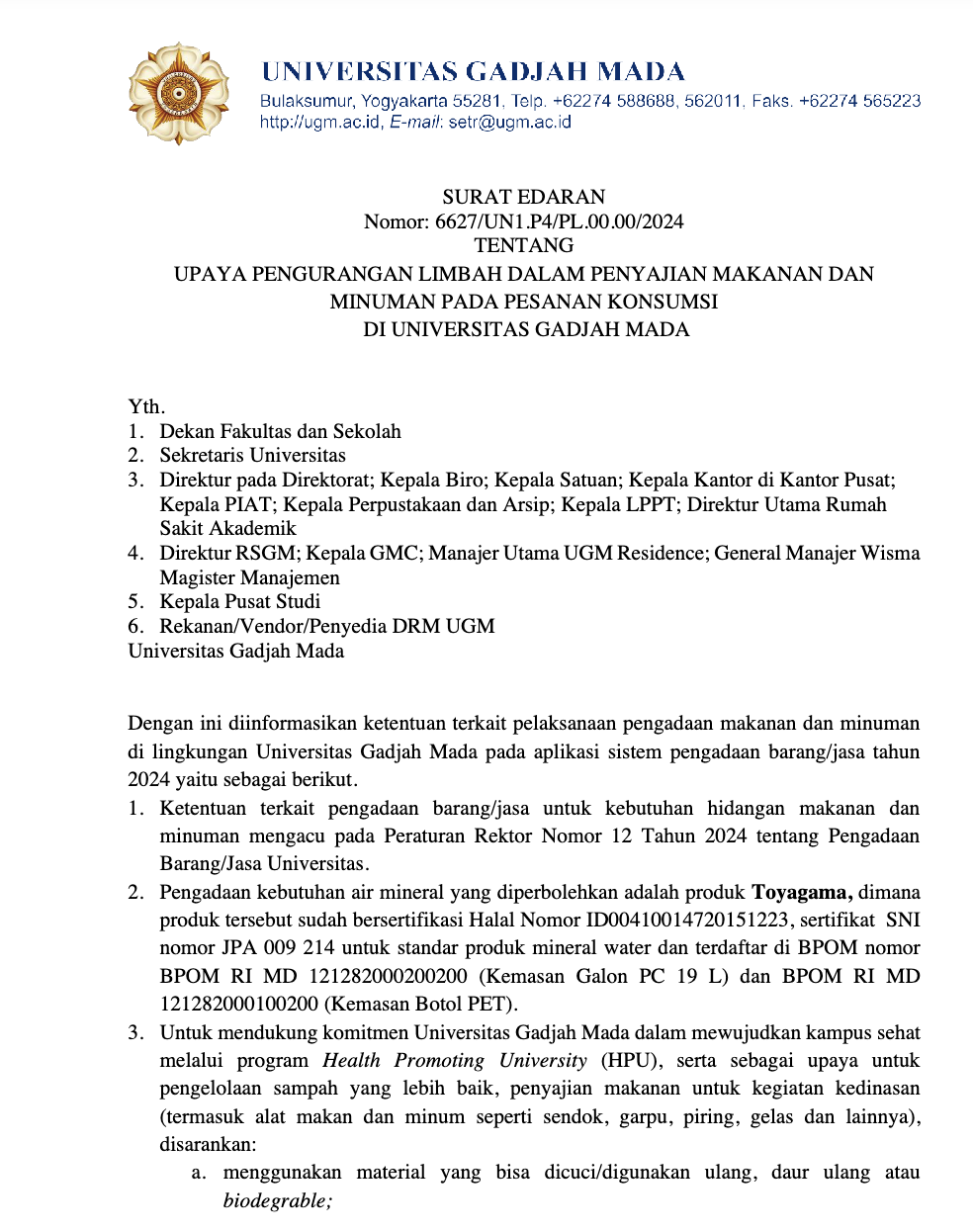
    The Vice-Rector for Human Resources and Finance previously issued Circular Letter Number 6627/UN1.P4/PL.00.00/2024 on waste reduction. This regulation emphasizes efforts to reduce waste in food and beverage services and encourages the use of reusable or biodegradable materials and discourages single-use plastics in campus activities.
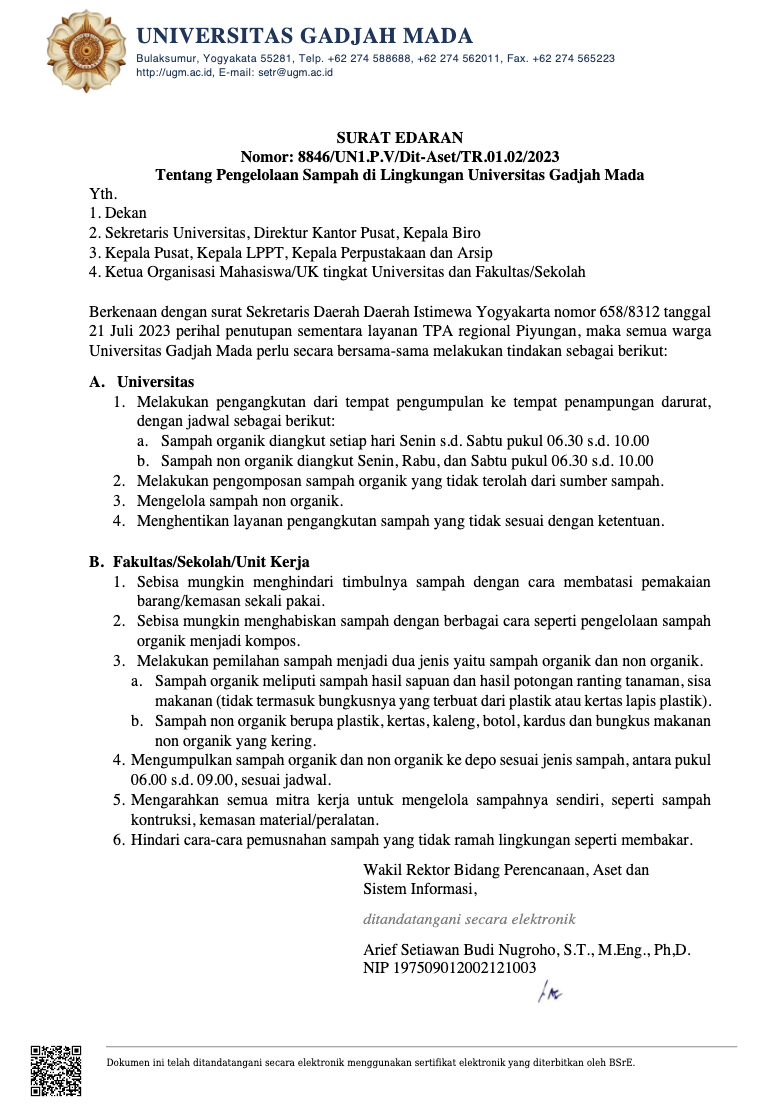
    This policy is a follow up to one established in 2023, specifically Circular Letter Number 8846/UN1.P.V/Dit-Aset/TR.01.02/2023 on Waste Management, which details guidelines for organic waste management, including food waste, within the university. These guidelines include schedules for organic waste collection and regular monitoring and measurement of waste quantities. By tracking the origins and amounts of organic waste, including food leftovers, UGM can collect accurate measurements for identifying departments or units generating significant waste. On a daily basis, UGM operates according to the Standard Operating Procedure on waste disposal management

    Food Waste Management is a critical part of climate action on campus. Good food waste management is able to mitigate Greenhouse Gas Emissions, since food waste contributes to methane emissions in landfills, which is a potent greenhouse gas. Secondly, food production consumes a significant amount of water, energy, and land. Minimizing food waste helps conserve these resources. Food waste management also encourages circular economy practices, as composting food waste supports soil health and reduces reliance on chemical fertilizers. The Department of Chemical and Environmental Engineering has even integrated food waste into biogas production in several community empowerment programs throughout Java island.

    Policies on UGM Campus Transportation

    Following the University’s Master Plan regarding Campus Transportation stated in Rector’s Decree Number 911 Year 2018,  UGM is dedicated to lowering carbon dioxide emissions by applying three concepts (pg. 8) which are 1) Prioritizing pedestrians and cyclists, 2) One Gate Campus protocol which restricts the use of motorized vehicles on campus, and provides parking lots and campus buses, and 3) creating a Better Campus Network that involves the integration of UGM campus transportation with city transportation services.

    Policies on Upgrading Campus Buildings to Higher Energy Efficiency

    Strategic plans are in the works to upgrade existing buildings to higher energy efficiency. By integrating sustainable practices and fostering green behaviour, UGM aims to align its infrastructure with global standards, supporting its Strategic Plan 2022–2027 for a greener, more sustainable campus. This includes obtaining certifications in energy efficiency for its campus buildings.

    The university appoints a designated Person-in-Charge (PIC) in each faculty to monitor the energy consumption of their faculty buildings and participate in training and socialisation sessions conducted by the Green Campus Team. As a result, new and existing buildings must be managed to ensure they achieve higher energy efficiency standards.

    For the past few years, UGM has organised the UGM Sustainable Campus Awards to encourage faculties to implement environmentally friendly construction practices and promote green behaviour to address climate change. The Sustainable Campus Awards will recognize faculties with the most sustainable learning centres. The Faculty of Animal Science took part in the 2024 awards program. Their Animal Science Learning Center (ASLC) was one of the leading centers that year, achieving approximately 30% energy savings through the use of natural daylight. 
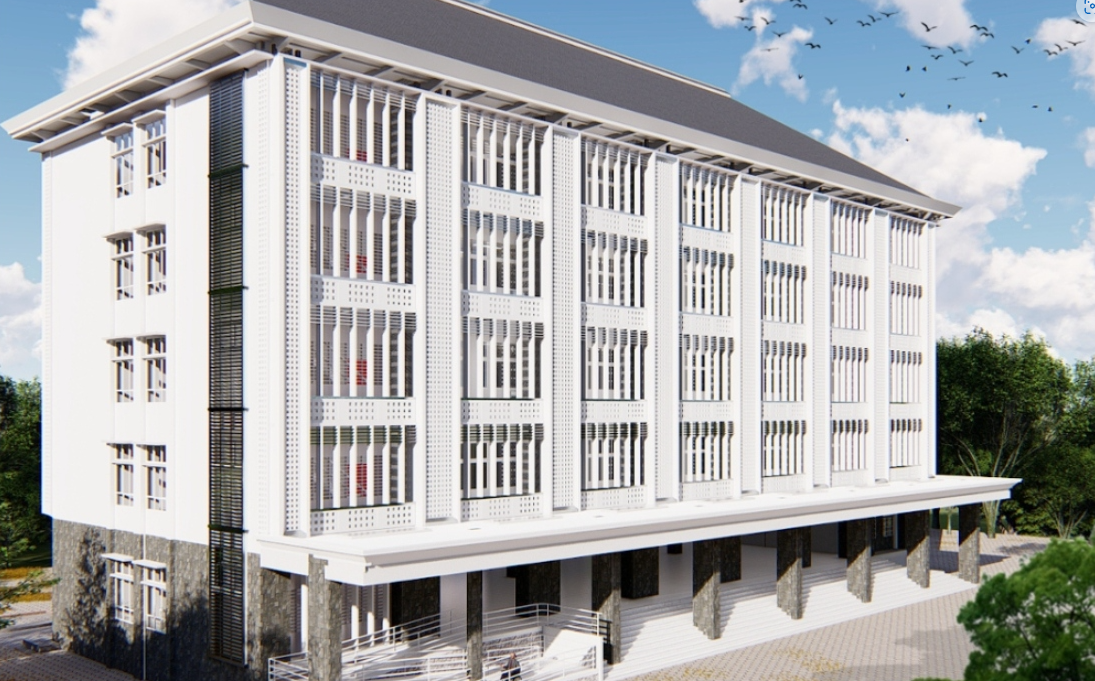
    Source: Animal Science Learning Center (ASLC)

    Additional policies are in place that oversee the renovation and construction of campus buildings which must adhere to energy efficiency standards, in accordance with Rector’s Regulation Number 157 Year 2020  and the Universitas Gadjah Mada’s Strategic Plan 2022-2027.

    Policies on Saving Electricity Usage

    Part of green behaviour is reducing electricity consumption. It is clearly stated in Rector’s Regulation Number 2 Year 2022 Management and Saving on Electricity Usage at UGM Article 15 that the electricity consumption in UGM must be reduced by 20% compared to the average usage over the six months preceding the enactment of this regulation. Saving electricity usage is carried out through: a. air conditioning system; b. lighting system; and c. supporting equipment (Article 16-18). 

    This regulation builds upon Regulation Number 157 Year 2020

    Article 16 of the regulation provides guidelines for implementing electricity savings by optimising air conditioning systems, lighting systems, and supporting equipment. 

    Article 17 demands green behaviour not only in the learning and teaching facilities, but also in the university office buildings. This includes turning off the air conditioning (AC) when the room is not in use and adjusting the room temperature in accordance with Indonesian National Standards (SNI), which range between 24°C and 27°C. 

    Regarding the Requirement for Electrical Systems (pg. 33), all faculties and university buildings must prioritize using energy-efficient appliances based on the Indonesian National Standard (SNI).

    UGM also has a water and energy conservation guidebook which follows the international UI GreenMetric Guidelines. The technical guidelines serve as the performance indicator for the use of electricity and water in all buildings.
    Water Management on Campus

    The Rector Decree on Technical Guidelines for UGM Building Code is the basis of the Clean Water Management System on campus. 

    This system includes wastewater management on campus. Article 11 Verse 3 states that wastewater and foul water disposal systems must be carefully planned and installed based on the type and level of hazard. Wastewater management should comply with SNI and other relevant regulations, and treatment can be done either on-site or through an existing wastewater treatment plant.

    Other articles of note are listed below:

    Article 13 Verse 2 states the technical planning stage of campus green buildings require site management, energy use efficiency, water use efficiency, indoor air quality, use of environmentally friendly materials, waste management, and wastewater management.

    Article 13 Verse 2 Section 3 concerning Water Use Efficiency addresses water source, water usage, and use of water-saving sanitary appliances (water fixtures). 

    Article 13 Verse 2 Section 7 concerning Wastewater Management addresses: a) providing facilities for the treatment of solid and liquid waste before disposal into the city sewer system and, b) recycling water from liquid waste (grey water).

    Rector’s Decree Number 157/UN1.P/KPT/HUKOR/2020 adds to UGM’s water management by regulating the Rainwater Management System in Article 11.4. Every building and its surrounding area must have a rainwater management system to support environmental sustainability and water resource conservation. Rainwater should be absorbed into the ground or achieve zero outflow, using methods like infiltration gardens, soak wells, or retention ponds. These systems must be maintained to prevent sedimentation and blockages.

    Climate Action Plan Shared with the Community

    Tackling climate change requires collective effort and shared responsibility. As a leading institution, UGM recognizes that meaningful climate action cannot be achieved in isolation. That is why UGM collaborates with the government, industry, and communities across Indonesia in the hopes of driving impactful change. Together, UGM can accelerate climate solutions, promote environmental stewardship, and support Indonesia’s transition toward a sustainable and resilient future.

    Developing a Waste Management Plan

    UGM actively collaborates with the Yogyakarta Provincial Government (DIY) to address the region’s escalating waste management challenges. Recognizing that waste is a shared responsibility, UGM commits to deploying 25% of its student community service (KKN) participants within DIY to support sustainable waste solutions. This initiative includes transferring campus-based waste management technologies to communities and distributing thematic KKN waste management guidebooks. Through joint efforts with local universities and government, UGM aims to create an integrated, community-based waste system that tackles the issue from its roots—starting with behavior change and ending with innovative, scalable solutions.

    Developing a Disaster Management Plan

    Together with the Salatiga City Government, UGM developed a 2021-2026 Disaster Management Plan (RPB) to mitigate risks. This document outlines threat conditions, vulnerabilities, and strategies for risk reduction, informing policies across different phases and addressing priority disaster issues at various administrative levels.

    Developing an Environmental Protection and Management Plan
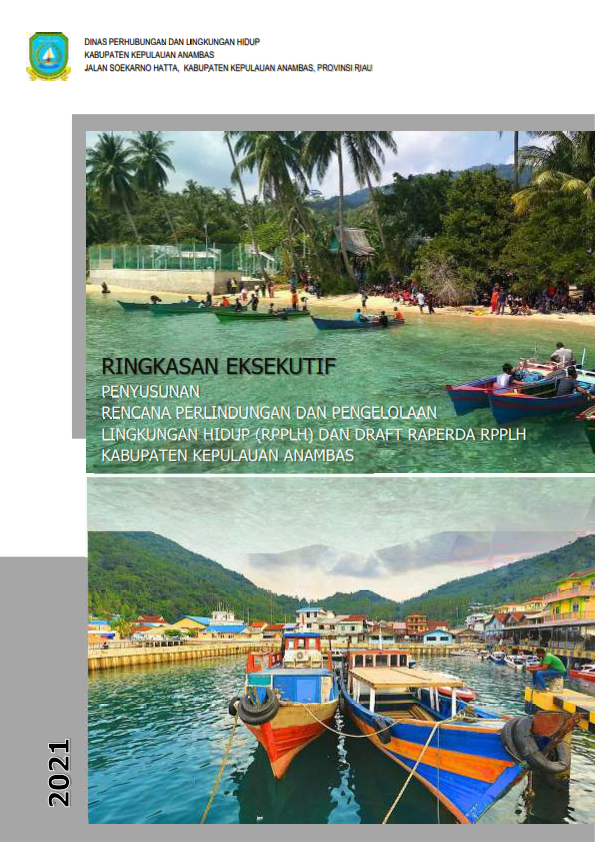
    UGM also advises the Anambas Islands Regency Government in proactively addressing environmental impact by considering ecological diversity, population distribution, natural resources, local wisdom, community aspirations, and climate change in the formulation of the Anambas Islands Regency Environmental Protection and Management Plan (RPPLH).

    UGM at the Forefront of the CDSR Consortium
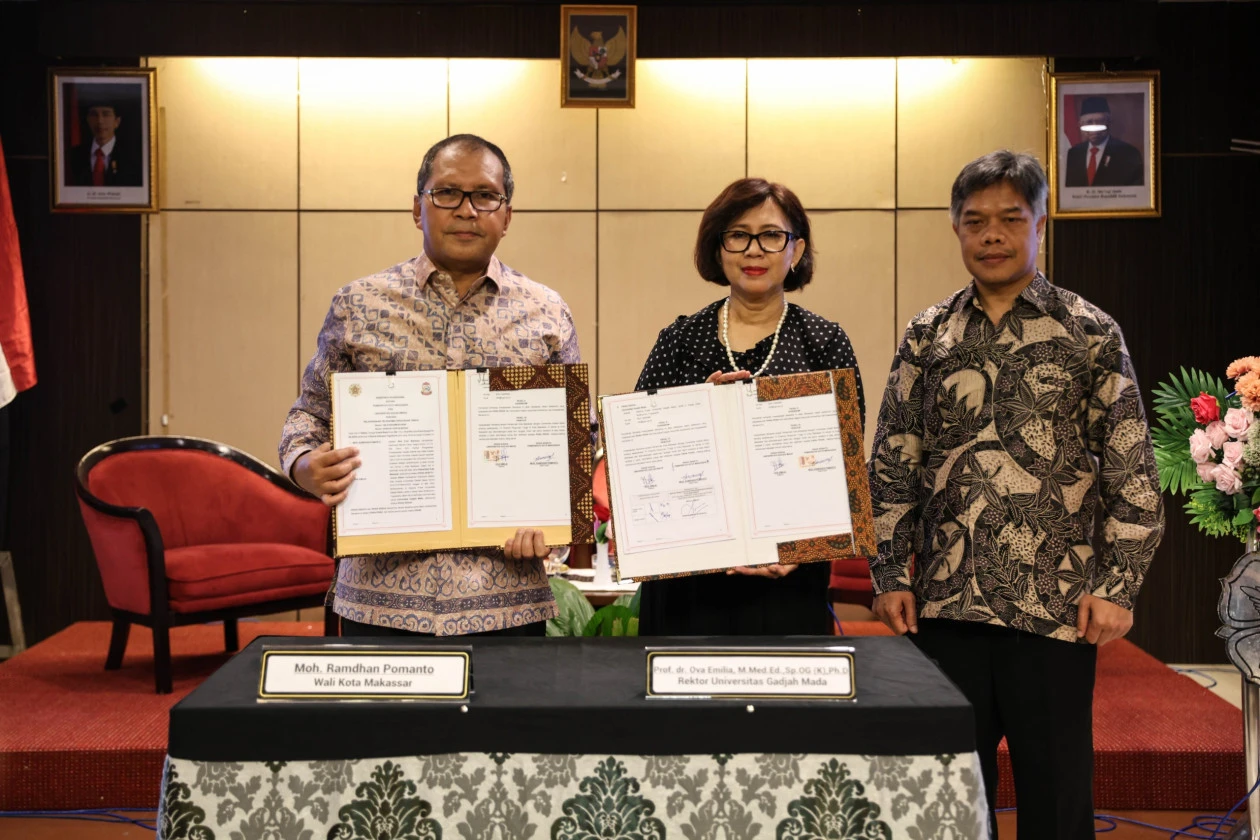
    Source: https://ugm.ac.id/id/berita

    UGM and the Government of Makassar City are two of many prolific institutions that have joined hands to establish the Centre for Development of Sustainable Region (CDSR) consortium. Together with reputable researchers from universities across Indonesia and abroad, including the University of Colorado Boulder, Penn State, Virginia Tech, and Institut Teknologi Bandung, the consortium is implementing a renewable energy utilisation program in Makassar City which aims to enhance community welfare and reduce carbon footprint emissions.

    The collaboration between UGM, the Government of Makassar City, and the CDSR consortium aligns with Indonesia’s broader commitment to renewable energy development as outlined in Indonesia’s National Energy Plan (RUEN). While initiatives like the renewable energy program in Makassar demonstrate localised efforts to enhance community welfare and reduce carbon emissions, these align with national ambitions to achieve 23% renewable energy use by 2025. 

    UGM Lends Experts to Refine the Renewable Energy and New Energy Bill
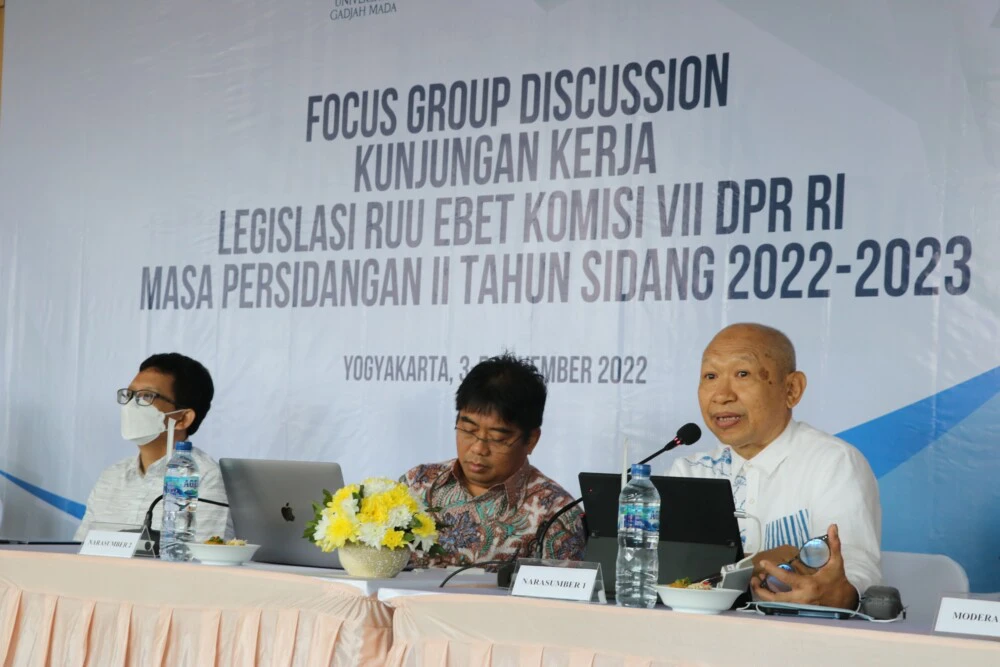
    Source: input for the EBET Bill

    The draft Renewable Energy and New Energy Bill (RUU EBET), currently under review by the Indonesian House of Representatives (DPR RI), seeks to build on renewable energy initiatives by addressing fossil fuel dependency and accelerating clean energy adoption. To refine this policy framework, energy experts, including UGM’s Prof. Tumiran, have contributed visionary strategies integrating renewable energy with economic growth and industrial expansion to the policy draft. The Indonesian House of Representatives has also sought input for the EBET Bill  from UGM’s Faculty of Engineering.

    UGM Hosts Workshop on Energy Research
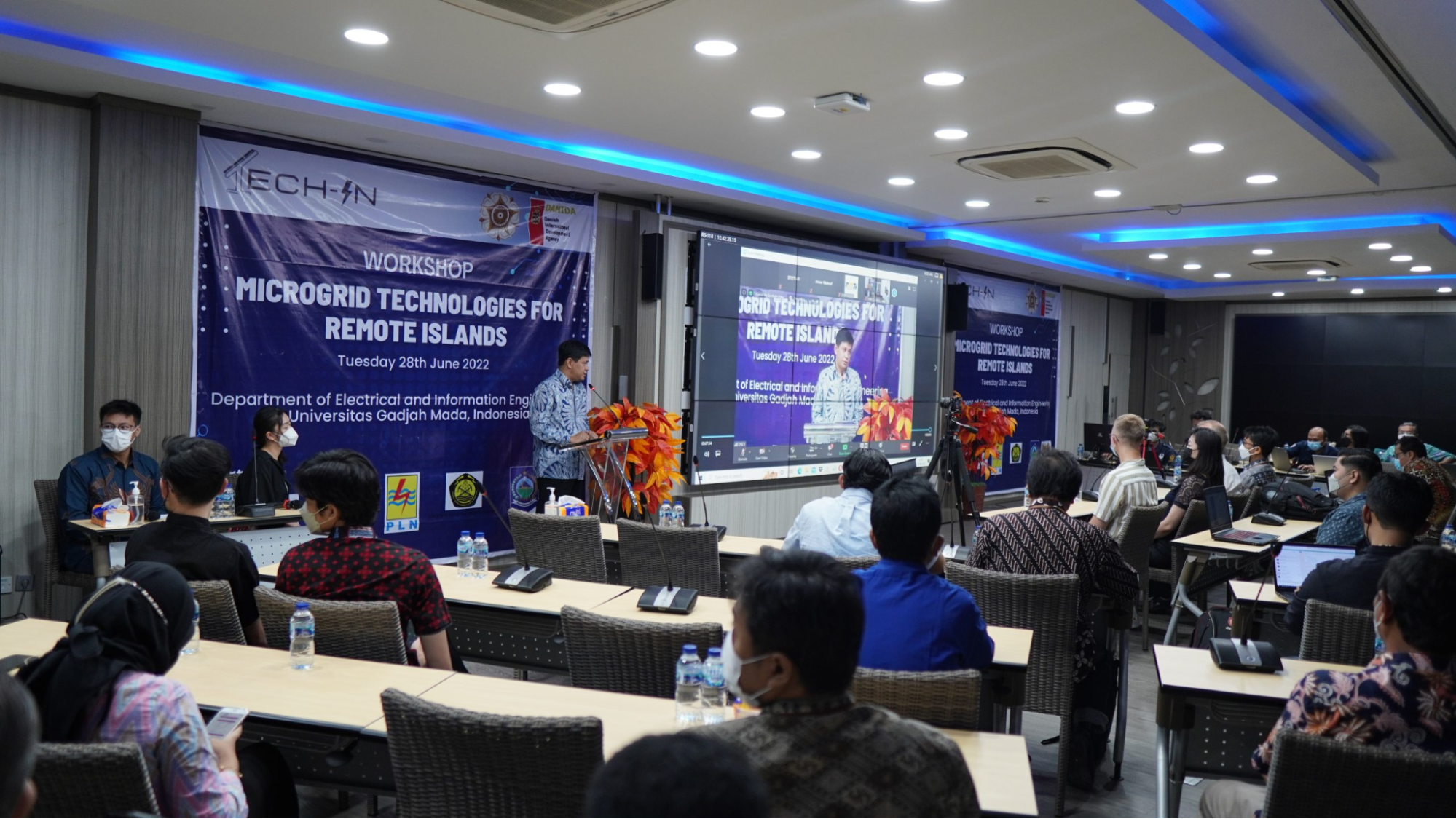
    Source: Microgrid Technologies for Remote Indonesian Islands (Tech-IN) 

    The refinement of the Renewable Energy and New Energy Bill (RUU EBET) has spurred collaborations that extend beyond legislative discussions, highlighting the need for integrated approaches to clean energy solutions. Complementing this effort, UGM hosted the Microgrid Technologies for Remote Indonesian Islands (Tech-IN) Workshop, a forum for policymakers from the government, researchers from national and international energy research institutions, academics from universities, as well as managers and engineers from industry to share ideas and research results related to the application of system technology microgrids in remote locations in Indonesia. This forum represents a collaborative effort in energy policy research, bringing together both private and public institutions alongside a robust national and international network. 

    Key participants include the Center for Research on Microgrids (CROM), the Ministry of Energy and Mineral Resources of the Republic of Indonesia, the National Energy Council, PT PLN (Persero), the Government of West Nusa Tenggara, Aalborg University in Denmark, the Center for Energy Informatics at the University of Southern Denmark (SDU), and the Danish International Development Agency (DANIDA).

    UGM and Banggai Regency Agree to Cooperate on Water Resources and Geopark Management

    The Banggai Regency Government and Universitas Gadjah Mada have agreed to a cooperation agreement in education, research, and community service. The agreement is related to urban water resources and geopark management; he said Banggai Regency needs this cooperation because it has enormous potential. This is important to overcome the problem of people who often lack water.

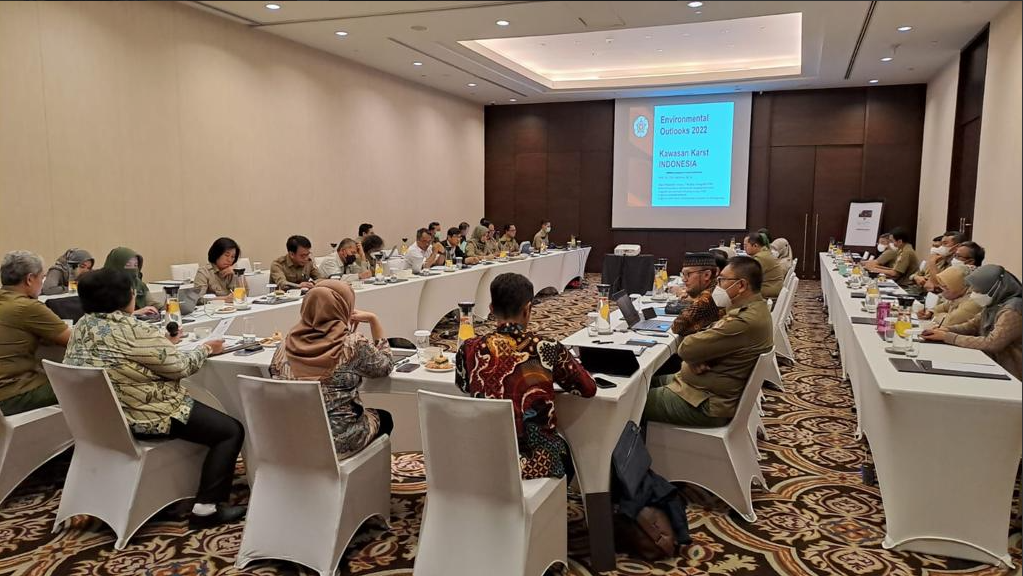
    Ministry of Environment and Forestry (MoEF) Intensifies Cooperation with Faculty of Geography UGM, Minister of MoEF Water Resources and Land Resources Policy Equally Important

    Source: Collaboration with the Ministry of Environment and Forestry

    The Faculty of Geography intensifies collaboration with the Ministry of Environment and Forestry to develop strong policy tools in land resource management, the latest being the FOLU Net Sink 2030. Water resources policy needs to be strengthened by the UN-Water Summit on Groundwater 2022 held on 7-11 December, 2022, in Paris, which affirmed the need to implement integrated water resources management for more responsible and sustainable use and protection of groundwater, springs and surface water. 

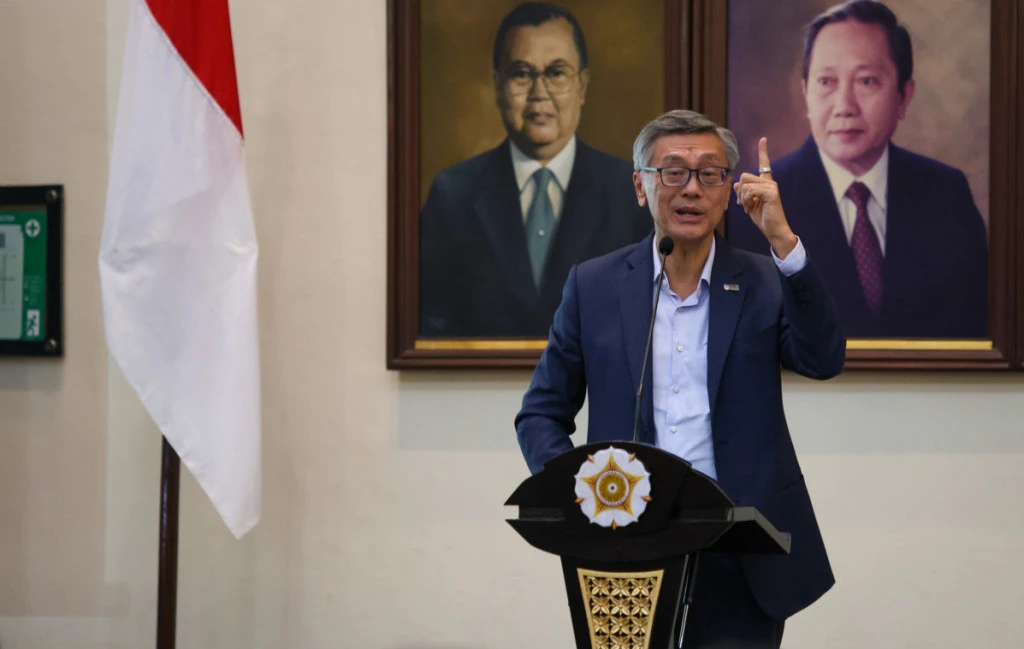
    UGM and NUS are Collaborating on Research to Support Ibu Kota Nusantara (IKN) as a Modern and Sustainable City
    Source: UGM and NUS are collaborating on research for modern and sustainable cities 

    Universitas Gadjah Mada (UGM) and the National University of Singapore (NUS) have agreed to collaborate in supporting the development of Indonesia’s new capital, Ibu Kota Nusantara (IKN), as a modern and sustainable city. This collaboration aims to combine the perspectives of both universities to promote sustainable development of IKN and facilitate the exchange of knowledge and experience between university experts and government officials. The partnership involves at least five experts from NUS working together with the Faculty of Geography at UGM to find solutions related to regional and global climate change.

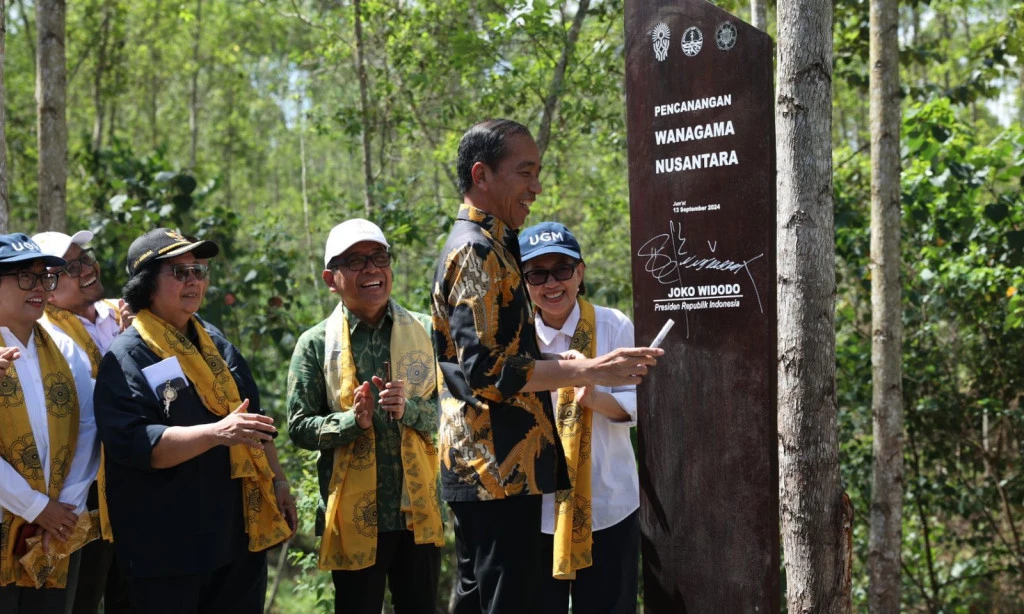
    UGM is Committed to Manage Wanagama Nusantara as an Interdisciplinary Educational and Research Forest
    Source: the inauguration of Wanagama Nusantara Forest 

    President Joko Widodo inaugurated the Wanagama Nusantara Educational and Research Forest in Indonesia’s new capital, Ibu Kota Nusantara (IKN), East Kalimantan. The 621-hectare forest, managed by Universitas Gadjah Mada (UGM), is intended to serve as a center for interdisciplinary education and research, support the restoration of tropical rainforests, and contribute to climate change mitigation and biodiversity conservation. UGM also plans to establish the Institute for Future Life in the area, featuring smart and environmentally friendly buildings as part of its commitment to environmental sustainability.

    UGM Hands Over a Policy Brief to The Government Regarding the Relocation of The National Capital
    Source: UGM hands over a policy brief to the government regarding the relocation of the national capital 

    In the process of relocating the national capital, the government must consider the principles of social and spatial justice. In relation to this, several professors from the Faculty of Geography at Universitas Gadjah Mada (UGM) have conducted a series of seminars and academic studies on the subject. The outcome of these activities is a policy brief that outlines several key recommendations regarding the parameters for selecting the new capital’s location, including physical aspects, demographic factors, migration patterns, accessibility, and inclusivity.
  • Dedicated Training on Environment Aspects of Sustainability in UGM

    In today’s world, environmental sustainability is no longer optional — it is a shared responsibility of the world across all sectors. As one of Indonesia’s leading institutions of higher education, UGM is committed to upholding this responsibility and playing an active role in preserving the environment through education, research, and community engagement. In institutions of higher education, dedicated training on sustainability is crucial for human resource development. It equips faculty, staff, and future graduates with the knowledge and skills needed to address complex environmental challenges. Thus, UGM holds annual training for its faculty, staff, and students, including dedicated training on environmental aspects of sustainability.

    For UGM’s faculty and staff, training such as these equips the human resource behind UGM’s excellency with the knowledge and awareness to reduce risks, ensure compliance, and drive operational efficiency. It fosters innovation, empowers employees to contribute meaningful solutions, and strengthens organizational culture. By holding training sessions, organizations not only protect the environment but also enhance their reputation and support global and national sustainability goals, ensuring long-term success in an increasingly climate-conscious world.

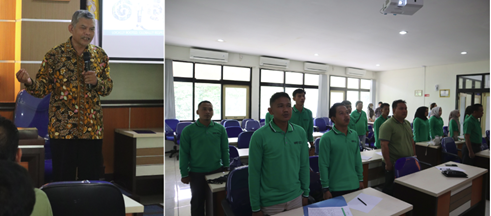
    The university’s Directorate of Human Resources conducts annual basic training for new staff, followed by an assessment at the end of the program. Renowned experts deliver sessions on topics designed to inspire and guide future staff members, including “Why Become a UGM Education Personnel?”, “Actualizing UGM Values at Work”, and “Becoming an Employee with Character and Inspiring Change.” Importantly, the training also emphasizes staff adaptation to climate and environmental challenges. After all, the issue of climate change has become a global concern for all stakeholders: governments, international institutions, the business sector, and civil society. Indonesia has enacted many policy adaptations that include human resource development, technology and knowledge transfer, climate change adaptation innovation and green economic transition, and climate change financing.

    There are other staff training dedicated to environmental aspects of sustainability, including Capacity Building Training for faculty who will become Field Supervisors in the university’s community service program. The training is conducted to prepare the field supervisors for their time in the program and involves training on HSE (Health, Safety, and Environment). HSE is a system of practices, policies, and regulations designed to minimize hazards, prevent accidents and injuries, and promote sustainable practices. This system serves to safeguard both individuals and the environment.

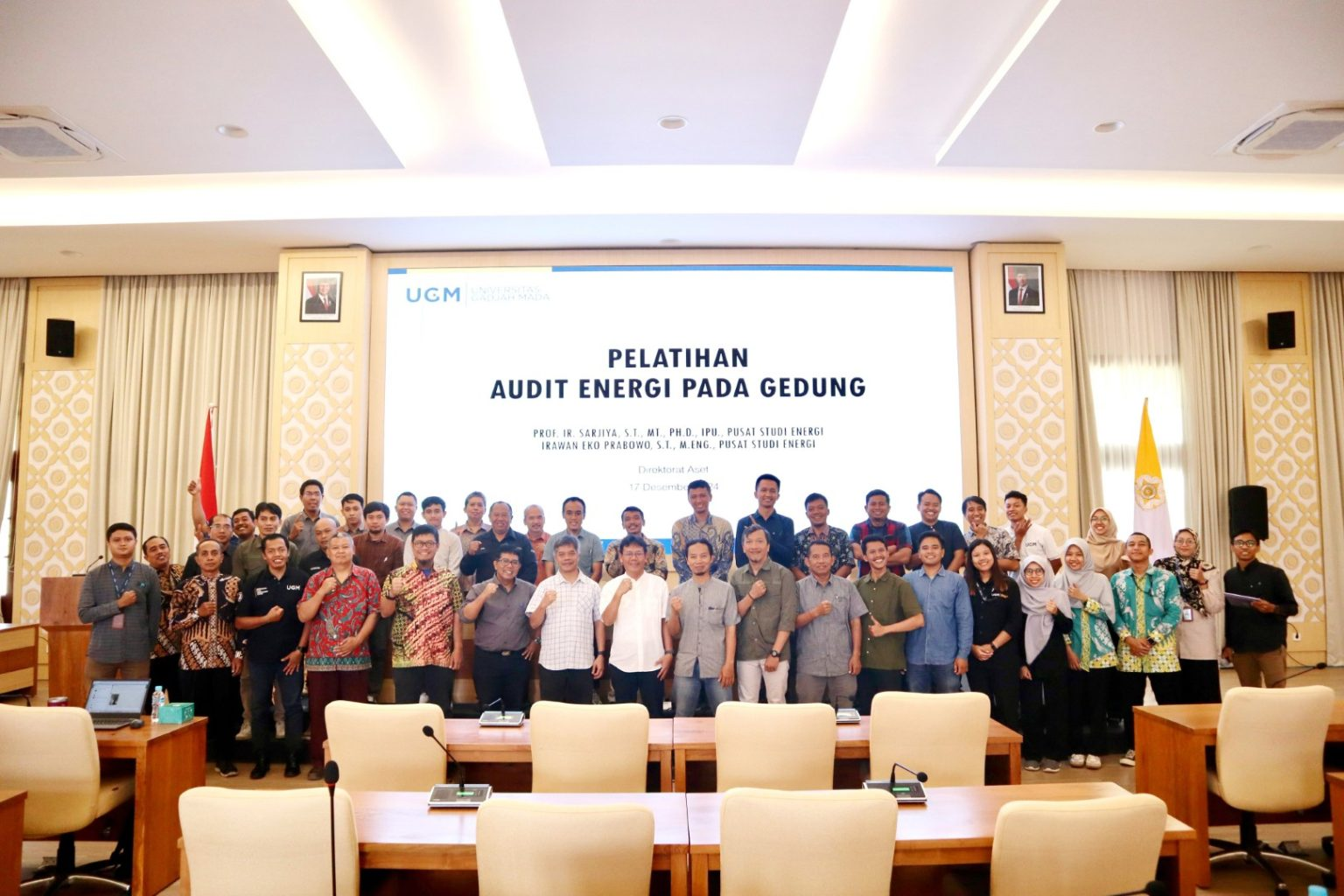
    In addition, the Directorate of Asset UGM organises Energy Audit Training for campus building managers. Energy-saving policies and energy audit training are important to improve efficiency, reduce operational costs, lower carbon emissions, and support sustainability goals by ensuring that staff can identify, monitor, and implement practical energy conservation measures. The training aims to provide an understanding of energy audits, as well as concrete steps in implementing energy-saving policies on campus. The materials on Energy Audit Training can be accessed here: Material 1 and Material 2

    Source: Directorate of Asset UGM organises Energy Audit Training

    UGM prioritizes environmental responsibility in other critical areas. This commitment is reflected not only in energy audit training but also in other areas of environmental management. UGM has its very own Academic Hospital (RSA UGM) which has aligned its hazardous waste management practices with the provisions of Minister of Environment and Forestry Regulation Number P.56/Menlhk-Setjen/2015. This regulation outlines technical procedures and requirements for managing hazardous and toxic waste (B3) in healthcare facilities, with Article 38 highlighting the importance of training for personnel involved. This reflects UGM’s broader commitment to sustainability, ensuring that both energy management and waste management are supported by proper policies and continuous staff training.

    The hospital regularly provides dedicated training for staff involved in hazardous waste management (Personnel Training), ensuring they possess the necessary knowledge and skills to handle hazardous waste safely and effectively. Furthermore, personnel who have completed training are required to obtain certification in accordance with standards set by the Ministry of Environment and Forestry (Certification). To maintain excellence and compliance, RSA UGM also keeps staff updated on the latest regulations and technologies through advanced training programs and workshops (Knowledge Updates).

    For UGM’s students and future graduates, training on environmental responsibility and sustainable practices is also a must.

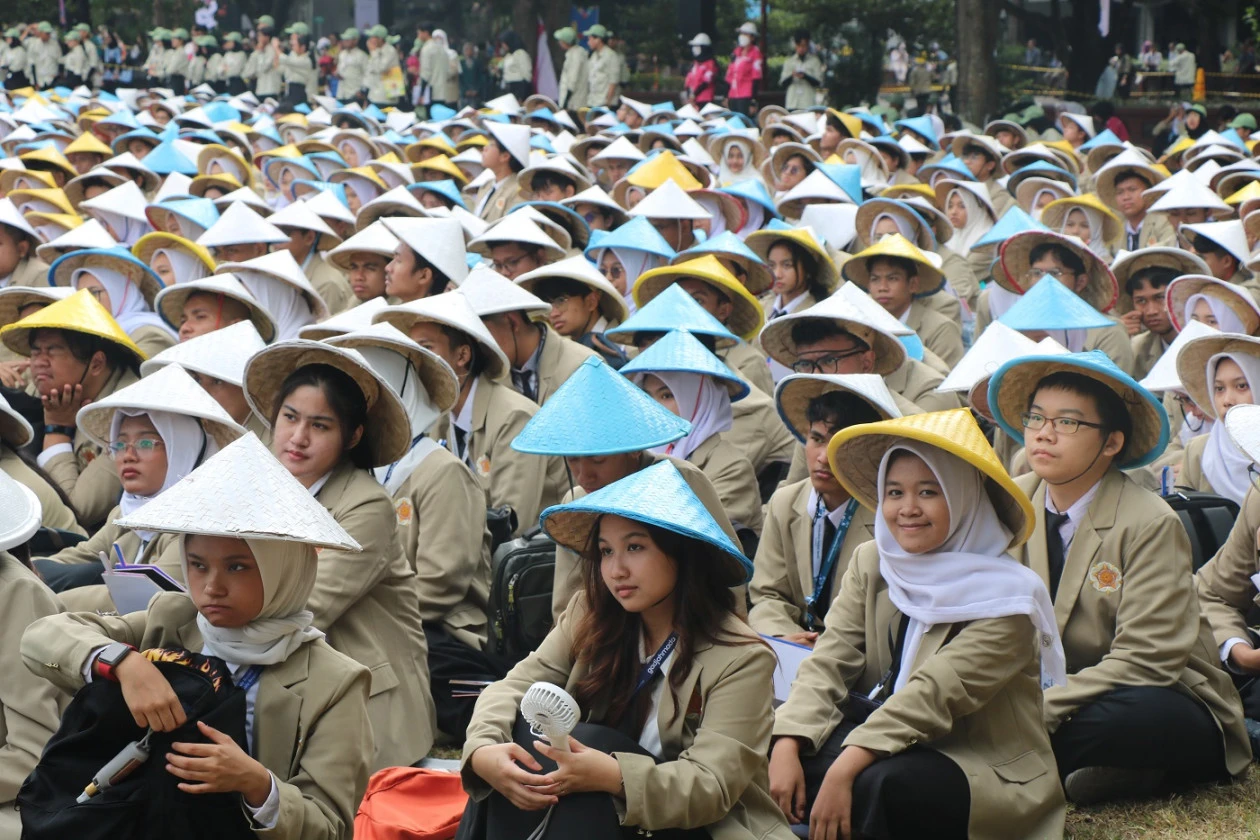
    Source: PIONIR

    Freshman year students at UGM are mandated to participate in the campus orientation program, PIONIR. Students received orientation materials that emphasized the values of leadership, interdisciplinary collaboration, and intellectual and emotional intelligence to face global challenges. Most importantly, the program highlighted environmental awareness and zero waste principles, encouraging students to adopt sustainable habits from their first day on campus. They were taught to bring their own water bottles and lunch boxes, avoid single-use plastics, and actively participate in waste sorting and recycling initiatives. This education aims to shape students into environmentally conscious individuals and agents of change within the university community and beyond.

  • On-campus and Local Health and Wellbeing Services in UGM

    UGM demonstrates a robust commitment to advancing the well-being and inclusivity of its academic community through strategic policies and initiatives. By prioritizing access to affordable and nutritious food options and fostering a safe, inclusive, and equitable campus environment, UGM aligns with national and global imperatives to support sustainable development and social justice. These efforts are institutionalized through well-defined regulations, practical guidelines, training programs, and collaborative discussions, reinforcing UGM’s dedication to holistic community empowerment and sustainable governance. The university’s approach highlights its role as a leader in promoting health, inclusivity, and equity within higher education.

    Existence of a committee, office, or officer

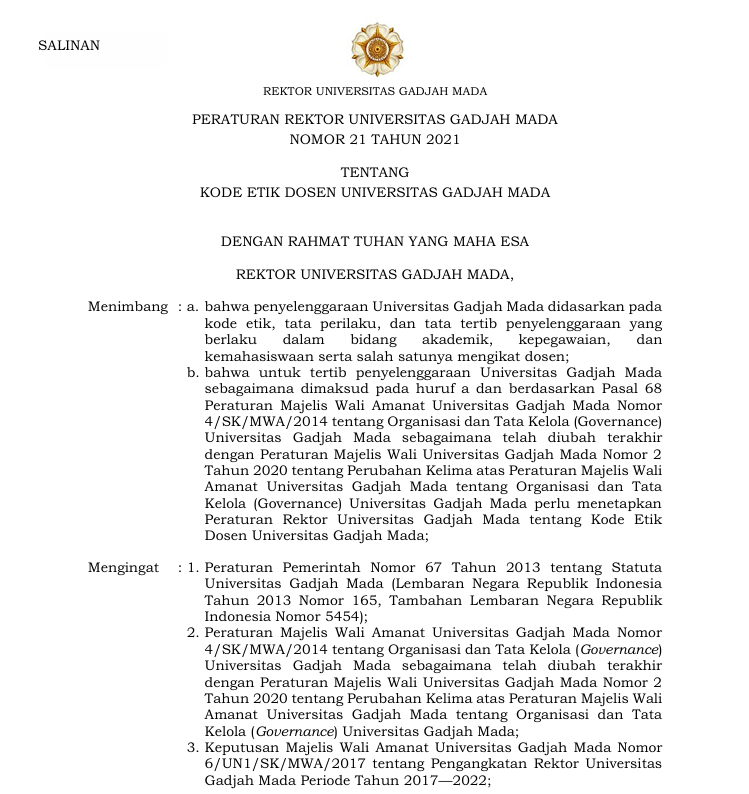
    Rector’s Regulation Number 21 Year 2021

    Source: https://hukor.ugm.ac.id/download/peraturan-rektor-ugm-nomor-21-tahun-2021/

    The University Honors Council (DKU) is an instrument of the Academic Senate (SA) which has the authority to independently conduct examinations and make decisions on alleged violations of the code of ethics. (pg. 2; Article 15 pg. 7). The code of ethics is related to the Tri Dharma of higher education which includes education, research and community service activities. Violators will be subject to sanctions referring to the Rector’s Regulation related to DKU (Article 16).

    Existence of anti-discrimination and anti-harassment policies

    UGM is committed to anti-discrimination as directed by Trustee Board’s Regulations Number 1 Year 2023 about University Strategic Plan 2022-2027 (pg. 14, UGM guarantees that the campus environment is a safe and comfortable ecosystem, free from sexual violence, other violence, bullying, mental health problems, discrimination, and friendly to people with disabilities). The regulation in 2023 is the continuation of the Trustee Board’s Regulations Number 1 Year 2020 about University Strategic Plan 2017-2022 which also regulates discrimination (pg. 20, inclusive campus development with an anti-discrimination spirit based on race, ethnicity, ethnicity, gender, marital status, disability, age, religion, minority group, etc.). UGM guarantees the rights of all women including staff and students to be treated equally. Based on the Trustee Board’s Regulations Number 1 Year 2021 concerning Campus Master Plans (pg. 13, pg. 25), UGM is fighting for universal principles, namely social justice, equality, inclusivism, and sustainability in all aspects of university administration policies.

    Specifically related to sexual violence, UGM is committed to maintaining standards of human values and dignity at UGM, as well as protecting the entire UGM community from all forms of sexual violence as stated in the Rector’s Regulation Number 1 Year 2020 Rector’s Regulation Number 1 Year 2020 (Article 2) and updated in Rector’s Regulation Number 1 Year 2023 (Article 2). UGM also provides prospective students from all pathways a fair admissions process and will not discriminate against ethnicity, religion, race and intergroup, etc. as clearly stated in the Rector’s Regulation Number 3 Year 2023 Article 2 Verse e.

    Provision of healthy and affordable food choices for all on-campus

    UGM has implemented a structured approach to ensure that canteens across its campus are managed effectively and safely. The Practical Guidelines for Healthy Canteens, which was introduced in 2022 to be implemented across all faculty canteens at UGM, offers key resources to help canteen managers and staff prioritize healthy, nutritious, and safe food choices while maintaining a welcoming environment for everyone on campus. These guidelines emphasize hygiene and sanitation based on best practices and the authors’ backgrounds in food safety. With an easy-to-follow format, the guidelines are crafted to be accessible for canteen staff, encouraging them to align their food services with broader food safety standards, such as those promoted by the National Food and Drug Monitoring Agency (BPOM).

    Practical Guideline for Healthy Canteens from HPU UGM

    Expanding on the foundational guidelines, the 2023 Practical Guidelines for Healthy Canteens  was created by students from UGM’s Public Health Master’s program. Developed in response to the changes brought by the COVID-19 pandemic, this guide assists canteens in adapting to updated health protocols and operational standards. It provides practical guidance on areas like food service, staff conduct, facilities, and visitor health protocols, all aimed at ensuring a safe and welcoming environment for the campus community.

    Further supporting these guidelines, Rector’s Regulation Number 6 Year 2016 about Canteen Management, along with an update in Rector’s Regulation Number 14 Year 2019, establishes additional responsibilities and standards for campus canteen management at UGM. These policies emphasize the importance of providing a variety of food choices, including options that cater to diverse dietary needs, while also ensuring that the campus remains a clean and safe space for students and staff. By encouraging high standards in food quality and environmental responsibility, these regulations reflect UGM’s commitment to fostering the health and wellness of its campus community.

    Sustainable Food Choices

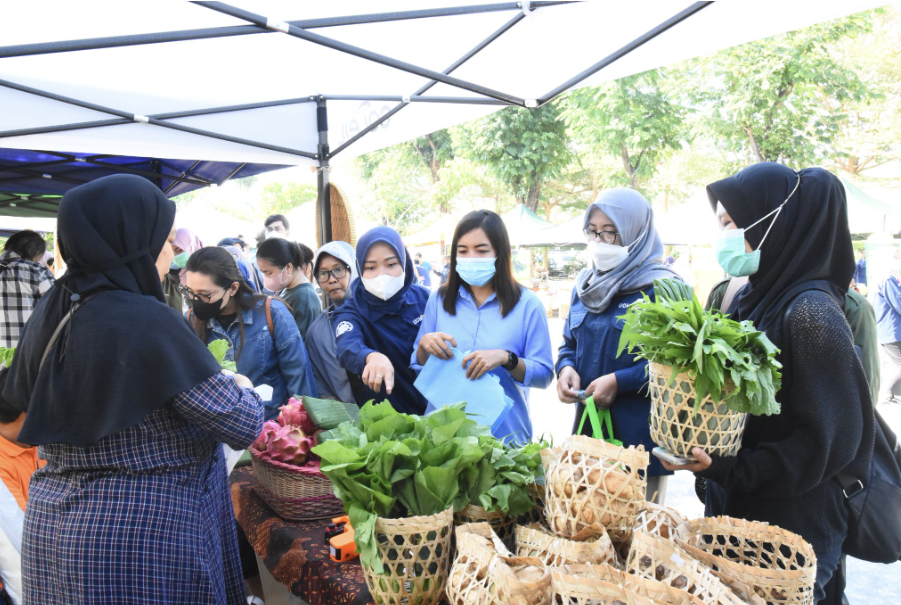
    UGM has introduced the Pasar Krempyeng Boge, hosted by the UGM Academic Hospital, a monthly food bazaar aimed at offering environmentally-friendly food choices on campus. Organized through collaborations between the UGM Academic Hospital, the UGM Agrotechnology Innovation Center (PIAT), and local Micro, Small, and Medium Enterprises (MSMEs), this program began on August 16, 2023, and emphasizes community-centered food offerings that promote health and support local agriculture. The market, held every Wednesday Wage (a Javanese calendar day that recurs every 35 days), encourages the purchase of organic and locally sourced foods, including vegetables grown and cultivated at PIAT.

    Pasar Krempyeng is more than just an event to buy food; it educates attendees on the importance of food security, healthy living, and reducing waste. The Director of Medical Services and Nursing at RSA UGM highlighted the initiative’s value in strengthening the relationship between the hospital and the community while encouraging healthy lifestyle practices. The bazaar prohibits plastic use, promoting reusable bags to minimize waste. This initiative both offers economic benefits to small-scale producers and enhances community engagement in sustainable practices.

    Pasar Krempyeng food bazar

    UGM’s canteen management and initiatives like Pasar Krempyeng Boge  show its commitment to campus health and sustainability. By promoting nutritious food, sustainable practices, and local producers, UGM supports food security and a healthier university community.

    Access to physical healthcare services including information and education services

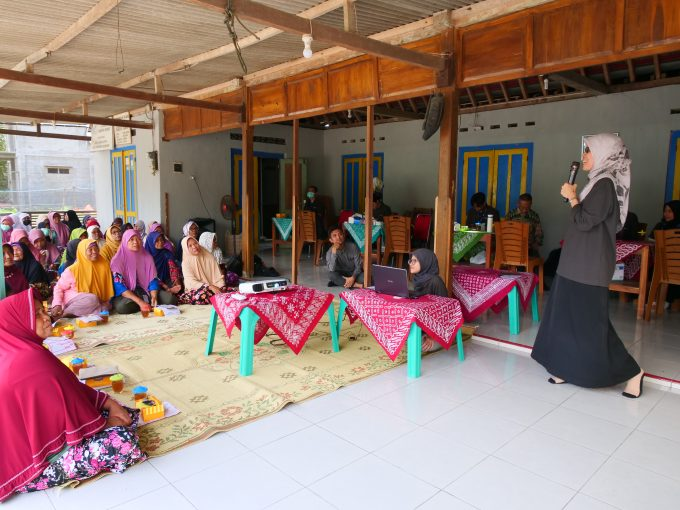
    With a vast archipelago and diverse geography, further burdened by socioeconomic disparities, many rural and remote regions in Indonesia lack adequate and have unequal access to healthcare facilities and professionals. Outreach programs bridge this gap by bringing essential health services directly to underserved communities. These programs target vulnerable populations, ensuring they receive the support needed for better health outcomes. Outreach programs can help in the prevention, early detection, and education to reduce the prevalence and impact of diseases found in Indonesia. This is especially important since many health issues stem from a lack of awareness about hygiene, nutrition, and preventive care. Outreach programs serve to educate communities on these topics, empowering individuals to make informed decisions about their health and well-being.

    The Comprehensive Community Health Care-Education Program (CCHC-EP), for instance, was introduced by the Faculty of Medicine Universitas Gadjah Mada in the 1990s as part of its commitment to community-based learning and healthcare. This program emphasised engaging students with community health issues through community service programs (KKN) and Community Health Service-Learning Program (K3M), fostering interprofessional collaboration among medical, nursing, and nutrition students. In 2013, a renewed effort led to the development of the Community and Family Health Care with Interprofessional Education (CFHC-IPE) program. This initiative aimed to integrate holistic healthcare education across disciplines, involving students in longitudinal learning experiences spanning seven semesters. Unlike its predecessor, CFHC-IPE focused on working with family partners and local health teams, ensuring comprehensive health interventions for individuals, families, and communities. Despite challenges in aligning the curricula of medicine, nursing, and nutrition programs, CFHC-IPE has evolved through continuous improvements and remains a cornerstone of UGM’s interprofessional education and community health initiatives.

    Simply put, UGM delivers comprehensive outreach programs to promote health and well-being in local communities. These initiatives address key topics such as hygiene, nutrition, family planning, ageing well, and preventive care. Through collaborations with local governments, health cadres, and academic units, UGM implements projects that empower communities with knowledge and services to improve their health. Most of UGM’s community service and community outreach programs are carried out by student volunteers. There are various health programs being served, such as:

    Health Services and Education for Local Residents

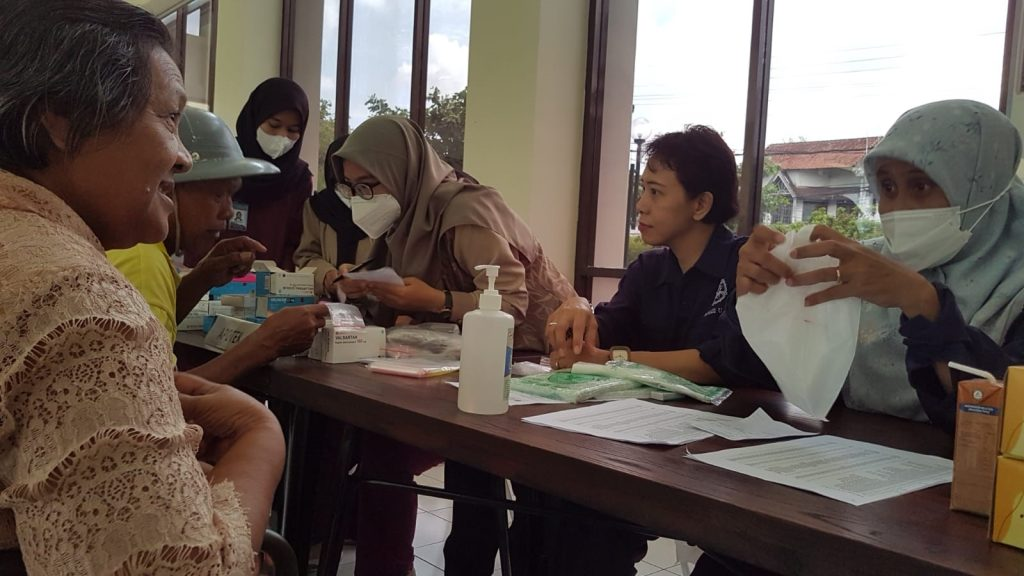
    UGM provides free health check-ups, dental health education, and lifestyle counselling for elderly citizens and community health cadres from villages near and surrounding UGM, especially in Sinduadi and Caturtunggal Villages. UGM hosts programs on elderly health care and emergency preparedness through free health check-ups and emergency response education for elderly residents and their caregivers in these villages.

    Health Examination and Education for Residents Around UGM
    Source: https://pengabdian.ugm.ac.id/2023/12/13/pererat-jalinan-kebersamaan-dan-tingkatkan-kesehatan-warga-sekitar-ugm-selenggarakan-bakti-sosial-pemeriksaan-dan-edukasi-kesehatan/

    Health Education and Preventive Care

    The Department of Pharmaceutical Chemistry at UGM’s Faculty of Pharmacy organised a program in Dukuh Soge Sanden, Bantul, educating residents about healthy lifestyles, and managing degenerative and chronic diseases. Topics included the importance of mental, physical, and social health, following the “GERMAS” movement’s seven steps, and specific prevention strategies for hypertension and diabetes. The program also offered health screenings for blood pressure, cholesterol, blood sugar, and uric acid.

    Counseling on healthy lifestyles and prevention of degenerative diseases by the UGM Faculty of Pharmacy
    Source: https://farmasi.ugm.ac.id/departemen-kimia-farmasi-fakultas-farmasi-ugm-adakan-penyuluhan-kesehatan-di-dukuh-soge-sanden-bantul/

    Women’s Reproductive Health Education

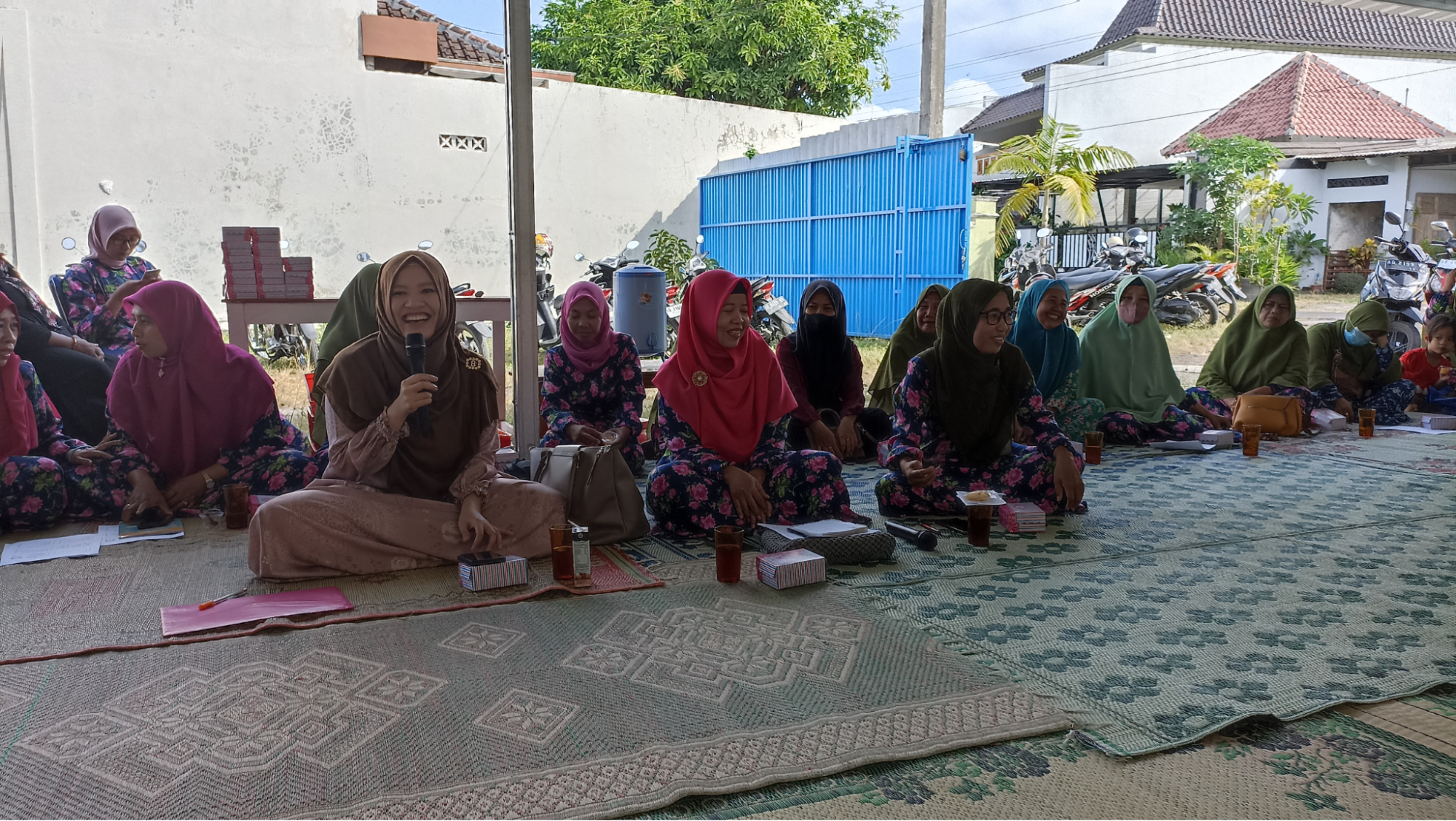
    The session featured expert guidance from UGM’s Department of Obstetrics and Gynecology. The program covered essential topics on maintaining reproductive health from childhood to menopause, with practical advice on hygiene practices to prevent diseases. Participants showed high engagement, actively asking questions and consulting the expert. The initiative aims to equip local women with knowledge to promote healthier reproductive practices and well-being.

    The Faculty of Medicine, Public Health, and Nursing (FK-KMK) UGM filled the reproductive health education.

    https://hdss.fk.ugm.ac.id/2023/07/21/penyuluhan-kesehatan-reproduksi-sribit-2023/

    Prevention and Management of Non-Communicable Diseases (NCDs)

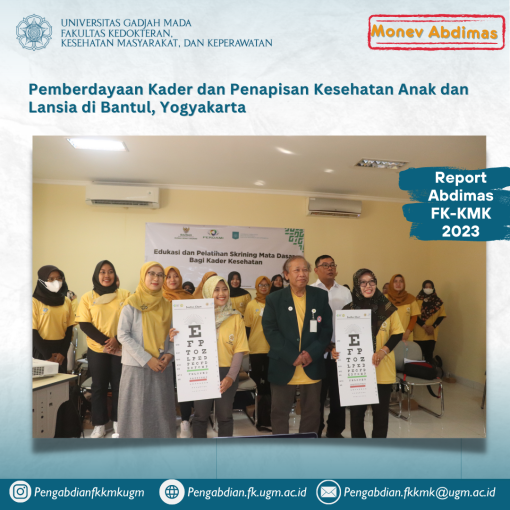
    This program targeted improving the health of children and the elderly in Bantul Regency. The program included health education for local health cadres on managing hypertension, diabetes, stroke prevention, stunting, obesity, and vision care. Funded through UGM’s Integrated Community Engagement Grant, the initiative emphasised empowering cadres with knowledge to identify and address NCD risk factors and vision issues in their communities.

    UGM Community Service Team Holds Empowerment of Cadres and Health Screening for Children and the Elderly

    Source:
    https://pengabdian.fk.ugm.ac.id/pemberdayaan-kader-dan-penapisan-kesehatan-anak-dan-lansia-di-bantul-yogyakarta/ 

    Access to sexual and reproductive healthcare services including information and education services

    Universitas Gadjah Mada provides students with access to sexual and reproductive health-care services, including confidential counselling and medical check-ups. UGM also offers evidence-based sexual health education through workshops, seminars, and online resources, promoting informed decision-making and reducing stigma. These services must be inclusive, addressing the diverse needs of all students, including those with disabilities. 

    UGM, as a member and one of the founders of the Health Promoting University, pays special attention to reproductive health. Reproductive health, according to the World Health Organization (WHO), is a state of complete physical, mental, and social well-being, not merely the absence of disease or disability, in all matters related to the reproductive system, its functions, and processes. Reproductive health should be a concern not only for women but also for men.

    Information on reproductive health is accessible through UGM’s Health Promoting University webpage. This platform provides students, staff, faculty, and even the public with valuable resources on topics like cancer in women’s reproductive organs and guidance for new mothers on the safety of certain medications while breastfeeding.

    UGM’s Health Promoting University team comprises working groups dedicated to providing health-related information and education to support a healthy campus life for students, the academic community, and the surrounding environment. Among their many efforts includes developing materials for UGM’s online courses, known as Massive Open Online Courses (MOOCs). These courses can be accessed throug https://mooc.ugm.ac.id/. The course is open to the public, offering paid certificates or credentials and membership for the UGM Online community. Among the courses offered is a course on Sexual and Reproductive Health where students can learn about the concept of the human body’s reproductive systems, potential issues affecting reproductive organs, and the prevention and management of reproductive health problems.

    The Faculty of Medicine, Public Health, and Nursing (FK-KMK) hosts an annual socialization for new students and offers comprehensive support services, including on sexual and reproductive health education. New students are introduced to these resources and encouraged to adopt healthy lifestyles. The faculty also organizes seminars on reproductive health education, since reproductive health is not often understood by teenagers. These seminars help spread awareness of reproductive health information and common issues such as unplanned pregnancies, which can disrupt education, especially for girls.

    Access to mental health support for both staff and students

    Universitas Gadjah Mada (UGM) has implemented the Health Promoting University (HPU) initiative to enhance its academic community’s mental health and well-being. This initiative, launched in 2019, aims to create a supportive campus environment that fosters optimal mental health for students, faculty, and staff

    A key initiative from the Mental Health Division in HPU UGM is the Kampus Sejahtera Program (Well-being Campus) system, which encourages mutual support, positive appreciation, and motivation among all campus members. This program aims to help individuals recognise their abilities, manage life pressures, work productively, and contribute to society. The Mental Health Division is also responsible for establishing mental health services across faculties, with trained first responders among students, faculty, and staff. To prepare for this, they organise workshops and training sessions to promote mental health awareness and equip individuals with skills to support others. For example, the university has conducted workshops on creating a well-being campus and training for mental health first aiders. In order to implement effective mental health strategies and guarantee that their programs are tailored to the needs of students and staff, the division initiates collaboration with various stakeholders, including the Ministry of Health and international experts.

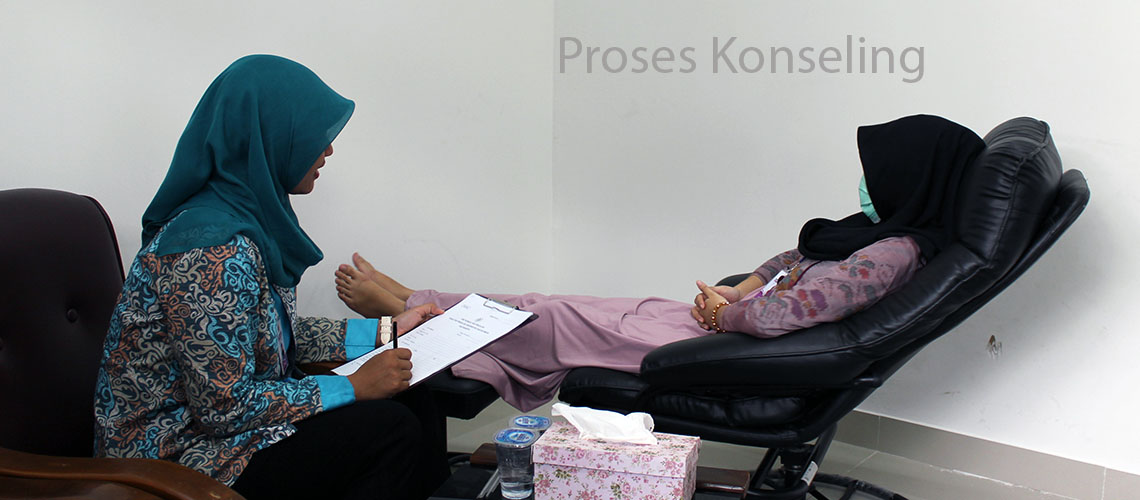
    An important unit in UGM that promotes mental health and provides psychological support to individuals and organisations within and beyond the university community is the Psychology Consultation Unit. This Psychology Consultation Unit (UKP) was established in 1970 under the Faculty of Psychology. Its primary mission is to provide comprehensive, professional, and ethical psychological services to the community.

    Services offered by UKP UGM include individual counselling, that is, personalised counselling sessions for adults and children, addressing various psychological concerns to promote mental well-being. They also offer educational and school assistance, which are unit assessments and interventions related to educational settings, such as cognitive testing and support for learning difficulties. Family and relationship counselling is also available for couples and families to navigate relational challenges, with the aim of improving communication and resolving conflicts. The unit extends its expertise to corporations and organisations by offering psychological assessments, employee assistance programs, and workshops to enhance workplace well-being. 

    Besides the UKP, the university also provides a Crises Center. Several UGM Faculties or Schools also provide career and mental health consultation services as part of their mental health system (see the Faculty of Biology, Faculty of Engineering, Faculty of Economics and Business, Faculty of PharmacyFaculty of Social and Political Sciences, Faculty of Mathematics and Natural Sciences, Faculty of Psychology, and Faculty of Medicine, Public Health, and Nursing).

    Of course, there are still many challenges in facing mental health. The university understands there remains stigma around seeking mental health support that discourages many individuals from reaching out to therapists. Subsequently, those that do wish to seek support are often unsure where to start. That is why UGM also provides a mental health platform known as ChatBot Lintang. Launched on July 26, 2023, by UGM’s Rector, Professor Ova Emilia, the chatbot serves as a communication channel for students, faculty, and staff to discuss mental health issues and incidents of violence.

    Chatbot Lintang offers four main services to support mental health. Psychoeducation provides essential information about mental health, disorders, symptoms, and self-help strategies to raise awareness and educate users. Mental Health Tips delivers practical advice on relaxation, stress management, and emotional wellness to promote mental well-being. The chatbot also allows Self Assessment for users to conduct a self-assessment through initial screenings and receive recommendations based on their responses. Finally, the Service Directory connects users with mental health resources at UGM, including professional counselling, support groups, and emergency services. These services ensure accessible and comprehensive mental health support.

    Improving Access to Mental Health Care for Staff

    In the dynamic work environment of a university, where teaching activities and research intertwine with the pressures of deadlines, responsibilities, and expectations, the mental health of staff often takes a backseat. University staff and faculty juggle multiple roles, from mentoring students to managing institutional demands, often under significant stress. Amid these challenges, the well-being of university staff is not just a personal concern but a cornerstone of institutional success. After all, a healthy, supported workforce fosters a positive environment for learning, collaboration, and innovation. By providing mental health support, Universitas Gadjah Mada can empower their faculty and staff to navigate challenges, enhance productivity, and maintain a harmonious work-life balance.

    UGM initiated the UGM Crisis Center, a centre which aims to enhance the quality of services for its community by providing comprehensive support during emergencies and crises. The centre offers several key services, including immediate assistance for various emergencies, including medical issues, safety concerns, and psychological support (emergency response). Dedicated Hotline Services are available for specific areas such as academic affairs, human resources, finance, international cooperation, alumni relations, and IT support. The centre also provides specialised services to handle cases of sexual harassment (sexual harassment support) and assistance tailored to the needs of individuals with disabilities (individuals with disabilities support), promoting inclusivity within the campus and ensuring a safe and secure working environment.

    The university understands the numerous challenges in addressing mental health and that the needs of each individual may vary. UGM aims to provide a variety of mental health support for its workforce. All the mental health support provided by UGM for its students is also available for staff. Detailed information on these services can be found here.

  • UGM’s Outreach Projects for the Local Community

    Provide Assistance in The Local Community Supporting Sustainable Business

    Higher education Tri Dharma (Three Pillars of Higher Education) includes community services as a part of the university’s contribution towards the development of society. In regard to UGM Tri Dharma, UGM provides various platforms to engage with the local community by assisting small and medium enterprises as well as ‘starting up’ to develop and maintain their businesses to become sustainable through community empowerment projects such as training, workshops, and digital innovations.

    Trainings

    Universitas Gadjah Mada (UGM) is dedicated to providing assistance within the local community to support sustainable businesses and improve the overall quality of life for residents in Mancasan Kleben Hamlet, Pendowoharjo, Sleman. Through targeted skills training tailored to labor market demands, the program aims to reduce social disparities and elevate the living standards of the Dusun Kleben community.

    Key initiatives include workshops on the creation, painting, and artistic development of Wayang Beber Serat Kancil Kridhamartana. Additional training sessions focus on preserving traditional Javanese arts, such as gamelan music, macapat poetry, and children’s songs, empowering local residents while fostering cultural sustainability.

    UGM further collaborates with the Nutrition Unit of RSA UGM and the Sleman District Health Office to introduce Hazard Analysis Critical Control Point (HACCP) measures for food servers and cooks at UGM Academic Hospital. This initiative addresses the critical importance of hygiene in food preparation, particularly for patients vulnerable to infections, thus supporting safer practices in food services. The 2013 Ministry of Health report highlighted the prevalence of nosocomial infections in Indonesia (15.74%), with 5.9% reported in Yogyakarta hospitals, underscoring the urgency of this effort to mitigate infection risks linked to hospital food.

    To further support sustainable growth, UGM offers training programs that include both qualitative and quantitative analyses across various disciplines such as sociology, communication, management, and politics. By strengthening researchers’ capabilities through Social Network Analysis (SNA) methods, these programs contribute to building a foundation for sustainable and inclusive community development.

    UGM’s Initiatives for Supporting Local Micro-, Small-, and Medium-sized Enterprises (MSMEs)

    Universitas Gadjah Mada (UGM) demonstrates a strong commitment to empowering local communities by fostering economically and socially sustainable business practices. Through a comprehensive approach that includes mentorship initiatives, training workshops, and access to university facilities, UGM equips entrepreneurs with the education and resources necessary to drive business growth and community development. 

    Training on Duck Farming 

    Source: https://pengabdian.ugm.ac.id/ In July 2023, UGM’s Directorate of Community Service (DPKM), in collaboration with the Batanghari Regency Tourism, Youth, and Sports Office, conducted a training program aimed at empowering local youth in Batanghari villages. The program focused on duck farming as a viable entrepreneurial venture. The training integrated theoretical and practical components, addressing the benefits of duck farming, operational management, feed production, agricultural business strategies, and marketing techniques. Additionally, participants engaged in field practices to acquire hands-on experience from established duck farming entrepreneurs. The program sought to enable participants to implement these newly acquired skills, thereby promoting entrepreneurial and economic growth within their communities.

    Digital Marketing Training for MSMEs

    Source: https://jogja.voi.id

    UGM’s Faculty of Economics and Business (FEB), in partnership with Creativago and the RISPRO LPDP research funding program, facilitated a series of free training sessions and mentorship opportunities for local MSMEs in Yogyakarta. Conducted through in-person workshops at UGM, the program featured a blend of theoretical instruction, interactive discussions, and practical exercises in content creation, led by experienced industry professionals. Participants engaged in modules covering digital marketing, social media optimization, creative writing, graphic design, photography, communication strategies, and consultation services. This initiative aimed to address the challenges of transitioning MSMEs to digital platforms, equipping them with essential tools to optimize operations and expand market reach. Source: https://jogja.voi.id  UGM’s Faculty of Economics and Business (FEB), in partnership with Creativago and the RISPRO LPDP research funding program, facilitated a series of free training sessions and mentorship opportunities for local MSMEs in Yogyakarta. Conducted through in-person workshops at UGM, the program featured a blend of theoretical instruction, interactive discussions, and practical exercises in content creation, led by experienced industry professionals. Participants engaged in modules covering digital marketing, social media optimization, creative writing, graphic design, photography, communication strategies, and consultation services. This initiative aimed to address the challenges of transitioning MSMEs to digital platforms, equipping them with essential tools to optimize operations and expand market reach.

    Food Packaging Training for MSMEs 

    Source: https://pengabdian.ugm.ac.id

    In March 2023, the DPKM organized a specialized training program targeting MSMEs in the food sector, with a primary focus on enhancing product packaging. The curriculum encompassed food processing standards, types of packaging materials, design and labeling techniques, and regulatory procedures for product registration. Participants received comprehensive technical guidance and were evaluated on their packaging designs. By providing practical knowledge and addressing common challenges, the program empowered participants to enhance the marketability and value of their products, enabling them to compete more effectively in broader markets.

    Training on Packaging, Marketing, and Promotion 

    Source: https://koranbernas.id

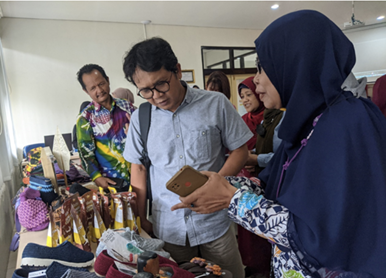
    In Padukuhan Malangrejo, a training program was conducted to enhance the marketability of local MSME products through tailored workshops on packaging, marketing, and promotional strategies. This initiative, particularly directed at women entrepreneurs, provided skills to improve their business practices. UGM students also contributed by collaborating with the Student Executive Board of FEB and the Jetis Village MSME Forum to organize an e-sharing training session. This session, involving 30 local business owners from Jetis and Celep, focused on product aesthetics, uniqueness, and digital marketing, facilitated by expert speakers. Participants expressed optimism for sustainable business growth, while local leaders commended the program’s contribution to advancing MSMEs in Indonesia.

    Capacity-Building Initiatives for Policymakers 

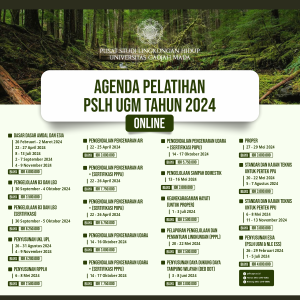
    UGM extends its outreach to policymakers and legislators by offering specialized training programs on topics such as environmental impact assessments (AMDAL) through the Centre for Environmental Studies (PSLH).

    Source: https://pslh.ugm.ac.id/pelatihan/ 

    UGM offers a diverse range of training programs aimed at building and enhancing competencies in environmental management. These programs are designed to cater to a wide audience, including professionals, students, and other key stakeholders involved in environmental assessment and management. Below is a detailed overview of the training programs offered: 
    1. Basic AMDAL and ESIA Training. This program provides foundational knowledge on Environmental Impact Assessment (AMDAL) and Environmental and Social Impact Assessment (ESIA). It covers the principles, benefits, and regulatory frameworks associated with environmental assessments. Participants gain insights into ecosystem typologies, impact identification, prediction, evaluation, and mitigation strategies. The curriculum also includes the preparation and feasibility assessment of AMDAL documents, an introduction to environmental document information systems, and ethical considerations for AMDAL practitioners.
    2. AMDAL Preparation Training. This training focuses on the systematic preparation of AMDAL documents. It encompasses planning, execution, and control phases of AMDAL preparation, including screening business activities, developing work plans, describing project activities and baseline environmental conditions, engaging public participation, identifying significant hypothetical impacts, defining study boundaries, selecting study methods, and compiling comprehensive AMDAL documents. Practical exercises and comprehensive examinations are integral components of this program.
    3. AMDAL Evaluation Training. Designed to assess AMDAL documents professionally, this program delves into the evaluation processes to ensure compliance with environmental standards and regulations. It aims to enhance the skills required for critical analysis and effective decision-making in environmental assessments.
    4. Hazardous and Toxic Materials (B3) and Waste Management Training. This course addresses the management of hazardous and toxic materials and their associated waste. It covers regulatory frameworks, best practices in handling, storage, disposal, and strategies for minimising environmental and health risks.
    5. UKL-UPL Preparation Training. Focusing on the preparation of Environmental Management Efforts (UKL) and Environmental Monitoring Efforts (UPL) documents, this training equips participants with the knowledge to develop effective environmental management plans for projects not requiring full AMDAL assessments.
    6. Strategic Environmental Assessment (KLHS) Training. This program offers insights into conducting Strategic Environmental Assessments for regional development plans, ensuring that environmental considerations are integrated into policy-making processes.
    7. Life Cycle Assessment (LCA) Training. Participants learn methodologies for assessing the environmental impacts of products or services throughout their life cycles. The course includes certification options to validate proficiency in LCA practices.
    8. Environmental Pollution Control Training. These courses cover pollution control strategies for air and water, including certification programs for responsible personnel overseeing pollution control installations.
    9. Biodiversity Management Training. This training focuses on strategies for conserving and managing biodiversity, emphasising the importance of maintaining ecological balance and protecting natural habitats.
    10. Domestic Waste Management Training. Participants are trained in effective management practices for domestic waste, aiming to reduce environmental pollution and promote sustainable waste-handling methods.

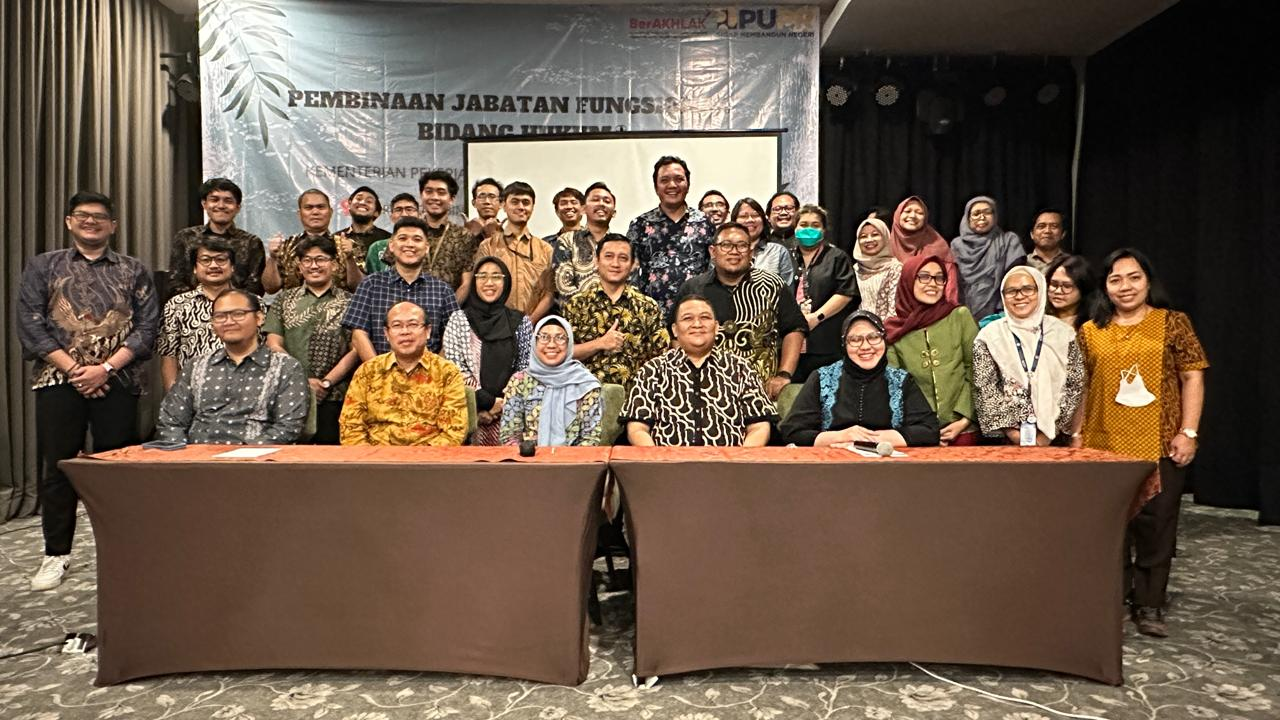
    Source: Workshop for Legal Drafting 

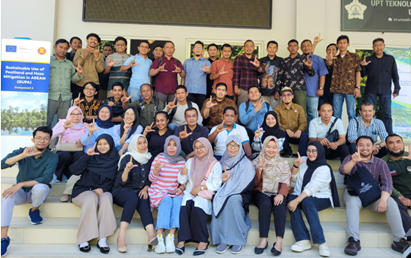
    In partnership with the Ministry of Public Works and Housing (PUPR), UGM also provides legal drafting and reasoning training to mitigate risks in policy-making. Moreover, UGM collaborates with GIZ to deliver training on remote sensing and geographical information systems for peatland assessment. These initiatives aim to enhance competencies and contribute to effective environmental and legal governance.

    Mentorship

    Universitas Gadjah Mada (UGM) underscores its commitment to providing assistance in the local community by supporting sustainable initiatives through mentorship programs. In strategic collaboration with Indonesia’s Ministry of Cooperatives and SMEs, UGM has taken a leading role in the Mikro Mandiri 2024 Business Mentorship Program. This initiative aims to accelerate the growth of Micro, Small, and Medium Enterprises (MSMEs) across various sectors, enhancing their competitiveness in both domestic and international markets. The program, jointly launched by the Ministry and UGM’s Directorate of Business Development, actively engages hundreds of industry partners and MSMEs, emphasizing mentorship as a cornerstone of sustainable business development.

    In addition to these efforts, UGM through its Innovative Academy organized a startup curation event attended by 25 startups and 40 talents. During this event, each board of curators assessed the potential sustainability of both the startup teams and the ideas presented by talents. For teams and talents who successfully qualify for the incubation stage, the Innovative Academy offers direct mentorship from experienced professionals in their respective fields. This invaluable guidance includes consultations on product development and market potential, equipping participants with critical knowledge to advance their startups. 

    The Startup Incubation program, organized by Innovative Academy, instills a mindset focused on identifying and validating business ideas derived from social or industrial challenges. The program empowers participants to develop solutions that address customer problems, foster sustainable business value, and achieve significant social impact. During this process, participants are trained to generate validated, actionable ideas, transforming them into marketable products and businesses tailored to meet market demands.

    Moreover, UGM extends its support through the UMKM Class Series, offered free of charge, which focuses on diverse entrepreneurial themes delivered by experts. These classes strengthen participants’ understanding of sustainable food products and entrepreneurship. UGM also leads the Merdeka Entrepreneurship Programme with Techno Sociopreneurship as its central theme, providing students with opportunities to enhance their entrepreneurial competencies, managerial skills, and ability to address social and sustainability challenges effectively.

    In alignment with this mentorship-driven approach, the MSME Services Unit (DPkM UGM) delivers non-financing capacity-building and business development initiatives. These services include marketing, exhibitions, workshops, equipment assistance, mentoring, and other tailored activities to meet partners’ needs, extending support for up to 36 months. 

    Source: https://tp.ugm.ac.id/id

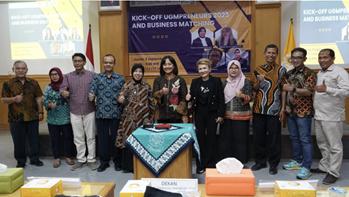
    In September 2023, UGM was steadfast in its commitment through the UGM Preneurs program and Business Matching event. This platform aimed to equip students and MSMEs with entrepreneurial skills and encourage collaborative opportunities. Participants engaged with business experts who provided insights into building efficient supply chains, navigating complex business environments, and sustaining growth. By fostering collaboration between academia, businesses, and local communities, UGM strengthens the entrepreneurial ecosystem, addressing challenges faced by start-ups and MSMEs, and equipping them to compete in global markets while promoting local economic growth.

    Source: https://law.ugm.ac.id 

    In addition to training programs, UGM’s Faculty of Law hosted a seminar on business law for MSMEs, highlighting the university’s multifaceted support for local enterprises. The seminar focused on essential legal aspects, including regulatory principles, business licensing processes, and compliance requirements. With expert speakers delivering practical guidance, the event empowered MSMEs to navigate legal frameworks effectively, reducing barriers to growth. UGM’s integrated approach—combining education, mentorship, and resources—demonstrates its dedication to empowering local communities and fostering sustainable businesses that contribute to broader economic and social development.

    Collectively, UGM’s programs underscore its commitment to fostering sustainable businesses, promoting inclusive community development, and supporting impactful solutions on a large scale.

    Facilities

    UGM through its Directorate of Community Service (DPKM), organized a landmark National Conference of 1,000 Micro, Small, and Medium Enterprises (MSMEs). This event, held as part of the International Conference of Community Engagement and Exhibition at Gelanggang Inovasi dan Kreativitas (GIK) UGM, featured an extensive exhibition showcasing MSME products and research outcomes. This initiative highlights UGM’s unwavering commitment to fostering a university-community relationship that delivers tangible benefits to society. As part of its broader mission, UGM has introduced three flagship programs aimed at improving access to basic services –education, health, and enhanced sanitation.

    Organise Training or Programmes to Improve Access to Basic Services

    Programmes to Improve Access to Education

    UGM has actively mobilized Community Service Programmes (KKN), involving over 7,000 students from 19 faculties across 31 provinces, 97 regencies, 204 sub-districts, and more than 400 villages nationwide. These initiatives include a variety of sustainability-focused projects, such as Waste Sorting Education and Ecoprint Making in Labuhan Pandan Village to support the Zero Waste campaign, eco-printing lessons and electricity experiments for students spanning elementary to high school levels, and health interventions addressing non-communicable and infectious diseases, as well as child health, in Pajangan Village. Additional programs include socialization of clean and healthy living behavior (PHBS) for elementary school students, environmental education to promote underwater life sustainability through the Green Generation Program at Parangkusumo Beach, and ‘Education Week’ activities for elementary students in Ternate City.

    Programmes to Improve Access to Health

    UGM has launched outreach programs to bring essential healthcare services directly to underserved rural and remote areas. These initiatives specifically target vulnerable populations, providing much-needed support for improved health outcomes. By focusing on prevention, early detection, and community education, UGM aims to address health challenges such as lack of awareness about hygiene, nutrition, and preventive care. These outreach activities empower communities to make informed decisions about their health and well-being.

    A notable example is the Comprehensive Community Health Care-Education Programme (CCHC-EP), introduced by UGM’s Faculty of Medicine in the 1990s. This program integrates community-based learning and healthcare through student-led initiatives, including KK) and Kuliah Kerja Kesehatan Masyarakat (K3M), promoting interprofessional collaboration among medical, nursing, and nutrition students. Building on this legacy, the Community and Family Health Care with Interprofessional Education (CFHC-IPE) program was launched in 2013. This long-term, seven-semester initiative emphasizes collaborative engagement with family partners and local health teams to deliver holistic health interventions. Despite challenges in aligning curricula across medical disciplines, CFHC-IPE has evolved into a cornerstone of interprofessional education and public health at UGM.

    UGM’s commitment to community service extends to a variety of outreach programs targeting topics such as hygiene, nutrition, family planning, aging, and preventive care. By working collaboratively with local governments, health cadres, and academic units, these programs empower communities with knowledge and services to improve their overall well-being. Significantly, many of UGM’s community service and outreach efforts are driven by student volunteers, underscoring the university’s role in fostering societal change and building sustainable solutions.

    Programmes to Improve Access to Better Sanitation

    The Faculty of Agriculture at Universitas Gadjah Mada (UGM) has initiated a water resource conservation program in Nawungan farmland, Imogiri, Bantul, aimed at addressing drought conditions in agricultural areas and transforming Nawungan into a prototype of productive conservation agriculture. This program is implemented in collaboration with the Lestari Mulyo Farmer Group, a local association of Nawungan farmers actively participating in the program’s activities.

    A notable innovation in this effort is the Gama Rain Filter, a groundbreaking technology developed by UGM hydrology experts. This system converts rainwater into an alternative source of clean, consumable water and has been applied by KKN-PPM UGM students in various locations, including Pondok Pesantren Nurul Huda, Serbajadi 2, Natar, South Lampung. The primary objectives of this technology are to mitigate shortages in clean water supply and promote rainwater conservation. By optimizing rainwater, previously underutilized as a potential water source, the Gama Rain Filter provides practical solutions to water scarcity.

    Additionally, this technology has been implemented at the Muara Pantuan Village Office in East Kalimantan, ensuring that the filtered rainwater is accessible to all residents. The system converts rainwater into clean, safe raw water, demonstrating its potential to enhance water security and support sustainable sanitation practices across various communities.

    Through these impactful initiatives, UGM reaffirms its dedication to addressing societal challenges while promoting sustainability, inclusivity, and equitable access to essential services.

    Sources:

    1. Programmes to Improve Access to Education: Community Service Programmes (KKN)
    2. Programmes to Improve Access to Health: Comprehensive Community Health Care-Education Programme 
    3. Programmes to Improve Access to Better Sanitation: UGM’s community service and outreach efforts
  • Annual Dedicated Training on Social Aspects of Sustainability

    UGM organises basic staff training followed by an assessment at the end of the training period. There was various material from speakers presented in the training, some of which were “Why Become a UGM Education Personnel?”, “Actualizing UGM Values at Work”, “Becoming an Employee with Character and Inspiring Change”. In the third material, there is a section that discusses staff adaptation to climate/environmental changes (sustainability) including changes in the environmental and social aspects.

    UGM organized a training program on the prevention and recognition of sexual violence within the university environment. This training is open to the public, thereby extending its impact to a broader community. Additionally, UGM offers an online public course on sexual violence, making it accessible to individuals in various locations. A specialized service for professional staff is also available to enhance internal human resource capacity.

  • Support Services for People with Disabilities

    Existence of Disability Support Office

    UGM has played a significant role in the Health Promoting University (HPU) network, established in 2014 under the ASEAN University Network’s Health Promoting Network (AUN-HPN). As one of approximately 30 Southeast Asian universities in the AUN, UGM actively contributed to the development of the Healthy University Framework from 2015 to 2018. Finalized in 2017, the framework provides guidelines for implementing healthy campus initiatives across AUN member universities. Following its adoption, UGM was officially recognized as a Health Promoting University in July 2019, a designation it upholds to this day.

    In addition, since 2016, UGM has demonstrated a strong commitment to addressing and preventing sexual harassment through the development of relevant policies. This began with the issuance of Rector’s Decree No. 1699/UN1.P/SK/HUKOR/2016, which outlined Guidelines for the Prevention of Harassment within the UGM Environment. These efforts were further enhanced in 2019 with the introduction of the Health Promoting University (HPU) program, aiming to foster a healthy campus environment for the entire UGM academic community. As part of this initiative, UGM established the Zero Tolerance for Violence, Bullying, and Harassment Working Group (Pokja).

    The Health Promoting University (HPU) unit carries out seven main activities, namely health literacy, physical activity, healthy eating patterns, mental health, zero tolerance for drugs, tobacco and alcohol, zero tolerance for violence, bullying and harassment, and the establishment of a healthy, safe and friendly living environment for persons with disabilities. 

    UGM’s dedication to inclusivity extends to accessible education and services for the entire academic community, staff, and the broader public. This commitment is reflected in inclusive facilities, curriculum integration, and specialized services provided by the Disability Services Unit under the Integrated Service Unit (ULT). Further details on these services are outlined in the Inclusive Campus Handbook, which includes guidelines on etiquette for assisting students with disabilities both inside and outside the classroom, as well as during examinations.

    In 2024, UGM received an award from the Directorate General of Learning and Student Affairs, Ministry of Education Research and Technology as the Best University in Establishing Disability Service Unit. The second best award was given to Victory University of Sorong and the third best award to Widya Mandala Catholic University of Surabaya.


    The campus is easily accessible to people with disabilities

    In an attempt to achieve inclusivity on campus, UGM has provided accessible facilities for people with disabilities.

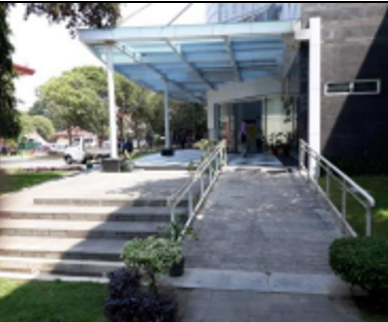
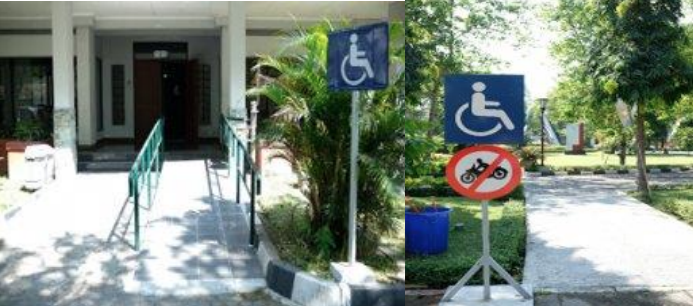
    UGM buildings are equipped with ramps, wheelchairs, toilets, special facilities, special parking areas, and other facilities to facilitate those with disabilities. Especially in UGM Residence, providing disabled rooms, ground floor rooms that are easily accessible to people with disabilities, disabled bathrooms, lifts in some dormitories, and ramps for access to the dormitory building.

    Ramps at Central Office
    Ramps at Center for Library and Archive
    Ramp and Route for Disabled People at Graduate School
    Accessible Disability People Room at Center for Library and Archive


    Access schemes for people with disabilities such as mentoring or other targeted support

    Access Schemes for People with Disabilities

    UGM offers comprehensive support for people with disabilities, encompassing education, access schemes, assistance, and various other forms of support. Access is facilitated through accommodation providers and the involvement of Student Activity Units.

    UGM (UGM) actively promotes sustainable inclusivity by enhancing accessibility for individuals with disabilities (difable) through various initiatives. These efforts include hosting webinars aimed at advocating for accommodations and inclusive public services to ensure equitable opportunities for all. Additionally, UGM organized ‘The Gate: Gateway to a World of Inclusion,’ a special event at the Library and Archives, a space managed by persons with disabilities, showcasing and celebrating their inspiring achievements.

    Furthermore, UGM demonstrates its commitment to inclusivity by empowering students with disabilities through the Student Activity Unit (UKM) for Disabled People. This unit fosters self-development by enabling students to organize events and initiatives that enhance their capabilities while raising awareness about disability inclusion within the UGM community.

    Support Services for People with Disabilities

    UGM provides comprehensive disability support services throughout the educational journey, from prospective students to graduates. It also offers inclusive facilities and accommodations for academicians and employees with disabilities to foster an accessible and supportive environment for all.

    Since 2022, UGM provides comprehensive support for exam participants with disabilities, including assistive technology such as headsets and screen reader programs for visually impaired individuals. These accommodations ensure equitable access to the admissions exam and promote an inclusive testing environment.

    UGM is committed to fostering an inclusive academic environment that empowers students with disabilities to achieve their full potential. The university actively engages students with disabilities to identify and address their academic support needs. To support the bachelor’s and master’s student, lecturers are guided in ensuring the accessibility of learning materials for all students, and assistants are provided to facilitate academic success for students with disabilities.

    We have a reasonable accommodation policy or strategy for people with disabilities, including adequate funding 

    UGM demonstrates its commitment to inclusivity and accessibility by maintaining a reasonable accommodation policy and strategy for individuals with disabilities, underpinned by adequate funding. Since 2021, UGM has advanced this effort through comprehensive disability accommodation policies. These initiatives include the provision of on-campus housing designed to be inclusive and disability-friendly, ensuring that all students have access to suitable living arrangements.

    Key highlights of this policy are reflected in the Inclusive Campus Handbook, which serves as a central resource detailing available facilities, services, and educational programs related to disabilities. By offering educational materials on disability-related topics and extending both guidance and scholarship opportunities for individuals with specific needs, UGM fosters a sustainable and inclusive campus environment.

    Additionally, UGM has established service guidelines accessible to all members of the academic community. These guidelines include an interaction framework tailored to the unique needs of different disabled groups, facilitating effective and respectful accommodations. From 2022 onwards, UGM has introduced affirmative scholarship opportunities, providing targeted support and higher education access for individuals with disabilities, further solidifying its commitment to equitable and inclusive education.

  • Current Equality, Diversity, and Inclusion (EDI) policies in UGM

    UGM is committed to anti-discrimination as directed by Trustee Board’s Regulations Number 1 Year 2023 about University Strategic Plan 2022-2027 (pg. 14, UGM guarantees that the campus environment is a safe and comfortable ecosystem, free from sexual violence, other violence, bullying, mental health problems, discrimination, and friendly to people with disabilities). The regulation in 2023 is the continuation of the Trustee Board’s Regulations Number 1 Year 2020 about University Strategic Plan 2017-2022 which also regulates discrimination (pg. 20, inclusive campus development with an anti-discrimination spirit based on race, ethnicity, gender, marital status, disability, age, religion, minority group, etc.). UGM guarantees the rights of all women including staff and students to be treated equally. Based on the Trustee Board’s Regulations Number 1 Year 2021 concerning Campus Master Plans (pg. 13, pg. 25), UGM is fighting for universal principles, namely social justice, equality, inclusivism, and sustainability in all aspects of university administration policies.

    Specifically related to sexual violence, UGM is committed to maintaining standards of human values and dignity at UGM, as well as protecting the entire UGM community from all forms of sexual violence as stated in the Rector’s Regulation Number 1 Year 2020 (Article 2) and updated in Rector’s Regulation Number 1 Year 2023 (Article 2). UGM also provides prospective students from all pathways a fair admissions process and will not discriminate against ethnicity, religion, race and intergroup, etc. as clearly stated in the Rector’s Regulation Number 3 Year 2023 Article 2 Verse e.