Day: July 30, 2021

  • UGM Launches ‘MOOCs Uji Sensoris’ for Sensory Evaluation Courses

    UGM Launches ‘MOOCs Uji Sensoris’ for Sensory Evaluation Courses

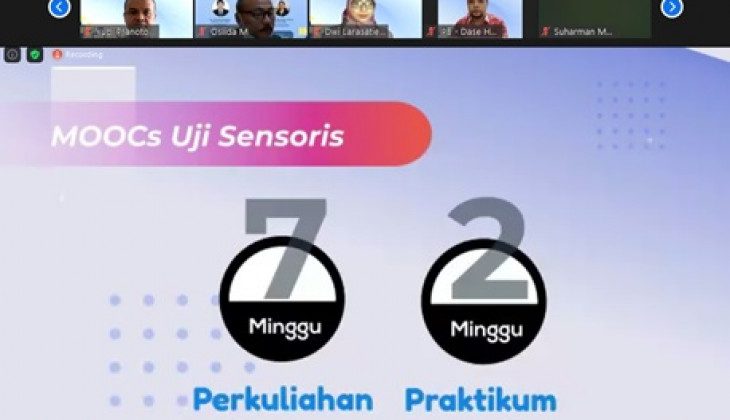
    The Faculty of Agricultural Technology (FTP) of UGM launched Massive Open Online Courses (MOOCs), an educational program on sensory evaluation, on Friday (30/7). MOOCs aim to enhance people’s enthusiasm to learn more about agricultural technology and disseminate the knowledge to the community.

    The courses, namely Sensory Evaluation Theory and Sensory Evaluation Practicum, are open to the public, agricultural technology students, UGM students of other disciplines, and students from other universities. Sensory Evaluation Theory offers seven topics and is available free of charge. For Practicum, students can opt for a free class or a paid one and will be equipped with a sensory kit package delivered to their respective homes to support hands-on learning during the course.

    UGM Vice-Rector for Education, Teaching, and Student Affairs Professor Djagal Wiseso Marseno congratulated the faculty for the MOOCs launching. He said that MOOCs enabled anyone to acquire knowledge and competencies online anytime, anywhere, and would benefit all lifelong learners.

    “Hopefully, development can continue for other courses and be accessible overseas. UGM welcomes the development of MOOCs-based learning at the university and will facilitate lecturers who want to offer online courses,” said Djagal in his remarks.

    Dean of the Faculty of Agricultural Technology Professor Eni Harmayani said the COVID-19 pandemic resulted in the necessity of online learning. This particular reason encouraged the faculty to develop and create the program. According to Eni, MOOCs, such as those provided by Coursera, edX, or Udemy, are future forms of education where the general public can access learning materials, both paid and free. She added that the faculty decided to go for sensory evaluation due to its increasing interest in the community. Sensory evaluation techniques are easy to apply in daily life to analyze food and beverage products.

    “Hopefully, (by getting their own sensory kits), students can practice directly at home and discuss the results through the provided forums. That way, it is easier for them to analyze the data and implement them,” said Eni.

    Source: https://www.ugm.ac.id/id/berita/21454-ftp-ugm-luncurkan-moocs-uji-sensoris



  • Wanagama Researcher House Serves as a Covid-19 Shelter

    Wanagama Researcher House Serves as a Covid-19 Shelter

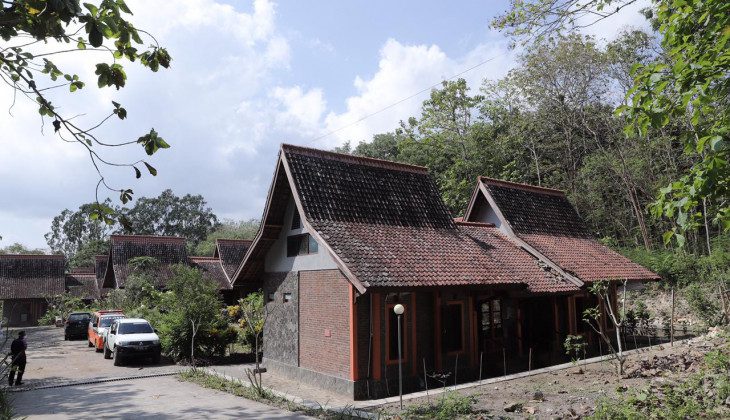
    UGM has added a shelter facility for handling Covid-19 for confirmed patients with mild symptoms. The UGM Wanagama Researcher House began to function as a shelter at the signing of the Cooperation Agreement between the Gunungkidul Regency Government and the UGM Faculty of Forestry on Friday (30/7).

    “This is the second time Wanagama is used a shelter. Previously, it was a shelter for residents who were tested reactive for rapid tests, now only for positive cases,” said the Dean of the Faculty of Forestry, Dr. Budiadi.

    He added that UGM tries as much as possible to donate its resources for handling Covid-19. Wanagama researcher house as a shelter should be able to support the local government efforts to treat patients and reduce mortality.

    “The shelter is conducive for isolation because it is far away from the surrounding community, and the environment is healthier. Hopefully, people who stay here will recover faster,” said Budiadi.

    Wanagama shelter has a capacity of 51 beds. In addition to the isolation room, there is a special emergency room unit equipped with an oxygen concentrator and a special room for health workers.

    The regent of Gunungkidul, Sunaryanta, said that the Wanagama shelter is one of several isolation shelters managed by the district government. An integrated shelter, according to him, is important as the number of cases in Gunungkidul Regency is still high.

    “This collaboration is crucial to us. Even though cases have decreased in recent days, the number of people who self-isolate is still high, around 2,500 people,” he explained.

    By being in an integrated shelter, self-isolating patients can be monitored and get treatment faster. They hope that there will be no more deaths during self-isolation at home.

    “Hopefully, with the measures taken by the government in collaboration with stakeholders and vaccinations that are continuously being encouraged, cases will soon begin to decline,” said the regent.

    Wanagama Director, Dr. Dwiko Budi Permadi, said that the Health Service and the Social Service of Gunungkidul Regency manage the shelter. It currently accommodates eight confirmed patients with mild symptoms.

    The Wanagama educational forest has been used for practicum and research for students and lecturers of the UGM Faculty of Forestry. However, considering the ongoing pandemic conditions and the implementation of the PPKM policy, student practicum activities at Wanagama are temporarily suspended.

    Dwiko explained that later research activities could still be conducted outside the research house area, with a number of arrangements to prevent the transmission of Covid-19.

    “Research is still being carried out outside the researcher home area. Meanwhile, practicums follow PPKM and faculty policies,” he explained.

    Source: https://www.ugm.ac.id/id/berita/21453-rumah-peneliti-wanagama-mulai-difungsikan-sebagai-selter-covid-19